
























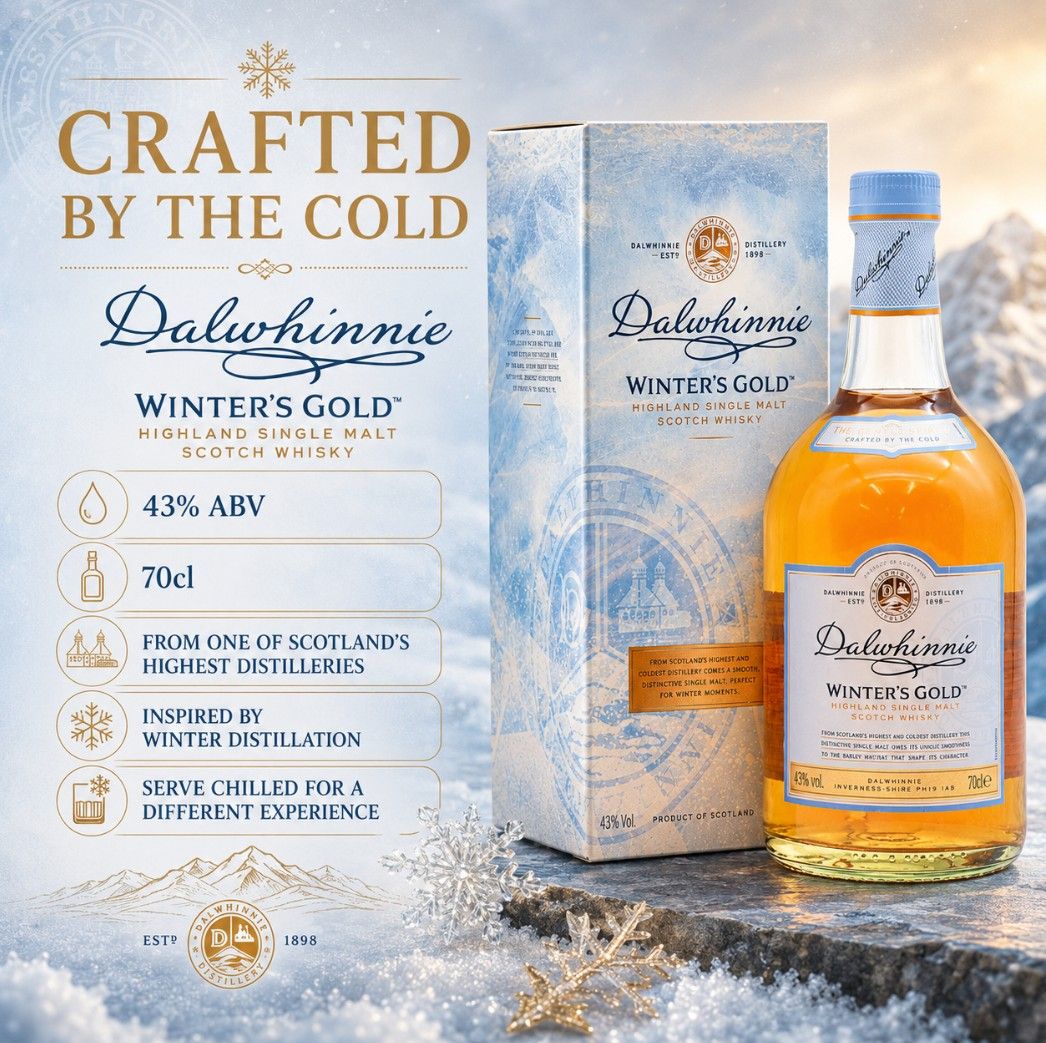
Few Scotch whiskies are as closely connected to their surroundings as Dalwhinnie Winter’s Gold Highland Single Malt Scotch Whisky. Produced in one of Scotland’s highest and coldest working distilleries, this distinctive expression was created as a tribute to the severe Highland winters that shape life around Dalwhinnie.
Winter’s Gold brings together the gentle, honeyed character associated with the distillery and a richer collection of autumn fruit, gingerbread, malt loaf, dark chocolate and softly aromatic smoke. Unlike most single malts, it is officially recommended for serving directly from the freezer, creating an unusual tasting experience that changes as the whisky gradually warms in the glass.
Bottled at 43% ABV, it is approachable enough for those beginning to explore single malt Scotch while retaining enough fruit, spice and texture to interest established whisky drinkers.
For anyone looking for a smooth Highland whisky with a genuine connection to its remote landscape, Dalwhinnie Winter’s Gold offers something noticeably different from the distillery’s familiar 15 Year Old.
What Is Dalwhinnie Winter’s Gold?
Dalwhinnie Winter’s Gold is a non-age-statement Highland single malt Scotch whisky produced at Dalwhinnie Distillery.
The whisky takes its name and character from the exceptionally cold environment surrounding the distillery. Dalwhinnie sits approximately 1,164 feet, or 355 metres, above sea level within the Cairngorms National Park and is described by its owner as the highest and coldest working distillery in Scotland.
Winter’s Gold follows the light, honeyed and softly smoky character of the Dalwhinnie house style, but it places greater emphasis on warming sweetness, ripe fruit and spice.
Its principal characteristics include:
- Heather honey
- Caramelised fruit
- Apricot
- Orange zest
- Gingerbread
- Malt loaf
- Raisins
- Dates
- Dark chocolate
- Gentle smoke
- Sandalwood
- Sweet malt
Its most unusual feature is the recommended serving method. Dalwhinnie advises placing the bottle in the freezer and pouring the whisky chilled, allowing its texture and flavours to develop as the liquid warms.
The History of Dalwhinnie Distillery
Dalwhinnie Distillery was established in 1897 in the Highland village from which it takes its name.
The remote location was selected partly because it provided access to clean mountain water and a transport connection through the railway and the historic road running between northern and southern Scotland.
The distillery originally operated under the name Strathspey before being renamed Dalwhinnie. Over the following decades, it passed through several owners and endured a number of interruptions, including a serious fire during the 1930s and production restrictions during the Second World War.
Dalwhinnie later became part of the group of distilleries represented as the Classic Malts of Scotland, helping introduce the distillery’s gentle Highland style to a wider international audience.
Today, Dalwhinnie is owned by Diageo and continues to produce whisky in its whitewashed buildings beneath the surrounding mountains of the Cairngorms.
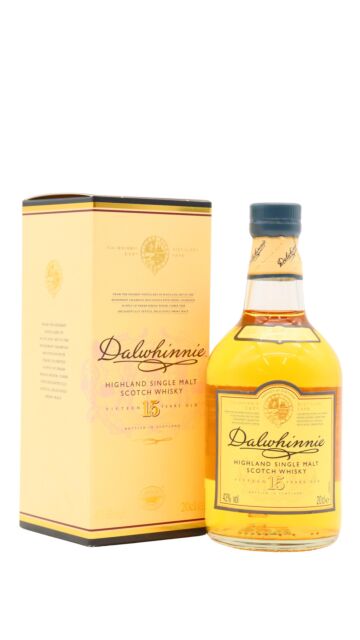
The distillery is best known for its honeyed, clean and approachable single malts, particularly the classic Dalwhinnie 15 Year Old Highland Single Malt.
Customers looking to explore beyond Winter’s Gold can browse the full Dalwhinnie whisky collection available from Hard To Find Whisky.
Where Is Dalwhinnie Distillery?
Dalwhinnie Distillery is located in the village of Dalwhinnie in Inverness-shire, within the Scottish Highlands.
It stands near the head of Glen Truim and the northern end of Loch Ericht, surrounded by the dramatic landscape of the Cairngorms National Park. The distillery is positioned on the A9 route between Perth and Inverness and is also served by the Highland Main Line railway.
At approximately 1,164 feet above sea level, the location experiences low temperatures, snowfall and severe winter weather. The official Dalwhinnie profile describes it as both the highest and coldest working distillery in Scotland.
The remote setting is central to the distillery’s identity. Dalwhinnie is not simply using winter imagery as decoration; the local climate has influenced working conditions, production and the way the whisky is presented.
What Does Dalwhinnie Mean?
Dalwhinnie comes from the Gaelic name Dail Chuinnidh, meaning “meeting place”.
The name reflects the village’s historic position at the meeting point of routes through the central Highlands. Cattle drovers and travellers once passed through the area on journeys between northern Scotland and markets further south.
Dalwhinnie’s location remains a natural meeting point today, sitting between different parts of the Highlands and close to the geographical boundary often associated with Speyside.
The name is pronounced Dal-wi-nee.
Is Dalwhinnie a Highland or Speyside Whisky?
Dalwhinnie is normally presented commercially as a Highland single malt Scotch whisky.
Its geographical location can create some confusion because Dalwhinnie sits near Speyside and within the broader Highland area used by Scotch whisky regulations. Speyside itself lies within the Highlands, meaning some distilleries around the regional boundary may legally use Highland terminology.
Dalwhinnie’s official range and bottle labels identify it as a Highland single malt. Its style also fits comfortably within the gentler side of Highland whisky, offering honey, malt, fruit, restrained peat and a smooth texture.
Drinkers interested in comparing it with other whiskies from the region can browse HTFW’s wider selection of Highland single malt Scotch whisky.
The Water Used at Dalwhinnie
Water is an important part of Dalwhinnie’s production and sense of place.
The distillery uses water flowing from the Allt an t-Sluic, a mountain burn supplied by water from the surrounding uplands. According to the official Dalwhinnie profile, the source begins at one of the highest elevations used by any malt whisky distillery.
The water travels through the local landscape before reaching the distillery, moving across ground containing peat and Highland vegetation. Dalwhinnie is the only distillery permitted to use this particular water source.
Water is used during mashing and may also be used to reduce the whisky to its final bottling strength. While water alone does not determine the finished flavour, its availability and quality were important considerations when the distillery site was chosen.
How Is Dalwhinnie Winter’s Gold Made?
Like all single malt Scotch whisky, Winter’s Gold is made from malted barley, water and yeast at one distillery.
The process begins by milling the malted barley into a coarse flour called grist. This is mixed with warm water in a mash tun, allowing fermentable sugars to dissolve and produce a sweet liquid known as wort.
The wort is transferred into washbacks, where yeast converts the sugar into alcohol. This creates a low-strength, beer-like liquid called wash.
The wash is then distilled in copper pot stills. Dalwhinnie uses separate wash and spirit stills to concentrate the alcohol and refine the character of the spirit.
Copper removes heavier sulphur compounds and helps create the clean, elegant style associated with the distillery. The shape of the stills, the speed of distillation and the selection of the middle cut all contribute to the final new-make spirit.
The spirit is then filled into oak casks and matured in Scotland before selected casks are combined to create Winter’s Gold.
The finished whisky is bottled at 43% ABV.
Is Dalwhinnie Winter’s Gold a Single Malt?
Yes. Dalwhinnie Winter’s Gold is a single malt Scotch whisky.
This means it is:
- Produced entirely at Dalwhinnie Distillery
- Made from malted barley
- Distilled in copper pot stills
- Matured in oak casks in Scotland
- Bottled in accordance with Scotch whisky regulations
The whisky may contain liquid from several individual casks, but every component comes from the same distillery.
Combining multiple casks does not make it a blended malt. A blended malt contains single malts from more than one distillery, whereas Winter’s Gold is made exclusively from Dalwhinnie spirit.
Those looking to explore more distillery-specific releases can browse the wider single malt Scotch whisky collection at HTFW.
Does Dalwhinnie Winter’s Gold Have an Age Statement?
No. Winter’s Gold is a non-age-statement single malt.
All Scotch whisky must mature in oak casks in Scotland for at least three years, but Dalwhinnie does not declare the age of the youngest whisky used in Winter’s Gold.
A non-age-statement release gives the whisky makers greater flexibility when selecting casks. Rather than creating the expression around one stated number, they can combine casks according to flavour, texture and maturity.
The objective with Winter’s Gold is to produce a particular sensory profile: honeyed, rich, fruity, gently smoky and warming.
Drinkers specifically looking for a clearly declared age may prefer the Dalwhinnie 15 Year Old, while Winter’s Gold offers a more experimental serving concept and a richer emphasis on spice and dark sweetness.
Why Is It Called Winter’s Gold?
The name pays tribute to Dalwhinnie’s cold Highland environment.
The distillery is surrounded by mountains and experiences some of the lowest temperatures associated with a working Scotch whisky distillery. Snow, frost and severe weather are a regular part of the landscape.
“Gold” refers both to the whisky’s warm colour and to the contrast between the cold surroundings and the comforting character of the liquid.
The name captures the central idea behind the expression: a golden, honeyed whisky shaped by one of Scotland’s most severe whisky-producing environments.
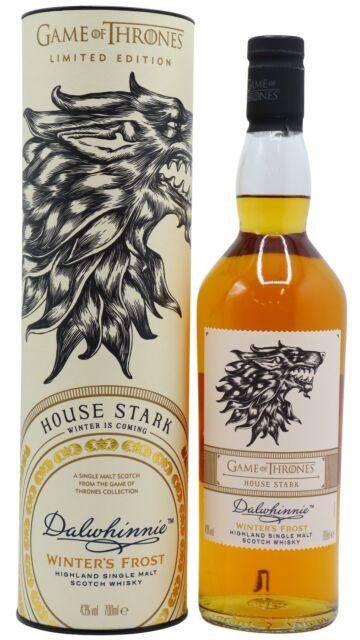
The bottle design reinforces this connection through its cool blue and white presentation, which contrasts with the amber whisky inside.
Why Is Dalwhinnie Winter’s Gold Served Frozen?
Dalwhinnie officially recommends serving Winter’s Gold directly from the freezer.
This is unusual because most single malt Scotch is served at room temperature, where its aromas are easier to detect. Chilling whisky normally reduces aromatic intensity and can make flavours seem more restrained.
Winter’s Gold turns that effect into part of the experience.
Straight from the freezer, the whisky becomes more viscous and concentrated in texture. The cold initially softens the alcohol and some of the sweeter flavours, making the dram feel smooth and dense.
As it warms in the glass and on the palate, different flavours gradually emerge:
- Crisp green fruit
- Honey
- Vanilla
- Orange zest
- Gingerbread
- Malt
- Dark chocolate
- Dried fruit
- Gentle smoke
The whisky therefore changes throughout the drink rather than presenting every flavour immediately.
Will Whisky Freeze in a Domestic Freezer?
Dalwhinnie Winter’s Gold should not freeze solid in an ordinary domestic freezer.
At 43% ABV, its alcohol content substantially lowers the freezing point. Most domestic freezers operate at around -18°C, which is cold enough to make the whisky more viscous but not normally cold enough to turn it into a solid block.
The liquid may appear thicker and pour more slowly after extended chilling.
The bottle should remain tightly closed and stored upright. As with any glass bottle, avoid exposing it to sudden and extreme temperature changes.
Does Serving Whisky Cold Ruin the Flavour?
Serving whisky cold does not ruin it, but it changes how the flavour is perceived.
Lower temperatures reduce the volatility of aromatic compounds. This means fewer aromas rise from the glass, and the whisky may initially smell less expressive than it would at room temperature.
Cold temperatures can also:
- Reduce the impression of alcohol heat
- Make sweetness feel more restrained
- Increase the impression of viscosity
- Emphasise freshness
- Delay the appearance of spice and oak
- Create a gradual flavour release as the whisky warms
Winter’s Gold was designed to make this transformation part of the serve. It can still be enjoyed at room temperature, but the freezer serve offers the experience intended by Dalwhinnie.
Can Dalwhinnie Winter’s Gold Be Served at Room Temperature?
Yes. There is no requirement to drink Winter’s Gold directly from the freezer.
At room temperature, the whisky becomes more aromatic from the start. Honey, caramelised fruit, orange zest, malt loaf, raisins and smoke become easier to detect immediately.
The texture may feel lighter and the spice more noticeable than it does when heavily chilled.
Trying the whisky both ways is the best approach:
- Pour one measure directly from the freezer.
- Pour a second measure at room temperature.
- Taste them side by side.
- Return to the frozen measure as it gradually warms.
This provides a useful demonstration of how temperature changes the perception of whisky.
What Does Dalwhinnie Winter’s Gold Taste Like?
Winter’s Gold is a sweet, fruit-led and gently smoky single malt with a smooth texture and warming spice.
Appearance
Warm gold with amber highlights.
When poured directly from the freezer, the whisky may appear slightly more viscous and move slowly around the glass.
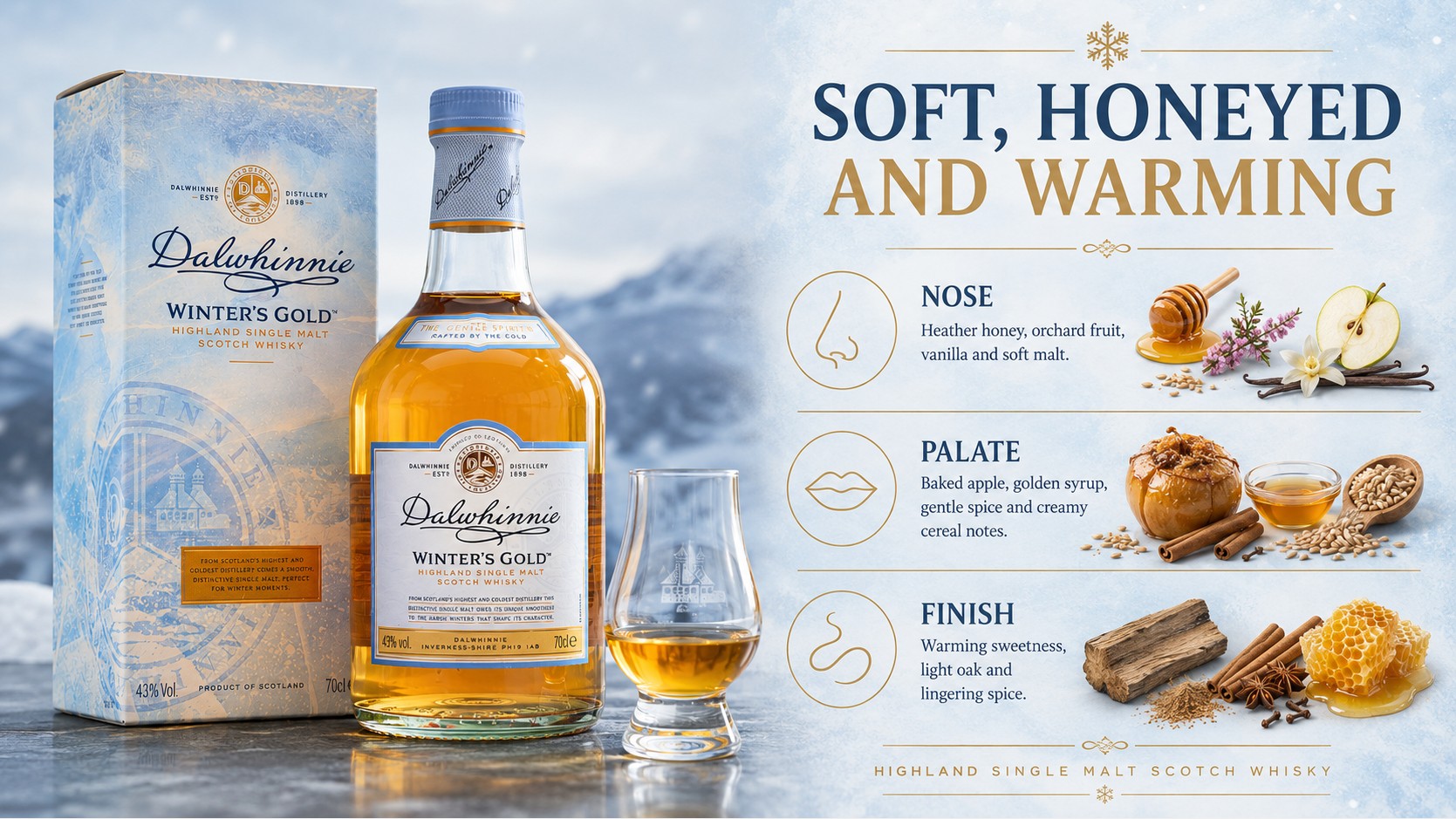
Nose
The aroma opens with honeyed sweetness, caramelised fruit and soft waxiness.
Apricot and orange zest provide brightness, followed by sweet pastry, menthol freshness and a restrained smoky note. The official tasting profile also compares its dessert-like character to caramel tart with sharp apricot and orange.
At room temperature, the aroma is broader and more immediate. From the freezer, the fruit and honey emerge gradually as the whisky warms.
Palate
Smooth, sweet and richly textured.
Heather honey and golden syrup lead into ripe autumn fruit, gingerbread and malt loaf. Molasses and mint add darker sweetness and freshness, followed by distant smoke.
The texture is medium-bodied but feels fuller when served cold.
Finish
Long, warming and gently chewy.
Sweet malt, raisins and dark chocolate remain on the palate, followed by dates, aromatic wood and sandalwood. The smoke remains subtle and does not dominate the sweeter flavours.
Is Dalwhinnie Winter’s Gold Sweet?
Winter’s Gold has a noticeably sweet flavour profile, although it is not a whisky liqueur and does not taste artificially sugary.
Its sweetness appears through flavours such as:
- Heather honey
- Golden syrup
- Caramel tart
- Malt loaf
- Molasses
- Raisins
- Dates
- Dark chocolate
- Sweet malt
The sweetness is balanced by apricot acidity, orange zest, gingerbread spice, mint and gentle smoke.
Serving it frozen can initially reduce the perception of sweetness. As the whisky warms, honey, malt and dried-fruit flavours become more pronounced.
Is Dalwhinnie Winter’s Gold Smoky?
Winter’s Gold contains a modest smoky character, but it is not a heavily peated whisky.
The smoke remains in the background and appears most clearly after the sweeter fruit, honey and malt flavours.
Drinkers should not expect the medicinal peat, seaweed, iodine or bonfire intensity associated with some Islay single malts.
Instead, the smoke contributes warmth and depth without overwhelming the whisky’s accessible Highland style.
This makes Winter’s Gold suitable for drinkers who want to begin exploring smoky whisky without moving directly into strongly peated expressions.
For more pronounced peat, browse HTFW’s full selection of peated Scotch whisky.
Is Dalwhinnie Winter’s Gold Peated?
Dalwhinnie uses a lightly smoky house style, and Winter’s Gold includes a gentle peat character.
However, it would not normally be classified alongside heavily peated single malts.
The local water flows through Highland terrain containing peat, while the whisky’s production and maturation preserve a restrained smoky quality. The result is closer to soft aromatic smoke than an intense peated dram.
Its principal identity remains honeyed, fruity and malty.
Is Dalwhinnie Winter’s Gold Chill Filtered?
The current official product information does not prominently state that Winter’s Gold is non-chill filtered.
At 43% ABV and with a recommended freezer serve, chill filtration would help the whisky remain visually clear at low temperatures. Non-chill-filtered whisky can become hazy when chilled because naturally occurring fatty acids and esters begin to form visible particles.
Cloudiness is not harmful and does not indicate that a whisky has spoiled. However, producers may use chill filtration when they want the spirit to retain a clear appearance under cold serving conditions.
Customers specifically seeking a confirmed non-chill-filtered whisky should refer to the latest bottle and packaging information.
Dalwhinnie Winter’s Gold vs Dalwhinnie 15 Year Old
The Dalwhinnie 15 Year Old is the distillery’s best-known expression and the most natural comparison with Winter’s Gold.
Both share the central Dalwhinnie character of honey, malt, soft fruit and gentle smoke, but they emphasise different qualities.
Dalwhinnie Winter’s Gold
- No age statement
- Bottled at 43% ABV
- Designed to be served from the freezer
- Richer honey and dessert notes
- Gingerbread and malt loaf
- Dark chocolate and dried fruit
- A more experimental presentation
Dalwhinnie 15 Year Old
- Clear 15-year age statement
- Bottled at 43% ABV
- Usually served at room temperature
- Greater emphasis on heather honey
- Fresh fruit and malt
- A composed, traditional Highland profile
- More established as the classic distillery expression
Winter’s Gold is the better choice for drinkers interested in the unusual freezer serve or a sweeter, more immediately warming profile.
The 15 Year Old is better suited to those who value an age statement and want the most recognisable expression of Dalwhinnie’s house style.
Dalwhinnie Winter’s Gold vs Glenmorangie Original
Glenmorangie Original and Winter’s Gold are both approachable Highland single malts, but their flavour profiles are different.
Glenmorangie generally emphasises:
- Citrus
- Peach
- Vanilla
- Floral notes
- Creamy oak
- Light sweetness
Winter’s Gold offers:
- Heather honey
- Caramelised fruit
- Gingerbread
- Malt loaf
- Raisins
- Dark chocolate
- Gentle smoke
Glenmorangie is typically brighter and more citrus-led. Dalwhinnie Winter’s Gold is darker, more malty and more warming.
Customers looking for a lighter, fresher Highland malt may prefer to explore the Glenmorangie whisky collection, while Winter’s Gold is better suited to colder evenings and richer food pairings.
Dalwhinnie Winter’s Gold vs Glenfiddich 15 Year Old
Glenfiddich 15 Year Old Solera Reserve is richer and more cask-driven than many introductory Speyside whiskies.
It typically delivers:
- Heather honey
- Vanilla fudge
- Dark fruit
- Marzipan
- Cinnamon
- Ginger
- Sherry oak
Dalwhinnie Winter’s Gold focuses on:
- Golden syrup
- Caramelised fruit
- Apricot
- Gingerbread
- Malt loaf
- Raisins
- Dark chocolate
- Soft smoke
Glenfiddich 15 offers a clearer sherry and oak influence, together with a declared age. Winter’s Gold provides a more unusual drinking experience and a softer smoky edge.
Dalwhinnie Winter’s Gold vs Monkey Shoulder
Monkey Shoulder Blended Malt Scotch Whisky is made from malt whiskies produced at more than one distillery, whereas Winter’s Gold is a single malt made entirely at Dalwhinnie.
Monkey Shoulder generally offers:
- Orange
- Vanilla
- Honey
- Orchard fruit
- Creamy malt
- Gentle oak spice
Winter’s Gold brings:
- Honeyed richness
- Apricot
- Orange zest
- Gingerbread
- Malt loaf
- Dried fruit
- Dark chocolate
- Gentle smoke
Monkey Shoulder is particularly versatile in cocktails. Winter’s Gold is better suited to slow sipping and exploring the effect of temperature.
Is Dalwhinnie Winter’s Gold Good for Beginners?
Winter’s Gold is highly approachable for new whisky drinkers.
Its main flavours are familiar and easy to recognise, including honey, fruit, sweet malt, gingerbread and chocolate. The smoke remains gentle, while the 43% ABV provides enough structure without becoming overly powerful.
Serving the whisky chilled can also soften the initial alcohol sensation, making it easier for inexperienced drinkers to approach.
It is particularly suitable for beginners who:
- Prefer sweeter spirits
- Enjoy honeyed flavours
- Want to explore gentle smoke
- Find high-strength whisky too intense
- Are interested in unusual serving methods
- Want a smooth Highland single malt
A few minutes of warming in the glass will gradually reveal greater spice and complexity.
How Should You Drink Dalwhinnie Winter’s Gold?
Dalwhinnie recommends serving Winter’s Gold straight from the freezer, but there are several enjoyable options.
Straight from the Freezer
Place the bottle upright in the freezer before serving.
Pour a small measure into a room-temperature whisky glass. The contrast between the chilled spirit and warmer glass will begin the gradual flavour development.
The whisky will initially feel dense, smooth and restrained. Honey, fruit, spice and smoke will emerge as it warms.
Neat at Room Temperature
Serving the whisky neat at room temperature makes its aroma more immediate.
The caramelised fruit, apricot, orange, malt loaf and smoke can be identified more easily from the first sip.
This approach is preferable for drinkers who want to examine the whisky in a more conventional way.
With a Little Water
A few drops of water can bring forward additional honey, fruit and malt.
Because the whisky is bottled at 43% ABV, it does not need significant dilution. Add water carefully and taste after each addition.
Over Ice
Winter’s Gold can be served over one large ice cube, although the freezer serve provides a more concentrated experience with less dilution.
Ice gradually reduces the strength and emphasises the whisky’s smooth, sweet character.
As a Highball
For a longer drink, combine Winter’s Gold with chilled soda water and plenty of ice.
A strip of orange peel complements its citrus, honey and spice.
What Is the Best Glass for Dalwhinnie Winter’s Gold?
A tulip-shaped whisky glass is the best choice for detailed tasting.
Its wider bowl allows the whisky to breathe, while the narrower opening concentrates the aromas.
This is especially useful when serving Winter’s Gold from the freezer because the changing aroma can be followed as the whisky gradually warms.
A tumbler works well for a relaxed serve or when adding a large ice cube.
Explore HTFW’s selection of whisky glasses for suitable tasting and gifting options.
What Food Goes with Dalwhinnie Winter’s Gold?
The whisky’s combination of honey, fruit, spice and gentle smoke makes it versatile with food.
Cheese
Suitable pairings include:
- Mature Cheddar
- Comté
- Gruyère
- Gouda
- Baked Camembert
- Mild blue cheese
- Smoked cheese
Nutty hard cheeses complement the malt and dried fruit, while creamy cheeses soften the whisky’s warming spice.
Meat
Try Winter’s Gold with:
- Roast pork
- Glazed ham
- Roast chicken
- Duck
- Charcuterie
- Sausages
- Venison
- Lightly smoked meats
Honey or fruit-based glazes work particularly well with the whisky’s sweet profile.
Desserts
Strong dessert pairings include:
- Gingerbread
- Malt loaf
- Fruit cake
- Apple crumble
- Apricot tart
- Sticky toffee pudding
- Dark chocolate
- Bread and butter pudding
- Date pudding
- Orange chocolate
The whisky’s official tasting profile already contains gingerbread, malt loaf, raisins, dates and dark chocolate, making desserts based around these flavours particularly effective.
Chocolate
Dalwhinnie is often associated with whisky and chocolate pairings.
For Winter’s Gold, try:
- Dark chocolate
- Raisin and nut chocolate
- Orange chocolate
- Salted caramel chocolate
- Milk chocolate with ginger
- Chocolate containing dried fruit
Allow the chocolate to soften on the palate before taking a small sip of whisky.
Is Dalwhinnie Winter’s Gold a Good Christmas Whisky?
Winter’s Gold is particularly well suited to Christmas and winter drinking.
Its name and presentation naturally fit the season, while the flavour profile mirrors many traditional winter foods.
Gingerbread, malt loaf, raisins, dates, honey, dark chocolate and warming spice all work well alongside Christmas desserts, cheese boards and roasted meats.
The recommended freezer serve also creates an unusual tasting experience for guests. The whisky can be poured cold and allowed to develop slowly after dinner.
It is an excellent option for:
- Christmas gifts
- Winter birthdays
- Festive whisky tastings
- After-dinner drinks
- Burns Night
- Hogmanay
- Cold-weather gatherings
- Seasonal food pairings
Is Dalwhinnie Winter’s Gold a Good Gift?
Dalwhinnie Winter’s Gold makes a distinctive gift for both new and experienced whisky drinkers.
It combines a recognised Highland distillery with an unusual serving recommendation and an approachable flavour profile.
It is especially suitable for:
- Christmas
- Birthdays
- Father’s Day
- Retirements
- Housewarmings
- Thank-you gifts
- Winter celebrations
- Highland whisky fans
- New single malt drinkers
- Gentle peat drinkers
The freezer serve gives the recipient something to explore rather than simply another conventional bottle of Scotch.
Is Dalwhinnie Winter’s Gold Collectable?
The standard Winter’s Gold release is primarily intended for drinking rather than investment.
It is not presented as an individually numbered single cask or a bottle with a limited outturn.
However, older packaging designs, discontinued versions and earlier releases may become interesting to Dalwhinnie collectors over time.
The expression also occupies a distinctive place within the modern Dalwhinnie range because of its winter theme and unusual recommended serving method.
Serious collectors may be more interested in older vintages, special releases and discontinued Dalwhinnie bottlings, which can be found when available within the Dalwhinnie range.
How Should Dalwhinnie Winter’s Gold Be Stored?
For general storage, keep the bottle upright in a cool, dark place away from direct sunlight.
Whisky should not be stored on its side for extended periods because its high alcohol content can damage the cork.
For the recommended frozen serve, the bottle can be placed upright in a domestic freezer before drinking. Ensure the closure is secure and avoid repeated, sudden movements between extreme temperatures.
Once opened:
- Keep the bottle tightly sealed.
- Store it away from strong light.
- Avoid excessive heat.
- Keep it upright.
- Return it to the freezer only when planning to serve it chilled.
- Consider a smaller bottle when very little whisky remains.
Whisky does not continue to mature once bottled.
Frequently Asked Questions
What is Dalwhinnie Winter’s Gold?
It is a non-age-statement Highland single malt Scotch whisky inspired by the cold environment surrounding Dalwhinnie Distillery.
Where is it made?
It is produced at Dalwhinnie Distillery in the Scottish Highlands, within the Cairngorms National Park.
What is the alcohol strength?
Dalwhinnie Winter’s Gold is bottled at 43% ABV.
What size is the bottle?
The standard bottle contains 70cl.
Does it have an age statement?
No. Winter’s Gold is a non-age-statement single malt.
Is it a single malt?
Yes. It is produced entirely at Dalwhinnie Distillery from malted barley.
Is Dalwhinnie Winter’s Gold smoky?
It has a gentle background smoke but is not heavily peated.
Is it sweet?
Yes. Its profile includes honey, golden syrup, caramelised fruit, malt loaf, raisins and dark chocolate.
What does it taste like?
Expect honey, apricot, orange zest, gingerbread, malt loaf, molasses, mint, raisins, dates, dark chocolate and gentle smoke.
Why is it served frozen?
Chilling increases the whisky’s viscosity, softens the initial alcohol and allows the flavour to change as the liquid gradually warms.
Will the whisky freeze solid?
It should not freeze solid in a normal domestic freezer because it is bottled at 43% ABV.
Does it have to be served from the freezer?
No. It can also be enjoyed neat at room temperature, with a little water or over ice.
Is it suitable for beginners?
Yes. Its honeyed sweetness, smooth texture and restrained smoke make it approachable.
What food works with it?
It pairs well with mature cheese, roast pork, glazed ham, gingerbread, fruit cake, apple crumble and dark chocolate.
Is it a good Christmas gift?
Yes. Its name, presentation, warming flavour and cold-weather serving concept make it particularly suitable for Christmas.
How does it compare with Dalwhinnie 15?
Winter’s Gold is sweeter, more experimental and designed for freezer serving. Dalwhinnie 15 has a declared age and offers a more traditional expression of the distillery.
Why Dalwhinnie Winter’s Gold Stands Out
Winter’s Gold stands apart because its serving method is directly connected to the environment in which the whisky is made.
Most single malts encourage the drinker to avoid low temperatures so the aromas remain expressive. Dalwhinnie instead uses the cold as part of the experience.
Straight from the freezer, the whisky is thick, smooth and restrained. As it warms, honey, apricot, orange, gingerbread, malt loaf, chocolate and gentle smoke gradually emerge.
This creates a more interactive tasting experience than simply pouring a whisky at room temperature.
The concept would mean little without a whisky capable of supporting it. Dalwhinnie’s soft, honeyed spirit provides the right foundation, while fruit, malt, spice and restrained smoke give the dram enough depth to develop in the glass.
Winter’s Gold is therefore more than a seasonal name. It is a distinctive interpretation of Dalwhinnie’s Highland style and a whisky that uses temperature to reveal its character in stages.
Buy Dalwhinnie Winter’s Gold Highland Single Malt
Dalwhinnie Winter’s Gold Highland Single Malt Scotch Whisky combines the distillery’s characteristic honeyed sweetness with caramelised fruit, gingerbread, malt loaf, dried fruit, dark chocolate and gentle smoke.
Bottled at 43% ABV, it is smooth enough for newer single malt drinkers but offers an unusual tasting experience for established whisky enthusiasts.
Serve it directly from the freezer to experience the whisky as intended, compare it at room temperature or pair it with gingerbread, mature cheese and dark chocolate.
Shop Dalwhinnie Winter’s Gold, explore the complete Dalwhinnie whisky range, or discover more bottles from the wider Highland single malt Scotch whisky collection at Hard To Find Whisky.