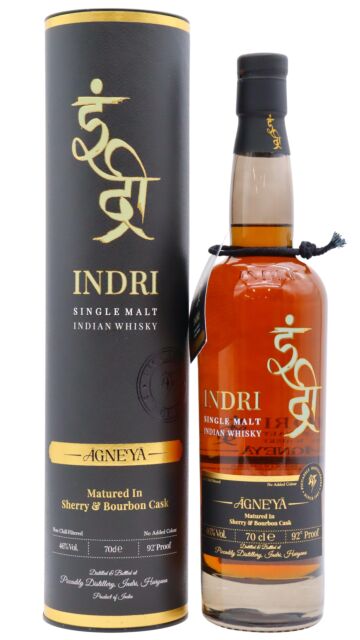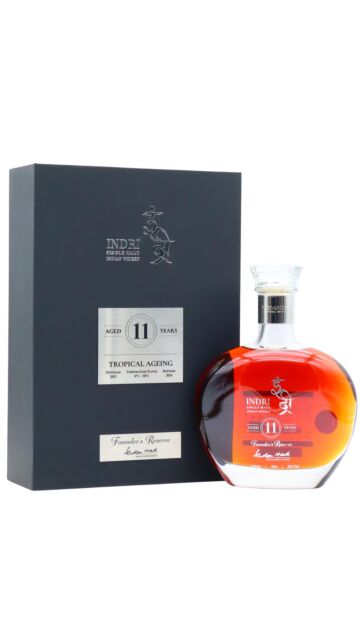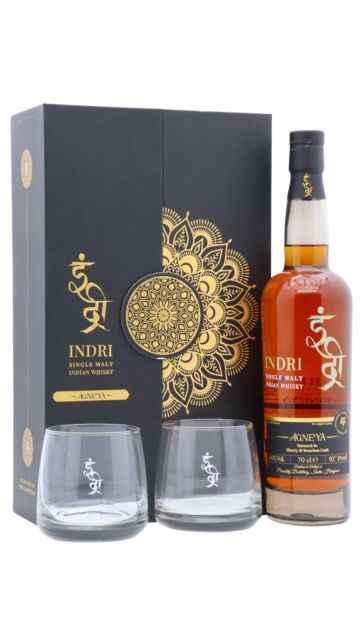

























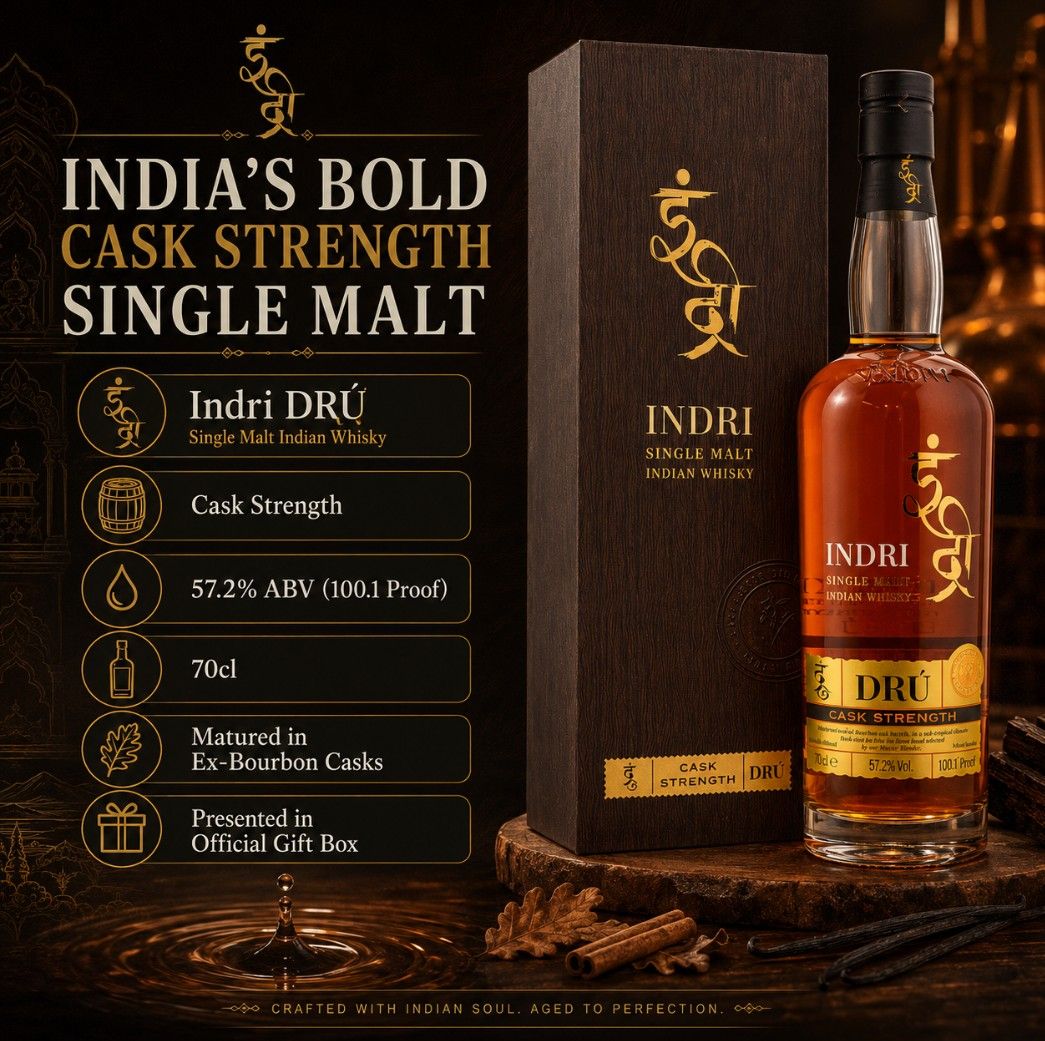
Indian single malt has developed into one of the most exciting areas of modern whisky, with distilleries across the country producing increasingly confident, distinctive releases. Indri-Dru Cask Strength Indian Single Malt Whisky is a particularly powerful example, bringing together selected ex-bourbon barrels and presenting the whisky at a natural strength of 57.2% ABV.
Produced by Piccadily Distilleries in Indri, Haryana, Dru takes the fruit-led style of the distillery’s spirit and amplifies it. Vanilla, mixed fruit, honey, citrus, chocolate and warming oak spice are delivered with the weight and texture expected from a cask-strength bottling.
Unlike the triple-cask Indri-Trini, Dru focuses entirely on ex-bourbon maturation. This gives the whisky a clear and concentrated profile in which tropical and orchard fruit meet vanilla, coconut, dark chocolate and seasoned oak.
For experienced whisky drinkers looking beyond Scotland, Ireland and Japan, Indri-Dru Cask Strength offers a compelling demonstration of what Indian whisky can achieve at full strength.
What Is Indri-Dru Cask Strength?
Indri-Dru is a cask-strength Indian single malt whisky made from selected ex-bourbon barrels.
The individual casks are handpicked and married by Indri’s blending team before the whisky is bottled at 57.2% ABV. Rather than reducing the whisky to a conventional 40% or 46% bottling strength, Dru retains considerably more of its natural concentration, texture and oak-derived character.
The result is fuller and more intense than the core Indri-Trini expression. It delivers the familiar fruit and sweetness associated with Indri, but with greater body, stronger spice and a longer, more warming finish.
The standard bottle contains 70cl and is supplied in its original presentation box. HTFW also offers an Indri-Dru Cask Strength miniature, providing a useful way to sample the whisky before opening a full bottle.
Where Is Indri Whisky Made?
Indri whisky is made by Piccadily Distilleries in Indri, Haryana, in northern India.
The distillery is positioned close to the Himalayan foothills and the Yamuna basin. Its location provides access to locally grown grain and water while exposing the maturing whisky to the pronounced seasonal temperature changes of northern India.
The name Indri refers to the town in which the whisky is produced. The company also connects the name with the Sanskrit word indriya, referring to the five senses.
This sensory idea runs throughout the brand’s presentation, with the whisky positioned around the combined experience of sight, aroma, flavour, texture and finish.
Those looking to explore the wider range can browse all current Indri whisky available from Hard To Find Whisky.
The Rise of Indian Single Malt Whisky
For many years, international discussions about premium whisky focused largely on Scotland, Ireland, the United States and Japan. Indian whisky was often associated with high-volume domestic blends rather than internationally recognised single malt.
That perception has changed considerably.
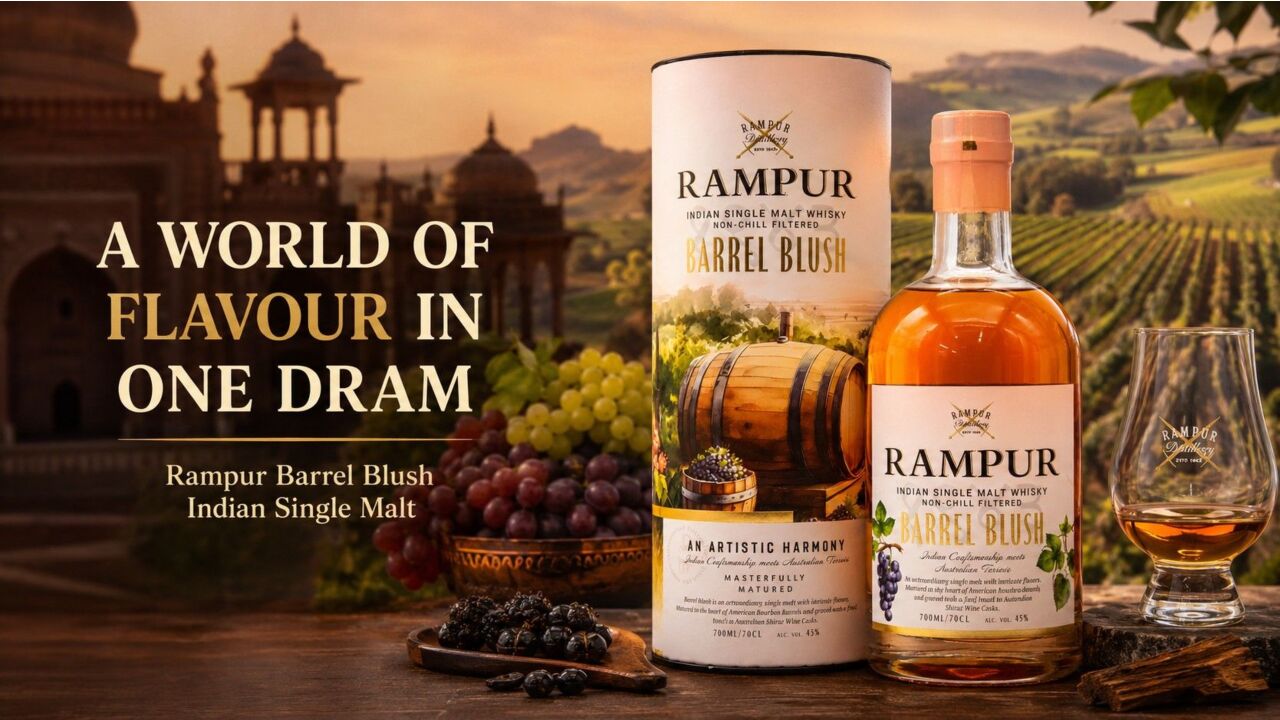
Indian distilleries including Amrut, Paul John, Rampur and Indri have demonstrated that locally produced malt whisky can compete successfully within the wider world whisky category. These producers have combined traditional copper pot distillation and oak maturation with Indian barley, regional climates and increasingly experimental cask programmes.
Indian single malt has also attracted growing international attention through competitions, specialist retailers and whisky bars. Indri-Dru was named Best Indian Single Malt at the 2024 World Whiskies Awards, adding further credibility to the distillery’s cask-strength expression.
Customers interested in exploring the category can discover the full selection of Indian whisky stocked by HTFW.
What Does “Dru” Mean?
The name Dru comes from Sanskrit.
It can mean wood, tree or a vessel made from wood. In ancient Indian mythology, a dru was described as a vessel used to collect and present soma, a ceremonial drink offered to the gods.
The name is particularly appropriate for a whisky whose identity is so closely connected to oak.
Indri-Dru is built around selected ex-bourbon barrels, with those casks supplying much of its vanilla, coconut, honey, spice and woody structure. The reference to a wooden vessel therefore connects the whisky’s modern maturation with a much older Indian linguistic and cultural tradition.
Is Indri-Dru a Single Malt?
Yes. Indri-Dru is an Indian single malt whisky.
A single malt must be produced at one distillery from malted barley and distilled in pot stills. Although several individual barrels may be combined before bottling, all of the whisky must come from the same distillery.
Dru is made entirely at Piccadily Distilleries and combines selected ex-bourbon barrels of Indri single malt.
It should not be confused with blended whisky, which may combine malt whisky with grain whisky or spirit from more than one distillery.
Is Indian Single Malt the Same as Scotch Whisky?
Indian single malt and Scotch single malt share several broad production principles, but they are not the same legal category.
Scotch whisky must be distilled and matured in Scotland under the requirements of the Scotch Whisky Regulations. Indri-Dru is distilled and matured in India, so it cannot be called Scotch.
Both styles can involve:
- Malted barley
- Fermentation with yeast
- Copper pot distillation
- Oak-cask maturation
- The blending of multiple casks from one distillery
The differences come from the ingredients, distillery character, climate, cask management and local production regulations.
Indian whisky often matures in considerably warmer conditions than Scotch. That changes the rate at which the spirit interacts with the oak and can create concentrated fruit, vanilla and spice over a comparatively shorter period.
Why Does Whisky Mature Differently in India?
India’s climate has a major effect on whisky maturation.
Oak casks expand and contract as temperatures change. In warmer conditions, the spirit moves more actively into and out of the wood, increasing contact with oak compounds.
This can accelerate the development of:
- Vanilla
- Caramel
- Coconut
- Toasted oak
- Baking spice
- Darker colour
- Concentrated fruit
Warm maturation also increases evaporation. The amount of spirit lost from a cask each year can be considerably greater than in Scotland, reducing the amount of mature whisky available for bottling.
This faster interaction does not mean Indian whisky is simply an accelerated copy of Scotch. The spirit develops under different conditions and can show its own concentrated tropical-fruit, spice and oak profile. Industry coverage of modern Indian single malt frequently identifies the warm climate and local grain as important parts of the category’s identity.
Does Indri-Dru Have an Age Statement?
No. Indri-Dru is released without a stated age.
A non-age-statement whisky can contain spirit of different ages, but the producer chooses to focus on flavour, maturation and cask selection rather than placing a number on the label.
This approach gives the whisky maker greater flexibility. Barrels can be selected when they have developed the required balance of fruit, sweetness, oak and strength rather than being chosen to meet a fixed age declaration.
Age statements remain useful information, but they are not the only indicator of quality. This is especially relevant in warmer whisky-producing regions, where the spirit can develop pronounced oak influence and maturity more quickly than it would in a cooler warehouse.
With Indri-Dru, the defining details are its ex-bourbon maturation, cask-strength presentation and bold flavour rather than its age.
What Does Cask Strength Mean?
Cask strength means a whisky is bottled at, or close to, the alcoholic strength at which it leaves the cask.
Most commercial whiskies are reduced with water before bottling, commonly to 40%, 43% or 46% ABV. This creates a consistent drinking strength and increases the number of bottles that can be produced from each cask.
A cask-strength whisky receives much less dilution. It therefore retains more of its original concentration, oils and texture.
Indri-Dru is bottled at 57.2% ABV. At this strength, it delivers a more powerful aroma, a fuller mouthfeel and a stronger warming sensation than the standard Indri-Trini at 46% ABV.
Cask strength does not mean the whisky must be consumed neat. It gives the drinker control over dilution, allowing water to be added gradually according to personal preference.
Is Indri-Dru Bottled at Natural Strength?
Indri-Dru is presented as a cask-strength expression at 57.2% ABV.
The selected barrels are married before bottling, so the final strength represents the combined batch rather than the strength of one individual single cask.
This distinction is important.
A single-cask whisky comes from one barrel. A cask-strength whisky can combine several casks while still being bottled at a high, minimally reduced strength.
Dru therefore offers the consistency and balance of a carefully assembled batch alongside the intensity associated with cask-strength whisky.
Is Indri-Dru Non-Chill Filtered?
Yes. The official product presentation identifies Indri-Dru as non-chill filtered and made without added colour.
Chill filtration is a process used to remove certain fatty acids, proteins and esters that can cause whisky to become cloudy at low temperatures or after water is added.
Leaving a whisky non-chill filtered can retain more of its natural oils and texture. At 57.2% ABV, Dru already has enough alcoholic strength to reduce the likelihood of haze under ordinary conditions.
The whisky’s deep amber-gold colour is also presented as natural rather than created through added caramel colouring.
What Casks Are Used for Indri-Dru?
Indri-Dru is matured in ex-bourbon barrels.
These casks previously held American bourbon before being shipped for use in India. American whiskey regulations generally require bourbon to mature in new charred oak containers, so the barrels still contain a considerable amount of flavour when they are reused for malt whisky.
Ex-bourbon casks commonly bring:
- Vanilla
- Coconut
- Caramel
- Honey
- Citrus
- Toasted oak
- Cinnamon
- Nutmeg
- Sweet wood spice
Indri’s official presentation specifically highlights vanilla and coconut as central contributions from the ex-bourbon wood.
In Dru, the casks also allow the fruit character of the spirit to remain prominent. The whisky is rich and oak-influenced, but it does not depend on sherry or wine casks for colour and sweetness.
Why Ex-Bourbon Casks Work Well in India
Ex-bourbon barrels provide a useful balance between active oak and spirit character.
Because the cask has already held bourbon, some of the strongest raw oak compounds have been extracted during its first use. The barrel can still supply abundant vanilla, coconut, caramel and spice, but it is generally less aggressive than completely new oak.
This is particularly valuable in India’s warm climate. A highly active new oak barrel could dominate the spirit relatively quickly, whereas a well-managed ex-bourbon cask allows fruit and malt character to remain clearer.
For Indri-Dru, the casks bring sweetness and structure while preserving the whisky’s mixed-fruit, citrus and honeyed qualities.
How Is Indri-Dru Different from Indri-Trini?
Indri-Trini and Indri-Dru are both single malts from the same distillery, but their cask programmes and bottling strengths are very different.
Indri-Trini Three Wood Indian Single Malt is matured across three types of cask:
- Ex-bourbon
- Ex-French wine
- Pedro Ximénez sherry
It is bottled at 46% ABV and offers a broad profile of caramelised pineapple, vanilla, black tea, raisins, citrus and nuts.
Indri-Dru uses selected ex-bourbon barrels and is bottled at 57.2% ABV.
Indri-Trini Offers
- Softer alcohol strength
- Greater cask variety
- More wine and sherry influence
- Raisins and darker fruit
- An accessible introduction to Indri
Indri-Dru Offers
- Higher strength
- A fuller texture
- More concentrated vanilla
- Stronger bourbon-oak influence
- Greater spice and warmth
- A more powerful finish
Trini is the easier starting point for someone new to the distillery. Dru is the natural progression for drinkers seeking a bolder, less diluted version of Indri’s house style.
What Does Indri-Dru Taste Like?
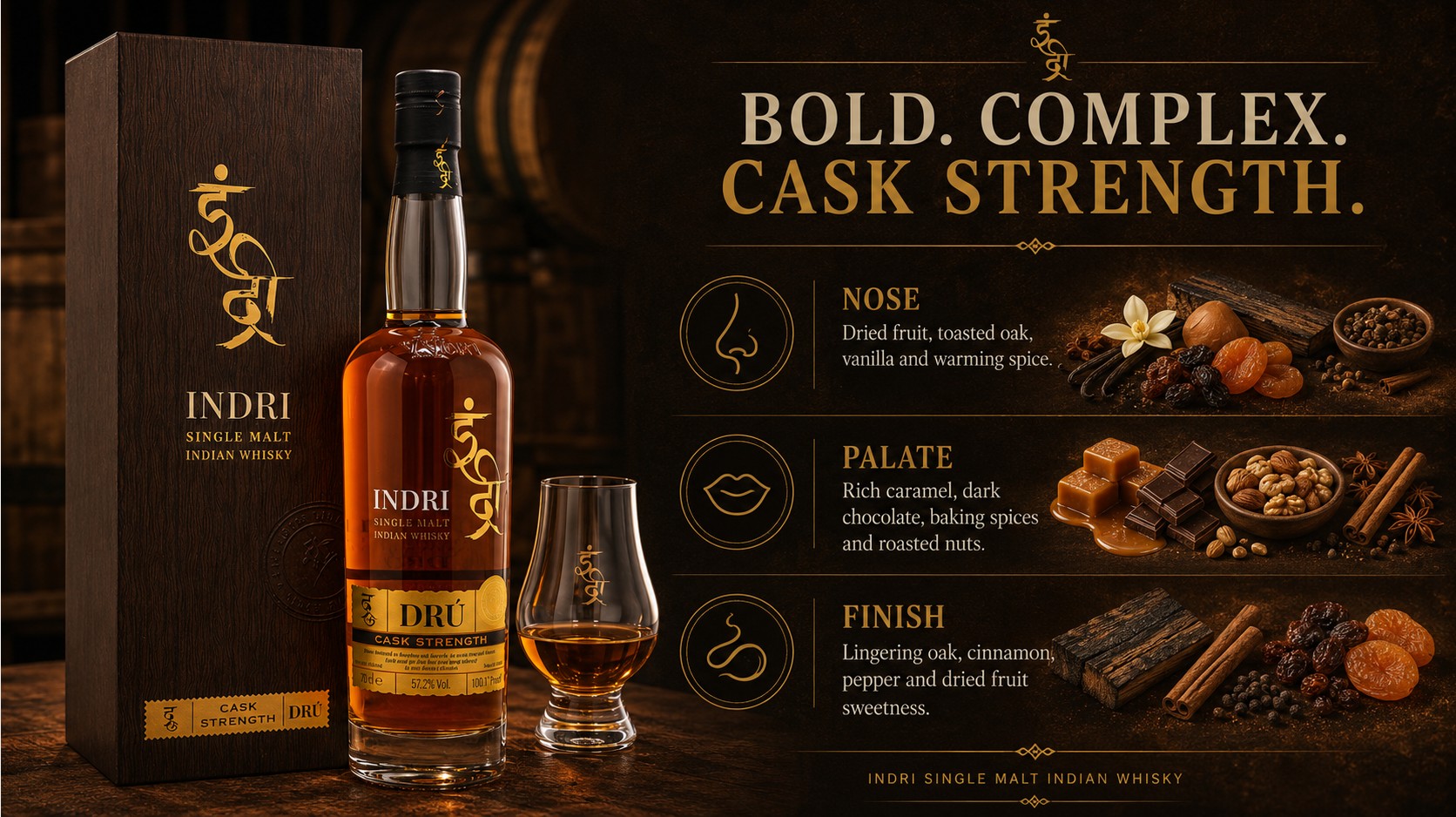
Indri-Dru is rich, fruit-led and powerful, with ex-bourbon sweetness balanced by citrus, spice and oak.
Colour
Deep amber-gold with honeyed copper highlights and a warm bronze glow.
Its natural colour reflects active oak maturation in a warm climate rather than the use of added colouring.
Nose
Mixed fruit and vanilla appear immediately, followed by bright citrus, honey and gentle spice.
With time in the glass, deeper notes of dark chocolate, toasted oak and tropical fruit begin to develop. The high strength gives the aroma considerable intensity, so a little water can reveal additional layers.
Palate
Sweet fruit coats the palate before moving into rich vanilla, warming spices and dark chocolate.
Ex-bourbon oak brings structure, coconut sweetness and seasoned wood. Citrus keeps the whisky lively, cutting through the heavier vanilla and chocolate notes.
The texture is full-bodied and mouth-coating, with the 57.2% ABV providing noticeable heat without obscuring the fruit.
Finish
Long, layered and warming.
Fruit, vanilla and spice remain present, followed by oak, chocolate and a lingering mouth-coating richness.
Is Indri-Dru Sweet?
Indri-Dru has a pronounced natural sweetness, but it is not a whisky liqueur and does not rely on added sugar.
Its sweet character comes largely from:
- Ex-bourbon oak
- Vanilla
- Coconut
- Honey
- Ripe fruit
- Caramelised notes
- Chocolate
The whisky also has enough citrus, spice and wood to avoid becoming cloying.
At full strength, the sweetness is dense and concentrated. Adding a small amount of water can make the fruit appear brighter and reduce some of the heavier oak and alcohol warmth.
Is Indri-Dru Smoky or Peated?
Indri-Dru is not positioned as a peated or heavily smoky whisky.
Its dominant flavours are fruit, vanilla, honey, citrus, chocolate and oak spice.
Any toasted or charred notes come primarily from the ex-bourbon barrels rather than from peat smoke in the malt.
Drinkers looking for smoke within Indian whisky may prefer an expression such as Amrut Peated Cask Strength Indian Single Malt, which combines high strength with a distinctly peated profile.
Dru is better suited to those who want power and oak concentration without medicinal or coastal smoke.
Is Indri-Dru Spicy?
Yes. The whisky has a noticeable warming spice, particularly at full strength.
The spice can suggest:
- Cinnamon
- Nutmeg
- Pepper
- Clove
- Ginger
- Toasted oak
Some of this comes from the oak, while the 57.2% ABV intensifies the warming sensation.
The spice is balanced by vanilla, fruit, chocolate and honey. It feels rich and energetic rather than dry or austere.
Adding a little water usually softens the alcohol heat and allows sweeter baking-spice notes to become more apparent.
How Should You Drink Indri-Dru?
Indri-Dru can be enjoyed neat, with water or over ice, but its cask strength makes a considered approach worthwhile.
Neat
Pour a small measure into a tulip-shaped whisky glass and allow it to rest for several minutes.
Avoid nosing too deeply at first. Keep the glass slightly below the nose and take short, gentle breaths until the alcohol settles.
The initial neat pour provides the clearest impression of the whisky’s full texture and concentration.
With Water
Water is particularly useful with a whisky bottled at 57.2% ABV.
Begin with a few drops, taste the whisky and add more gradually. Water can reveal additional fruit, vanilla, citrus and honey while reducing the intensity of the oak and alcohol.
There is no universal correct amount. Some drinkers may prefer only a few drops, while others may reduce the whisky closer to conventional bottling strength.
Over Ice
A large ice cube can make Dru more accessible by gradually chilling and diluting the whisky.
The lower temperature emphasises vanilla, coconut and chocolate while softening the sharper spice. Some aromatic complexity will be reduced, but the result can be particularly enjoyable after dinner.
In a Highball
Although Dru is primarily designed as a powerful sipping whisky, it can produce a flavourful highball.
Use a smaller measure than usual, add plenty of ice and top with chilled soda water. A strip of orange peel complements its citrus and vanilla notes.
Should Water Be Added to Cask-Strength Whisky?
Adding water to cask-strength whisky is entirely normal.
Water lowers the alcoholic strength and changes the balance of volatile aroma compounds. This can make certain flavours easier to detect while reducing the numbing effect of high alcohol.
With Indri-Dru, water can bring forward:
- Tropical fruit
- Citrus
- Honey
- Vanilla
- Coconut
- Milk chocolate
- Softer baking spice
It can also make the oak appear less dominant.
Add water slowly because it is easy to dilute a whisky further but impossible to remove water once it has been added.
What Is the Best Glass for Indri-Dru?
A tulip-shaped tasting glass is the best option for exploring Indri-Dru in detail.
The bowl gives the whisky room to breathe, while the narrower opening concentrates the aromas. This makes it easier to separate the fruit, vanilla, citrus, chocolate and oak.
A traditional tumbler is more suitable when serving the whisky over ice.
Those building a home tasting setup can explore the range of whisky glasses available from HTFW.
What Food Goes with Indri-Dru?
Indri-Dru has enough strength and concentration to accompany richer foods that might overwhelm a lighter whisky.
Indian Food
The whisky works especially well with dishes that combine sweet, savoury and spiced flavours.
Suitable options include:
- Tandoori lamb
- Butter chicken
- Lamb rogan josh
- Paneer tikka
- Smoked aubergine
- Mildly spiced kebabs
- Cashew-based curries
- Biryani
- Grilled meats with cardamom and cumin
Avoid dishes with extreme chilli heat, which can exaggerate the whisky’s alcohol.
Meat
Try Dru with:
- Barbecued ribs
- Roast pork
- Charred steak
- Glazed duck
- Smoked brisket
- Spiced lamb
- Pulled pork
- Cured meats
The whisky’s vanilla and honey complement sweet glazes, while the oak and spice stand up to roasted or charred flavours.
Cheese
Good choices include:
- Mature Cheddar
- Gouda
- Comté
- Manchego
- Smoked cheese
- Blue cheese
- Baked Camembert
Aged and nutty cheeses work particularly well with its bourbon-oak sweetness.
Desserts
Suitable desserts include:
- Dark chocolate tart
- Chocolate orange
- Vanilla cheesecake
- Coconut pudding
- Mango dessert
- Caramelised pineapple
- Sticky toffee pudding
- Bread and butter pudding
- Spiced fruit cake
Chocolate, vanilla, coconut and tropical fruit naturally echo flavours found in the whisky.
Indri-Dru and Dark Chocolate
Dark chocolate is one of the strongest simple pairings for Indri-Dru.
The whisky already carries a clear chocolate note, while its high strength can stand up to cocoa bitterness. Chocolate containing orange, sea salt, chilli or roasted nuts can introduce additional contrast.
A chocolate with approximately 60% to 75% cocoa provides enough intensity without becoming too bitter.
Allow a small piece of chocolate to soften on the palate before taking a sip of whisky. The combination can bring out more vanilla, honey and fruit in the dram.
Indri-Dru Compared with Amrut Cask Strength
Amrut is one of the most established names in Indian single malt, making it a natural comparison with Indri.
Both producers use India’s warm climate to create concentrated whisky, and both offer high-strength expressions.
Indri-Dru places particular emphasis on:
- Ex-bourbon vanilla
- Mixed fruit
- Citrus
- Honey
- Chocolate
- A rounded, mouth-coating texture
Amrut cask-strength releases can vary considerably according to the expression, with some showing more malt, tropical fruit, spice or peat.
For those seeking smoke, Amrut Peated Cask Strength provides a notably different experience. It combines cask strength with a much more obvious peated character.
Dru is the stronger option for drinkers who prefer unpeated whisky centred on bourbon oak, fruit and vanilla.
Indri-Dru Compared with Paul John
Paul John produces Indian single malt in Goa, giving its whisky a different regional identity and maturation environment.
Paul John offers both unpeated and peated styles, along with sherry-cask releases such as Paul John Pedro Ximénez Select Cask.
A Pedro Ximénez-influenced Paul John typically emphasises:
- Raisins
- Figs
- Dark fruit
- Chocolate
- Sweet spice
- Sherry richness
Indri-Dru focuses more heavily on:
- Vanilla
- Coconut
- Citrus
- Honey
- Mixed fruit
- Bourbon oak
Paul John Pedro Ximénez is the better choice for a sherry-led profile. Dru is better for drinkers who want the concentrated clarity of ex-bourbon maturation.
Indri-Dru Compared with Rampur
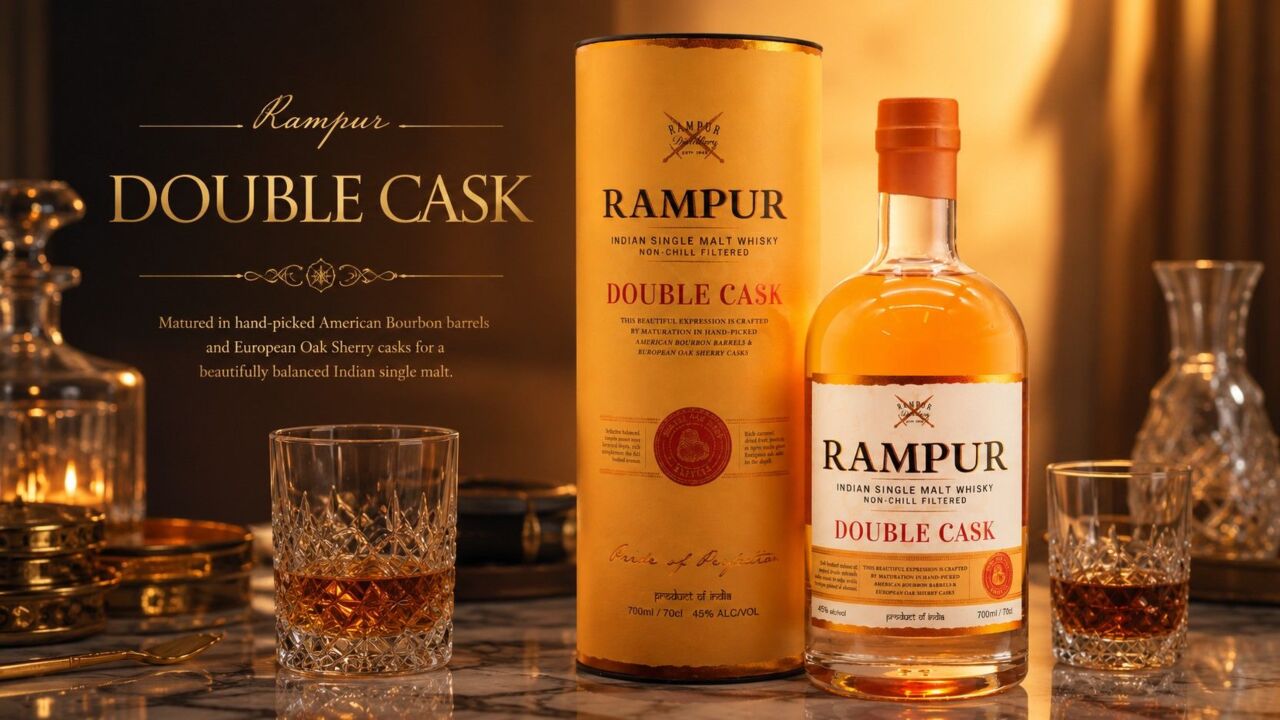
Rampur single malt is produced in Uttar Pradesh and is another important name in the development of premium Indian whisky.
Rampur expressions frequently emphasise tropical fruit, floral notes, honey and elegant spice. Some releases use wine or fortified-wine casks to add further layers.
Indri-Dru is generally more forceful. Its 57.2% ABV and concentrated bourbon-oak profile create greater weight, vanilla and warming spice.
Rampur may appeal to drinkers looking for a softer and more aromatic Indian malt. Dru suits those who prefer a bold, high-strength whisky with considerable texture.
Indri-Dru Compared with Bourbon
Although Dru is an Indian single malt, ex-bourbon casks give it several flavours that will feel familiar to bourbon drinkers.
Shared characteristics can include:
- Vanilla
- Caramel
- Coconut
- Charred oak
- Cinnamon
- Honey
- Baking spice
The underlying spirit is very different.
Bourbon is made from a mash containing at least 51% corn and matured in new charred oak. Indri-Dru is a malt whisky made from barley and matured in barrels that have already held bourbon.
Dru therefore combines bourbon-cask flavours with the fruit, cereal and texture of malt whisky.
It can be an excellent bridge into world single malt for bourbon drinkers who enjoy higher-proof bottlings.
Indri-Dru Compared with Scotch Single Malt
A direct comparison depends heavily on the Scotch whisky selected.
An unpeated bourbon-cask Scotch may share notes of vanilla, citrus, honey and orchard fruit. However, Scotland’s cooler climate generally produces a slower pattern of oak interaction.
Indri-Dru often feels more concentrated and immediately oak-driven, with richer tropical fruit and a stronger sense of warmth.
Scotch may offer:
- Slower maturation
- More restrained oak
- Fresher cereal character
- Greater regional diversity
- A wider range of age statements
Indri-Dru offers:
- Concentrated fruit
- Pronounced vanilla and coconut
- Full cask-strength texture
- Warm-climate maturation
- A distinctive modern Indian identity
The purpose is not to identify one as superior. They provide different expressions of malt whisky shaped by their climate, ingredients and production environment.
Is Indri-Dru a Good Whisky for Beginners?
Indri-Dru is approachable in flavour but powerful in strength.
Its vanilla, honey, fruit and chocolate notes are easy to enjoy, but 57.2% ABV can feel intense to someone completely new to whisky.
A beginner can still enjoy Dru by adding water gradually or serving it over a large ice cube. However, Indri-Trini Three Wood at 46% ABV provides a softer introduction to the distillery.
Dru is particularly suitable for:
- Experienced single malt drinkers
- Bourbon drinkers accustomed to barrel-proof releases
- Fans of cask-strength Scotch
- Drinkers interested in Indian whisky
- Anyone who enjoys ex-bourbon maturation
Is Indri-Dru a Good Gift?
Indri-Dru makes an excellent gift for an adventurous whisky drinker.
It combines a rising Indian distillery, a recognised competition award, a cask-strength presentation and a clear ex-bourbon maturation story.
It is suitable for:
- Birthdays
- Father’s Day
- Christmas
- Retirements
- Promotions
- Whisky collectors
- World whisky enthusiasts
- High-strength whisky drinkers
- Bourbon fans
- Indian whisky explorers
The original box adds to its presentation, while the 57.2% ABV immediately distinguishes it from more conventional bottles.
The Indri-Dru miniature also works well as a smaller gift, stocking filler or addition to a world whisky tasting selection.
Has Indri-Dru Won Any Awards?
Indri-Dru received the Best Indian Single Malt award at the 2024 World Whiskies Awards.
It has since continued to attract international recognition, including a Best World Whiskey title at the inaugural Miami Global Spirit Awards in 2025.
Awards are not a guarantee that every drinker will enjoy a whisky, but they do demonstrate that Dru has been assessed positively within international competition settings.
More importantly, the whisky has a clear and distinctive identity: high strength, ex-bourbon maturation and a concentrated fruit-and-vanilla profile.
Is Indri-Dru Collectable?
Indri-Dru is primarily a drinking whisky rather than an individually numbered limited release.
However, it holds interest for collectors because Indri is a relatively young international brand and Dru represents its first cask-strength core expression.
Early batches, discontinued packaging and export-market variations may become more desirable as the range develops.
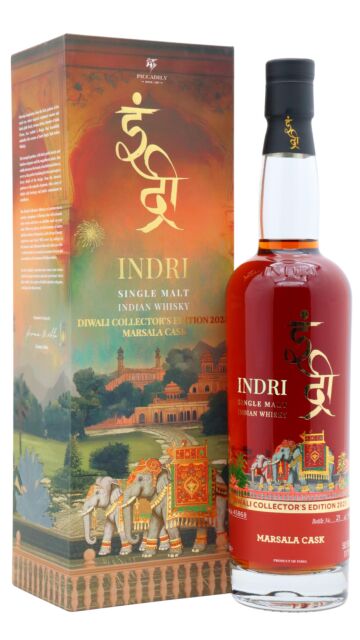
Collectors may also look towards the distillery’s limited Indri Diwali Collector’s Editions, which have been released at high strength and in more restricted quantities.
Dru remains the more accessible way to experience Indri at cask strength without moving into the pricing of rare collector releases.
How Should Indri-Dru Be Stored?
Store the bottle upright in a cool, dark place away from direct sunlight and significant changes in temperature.
Whisky should not be stored on its side for long periods because the high alcohol content can damage the cork.
An unopened bottle can remain stable for many years when stored correctly. The whisky does not continue to mature in glass, so keeping it for another decade will not increase its age.
Once opened:
- Keep the closure tightly sealed.
- Return the bottle to a dark cupboard.
- Avoid excessive heat.
- Do not leave it in direct sunlight.
- Consider transferring the whisky to a smaller bottle when very little remains.
Oxidation is usually gradual, but a nearly empty bottle contains more air and may change more quickly.
Frequently Asked Questions
What is Indri-Dru?
Indri-Dru is a cask-strength Indian single malt whisky made from selected ex-bourbon barrels.
Where is Indri-Dru made?
It is produced by Piccadily Distilleries in Indri, Haryana, India.
What does Dru mean?
Dru is a Sanskrit word associated with wood, trees or a wooden vessel. It also refers to a vessel used for soma in ancient Indian mythology.
What is the alcohol strength?
Indri-Dru is bottled at 57.2% ABV.
Is Indri-Dru cask strength?
Yes. It is presented as Indri’s cask-strength expression.
What casks are used?
The whisky is matured in selected ex-bourbon barrels.
Is Indri-Dru a single cask?
No. Selected barrels are married together before bottling. It is a cask-strength batch rather than a single-cask release.
Does it have an age statement?
No. Indri-Dru is released without a stated age.
Is it chill filtered?
No. The whisky is presented as non-chill filtered.
Does it contain added colour?
No. Indri states that the expression has no added colour.
Is Indri-Dru peated?
No. Its profile is centred on fruit, vanilla, honey, citrus, chocolate and oak rather than peat smoke.
What does Indri-Dru taste like?
It offers mixed fruit, vanilla, citrus, honey, warming spice, dark chocolate and ex-bourbon oak.
Is it sweet?
It has a rich natural sweetness from vanilla, fruit, honey and bourbon oak, balanced by citrus, spice and wood.
Should water be added?
A little water is recommended for many drinkers because it can open the fruit and reduce the intensity of the 57.2% ABV.
Can it be served over ice?
Yes. A large ice cube gradually softens the alcohol and emphasises vanilla, coconut and chocolate.
Is Indri-Dru good for bourbon drinkers?
Yes. Its high strength and pronounced vanilla, coconut and oak flavours make it an excellent entry into Indian single malt for fans of barrel-proof bourbon.
Is it suitable for beginners?
Its flavour is approachable, but its strength can be challenging. Beginners may prefer to add water or begin with Indri-Trini at 46% ABV.
Has Indri-Dru won awards?
It was named Best Indian Single Malt at the 2024 World Whiskies Awards and received further international recognition in 2025.
Does it come in a box?
The 70cl bottle available from HTFW is supplied in its original presentation box.
Why Indri-Dru Stands Out
Indri-Dru succeeds because it does not attempt to hide its strength or oak influence.
The whisky is deliberately full-bodied and concentrated. Its ex-bourbon barrels bring abundant vanilla, coconut, honey and spice, while the distillery’s spirit contributes mixed fruit, citrus and chocolate.
At 57.2% ABV, these flavours arrive with considerable weight. Water can soften and reshape the whisky, but the underlying character remains clear.
Dru also offers an effective contrast with the triple-cask Indri-Trini. Where Trini uses bourbon, wine and Pedro Ximénez casks to create layers of fruit and richness, Dru narrows the focus to ex-bourbon wood and increases the strength.
That clarity makes it a useful bottle for understanding both the Indri spirit and the influence of bourbon casks under Indian maturation conditions.
It is powerful without relying on peat, rich without depending on sherry and sweet without becoming simplistic.
Buy Indri-Dru Cask Strength Indian Single Malt Whisky
Indri-Dru Cask Strength Indian Single Malt Whisky is a bold, full-strength release that showcases the growing confidence of Indian single malt.
Selected ex-bourbon barrels bring vanilla, coconut, honey and seasoned oak, while the whisky itself delivers mixed fruit, citrus, chocolate and warming spice. Bottling at 57.2% ABV preserves a rich texture and gives the drinker complete control over dilution.
Enjoy it neat to experience its full concentration, add water to reveal greater fruit and sweetness, or serve it over a large ice cube for a softer after-dinner dram.
Shop Indri-Dru Cask Strength, explore the wider Indri whisky collection, or discover more releases from the full Indian whisky range at Hard To Find Whisky.