






























English whisky has developed rapidly over the past decade, with a growing number of distilleries demonstrating how locally grown barley, patient fermentation and carefully selected casks can create whiskies with a distinctive identity.
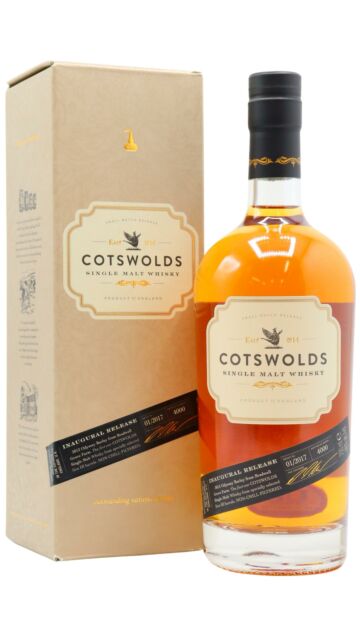
Cotswolds Signature English Single Malt Whisky stands among the leading examples of this modern English whisky movement.
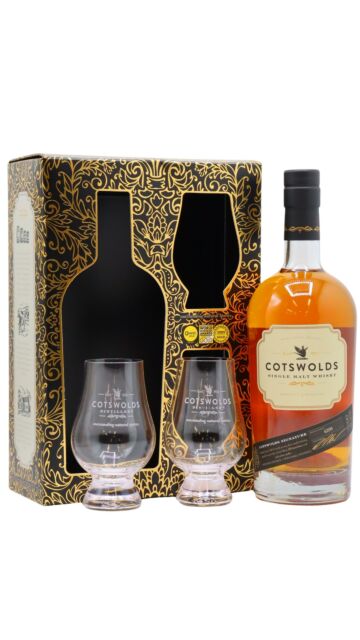
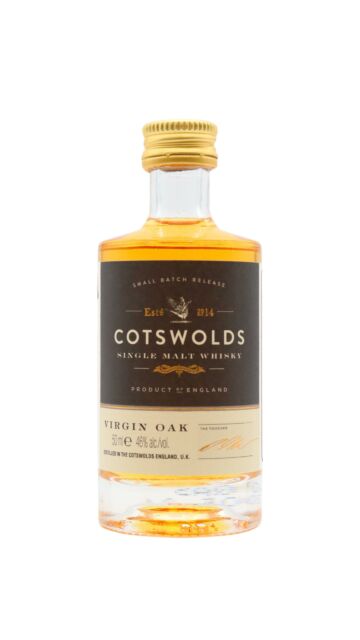
Produced at Cotswolds Distillery in the rolling countryside of south-west England, this richly flavoured single malt is made using locally grown barley and matured in a combination of specially prepared red wine casks and first-fill ex-bourbon barrels.
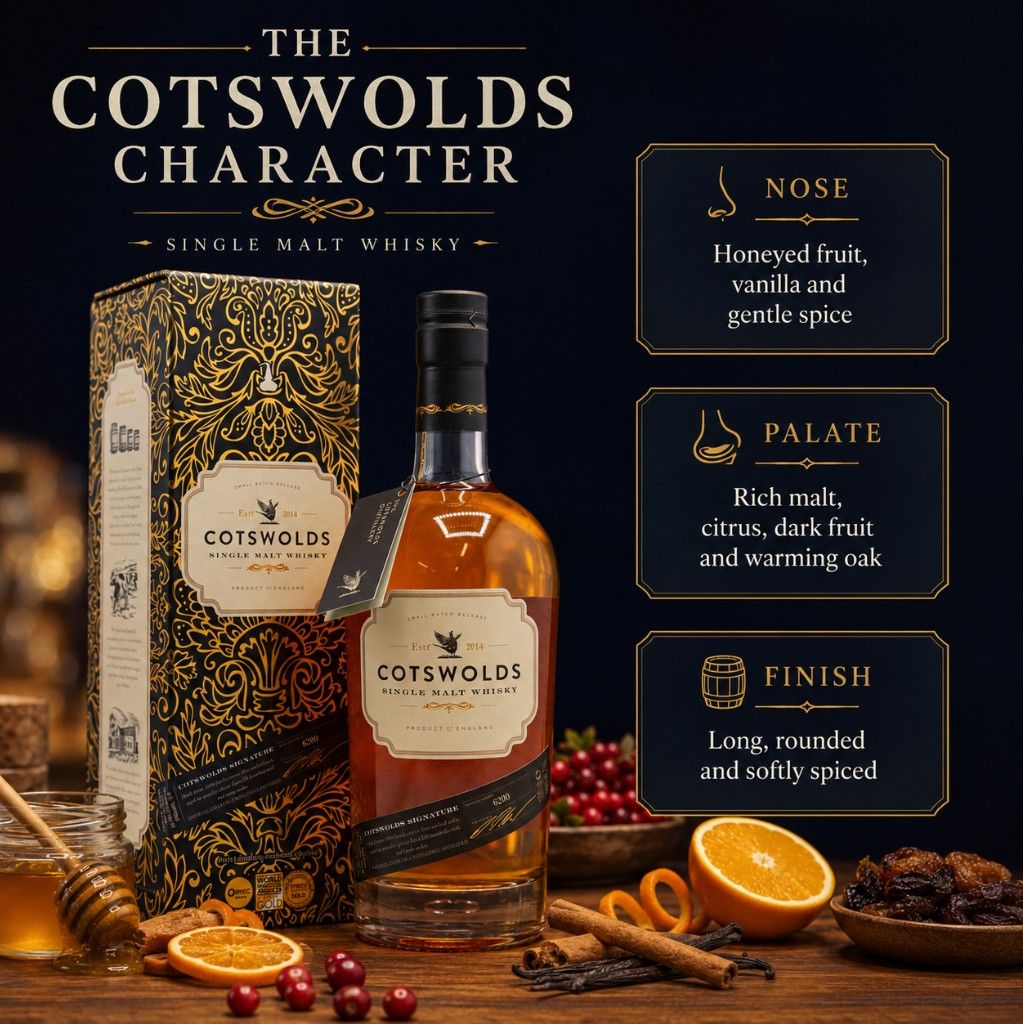
The result is a generous and fruit-forward whisky filled with honey, butterscotch, ripe stone fruit, red berries, dark sugar and warming spice.
Bottled at 46% ABV without chill filtration or added colouring, it retains a full texture and natural depth of flavour. It is approachable enough for drinkers discovering English whisky, while offering enough character and cask influence to interest experienced single malt enthusiasts.
The Story of Cotswolds Distillery
Cotswolds Distillery was established in 2014 by founder Daniel Szor.
After working in finance in London, Szor moved with his family to the Cotswolds. Surrounded by fields of barley, he recognised the potential to create a whisky that reflected the landscape and agricultural character of the area.
The distillery was established near Stourton in Warwickshire, within the Cotswolds Area of Outstanding Natural Beauty.
From the beginning, the objective was to produce spirits with a strong connection to their place of origin. Rather than purchasing anonymous bulk grain, the distillery began working with local farmers to source barley grown in and around the Cotswolds.
The first spirit was distilled in September 2014. After completing the legally required minimum maturation period, Cotswolds released its first English single malt whisky in 2017.
That inaugural release helped establish the distillery as an important name within the growing English whisky category.
The Signature Single Malt continues to represent the core Cotswolds house style: ripe fruit, rich malt, active oak and a substantial mouthfeel.
What Is English Single Malt Whisky?
English single malt whisky follows many of the same basic principles associated with single malt produced elsewhere.
It must be made at a single distillery using malted barley, water and yeast before being distilled and matured in wooden casks.
However, English whisky is not Scotch whisky.
Scotch must be produced and matured in Scotland under the requirements of the Scotch Whisky Regulations. Cotswolds Signature is distilled and matured in England, placing it within the expanding English whisky category.
The lack of centuries-old regional conventions gives English producers considerable freedom to develop their own production styles.
Some distilleries emphasise traditional ex-bourbon maturation, while others work extensively with wine, sherry, fortified wine and virgin oak casks. Differences in fermentation, still design, climate and barley selection also allow each producer to establish a recognisable identity.
Cotswolds Distillery has become particularly associated with locally grown barley, long fermentation and active casks that create a full, fruit-led style.
Locally Grown Cotswolds Barley
Barley lies at the heart of every single malt whisky, but its role can sometimes be overshadowed by discussions of age and cask type.
Cotswolds Distillery places the grain at the centre of its identity.
The barley used for the Signature Single Malt is grown locally in the Cotswolds. This supports nearby farming communities while giving the whisky a clear connection to the landscape surrounding the distillery.
Once malted, the barley is milled and combined with hot water to extract fermentable sugars. The resulting sweet liquid, known as wort, becomes the foundation of the whisky.
Using high-quality local barley does not mean that the finished whisky will literally taste of the fields in which it was grown. However, the grain contributes cereal sweetness, malt richness and texture before fermentation and maturation introduce further layers of fruit and oak.
This locally rooted approach distinguishes Cotswolds from larger whisky producers that may source barley from a much wider geographical area.
Long Fermentation and Fruity New-Make Spirit
Fermentation is one of the most important stages in determining the flavour of a whisky before it enters the cask.
Cotswolds uses an extended fermentation lasting approximately 90 hours. This gives the yeast and naturally occurring microorganisms more time to create fruity and aromatic compounds within the wash.
Longer fermentation can encourage flavours associated with orchard fruit, stone fruit, flowers and citrus.
The fermented wash is then distilled in traditional copper pot stills. Careful control of the distillation cut allows the team to retain the fresh and fruity qualities developed during fermentation.
The resulting new-make spirit is designed to carry plenty of character into maturation.
This is important because active wine and bourbon casks can contribute significant flavour. A light or neutral spirit could easily become overwhelmed by rich oak. Cotswolds instead creates a robust, fruity new make capable of integrating with strong cask influence.
STR Red Wine Casks Explained
One of the defining features of Cotswolds Signature Single Malt is its use of STR red wine barriques.
STR stands for shaved, toasted and re-charred.
The process was developed and popularised within modern whisky production by the late whisky consultant Dr Jim Swan. It involves taking used red wine casks and carefully treating their interior surfaces before they are filled with whisky.
First, a thin layer of wood is shaved from the inside of the cask. This removes part of the previous wine saturation and exposes fresh oak beneath.
The cask is then toasted, allowing heat to break down compounds within the wood and develop flavours associated with vanilla, caramel, spice and sweetness.
Finally, the interior is re-charred. This creates an active surface that encourages interaction between the spirit and oak.
The resulting cask retains an influence from the red wine while also behaving more like freshly prepared oak.
For Cotswolds Signature, the STR casks add red berries, dark fruit, spice, chocolate and rich sweetness. They also contribute colour and a substantial texture during a relatively youthful period of maturation.
The Influence of First-Fill Bourbon Barrels
Whisky matured in first-fill ex-bourbon barrels is blended with the STR-matured component to create the final Signature expression.
A first-fill bourbon barrel is one being used to mature another whisky for the first time after previously holding American bourbon.
These barrels tend to deliver a clearer and more active influence than refill casks that have already held Scotch or another malt whisky several times.
American oak ex-bourbon barrels bring vanilla, honey, caramel, coconut, citrus and soft wood spice.
Within Cotswolds Signature, they provide freshness and sweetness around the richer red fruit and spice of the STR casks.
The bourbon-matured whisky prevents the final expression from becoming too dominated by dark fruit or wine tannin. It introduces lighter stone fruit, honey and vanilla while allowing the underlying malt character to remain visible.
The relationship between the two cask types is central to the whisky’s identity.
STR red wine casks deliver richness, colour and spice, while first-fill bourbon barrels add lift, creaminess and balance.
What Does Cotswolds Signature Single Malt Taste Like?
Cotswolds Signature is a rich and openly fruity whisky.
Honey and butterscotch provide the first impression, followed by ripe peach, apricot, red apple and darker berry flavours.
The palate has a substantial texture, helped by the decision to bottle the whisky at 46% ABV without chill filtration.
Dark sugar, malt and caramel sit beneath the fruit, while cinnamon, clove, ginger and nutmeg provide warming structure.
The red wine casks become more apparent through notes of cherry, dried fruit and berry compote. The bourbon barrels contribute vanilla and honey, softening the tannin and keeping the whisky balanced.
Despite its richness, it is not an especially smoky whisky. Its intensity comes from fruit, malt, spice and active oak rather than peat.
Cotswolds Signature Single Malt Tasting Notes
Colour
Rich golden amber with warm copper and red-gold highlights.
Nose
Honey, creamy butterscotch and vanilla lead the aroma, followed by ripe peach, red apple and dark berries. Marzipan, orange peel and gentle floral notes develop alongside cinnamon and toasted oak.
Palate
Full-bodied and richly textured, with malt, dark sugar and caramel supporting ripe stone fruit and red berries. Vanilla and honey balance warming notes of cinnamon, clove, ginger and nutmeg, with a touch of dark chocolate and red wine tannin.
Finish
Long, warming and fruit-led. Honeyed malt, red fruit and vanilla gradually give way to pepper, toasted oak and lingering sweet spice.
Why Is It Bottled at 46% ABV?
Cotswolds Signature Single Malt is bottled at 46% ABV rather than being reduced to the 40% minimum commonly seen in entry-level whisky.
The higher strength carries more aroma, texture and cask character.
It allows the honey, fruit, spice and malt to remain clearly defined, while preserving the whisky’s natural oils.
At 46% ABV, the whisky is still approachable when served neat but can also accept a small amount of water without losing its structure.
This strength has become popular among whisky enthusiasts because it often provides a good balance between intensity and drinkability.
It also supports the distillery’s decision not to chill-filter the whisky.
What Does Non-Chill Filtered Mean?
Whisky naturally contains fatty acids, proteins and flavour compounds that may become cloudy when it is chilled or diluted.
Some producers remove these compounds through chill filtration to ensure that the whisky remains visually clear at lower temperatures.
Cotswolds Signature is bottled without chill filtration.
As a result, the whisky may develop a slight haze when served with ice or water. This is completely natural and does not indicate a problem with the bottle.
By avoiding chill filtration, the distillery retains more of the whisky’s oils and texture.
This contributes to the rich, slightly viscous mouthfeel that helps distinguish Cotswolds Signature from lighter and more heavily filtered whiskies.
The whisky is also presented at its natural colour, without caramel colouring being added to standardise its appearance.
Is Cotswolds Signature a Sherried Whisky?
Cotswolds Signature is not primarily a sherry-cask whisky.
Its deeper fruit and wine notes come from STR red wine barriques rather than traditional Oloroso or Pedro Ximénez sherry casks.
Red wine casks can create flavours that overlap with sherry maturation, including dark berries, dried fruit, spice and chocolate. However, they often retain a fresher red-fruit character and firmer tannic structure.
Drinkers who enjoy sherry-matured whisky may still find plenty to appreciate in Cotswolds Signature.
Those seeking a more direct sherry-cask expression can explore Cotswolds Sherry Cask Matured English Single Malt Whisky, which places the influence of Spanish fortified-wine casks at the centre of the flavour profile.
Is Cotswolds Signature a Smoky Whisky?
Cotswolds Signature is unpeated and is not designed around smoke.
Its main flavours are honey, butterscotch, ripe fruit, berries, vanilla, malt and warming spice.
There may be a light toasted or charred quality from the treated red wine casks, but this should not be confused with peat smoke.
This makes the whisky particularly suitable for drinkers who prefer rich and fruity single malts without the medicinal, earthy or maritime flavours found in heavily peated whisky.
It can also provide an accessible introduction to single malt for drinkers moving from bourbon, brandy or dark rum, as its vanilla, caramel and red-fruit qualities offer several familiar points of reference.
How to Serve Cotswolds Signature Single Malt
The whisky is versatile enough to be enjoyed neat, with water, over ice or in carefully chosen whisky cocktails.
Neat
Serving Cotswolds Signature neat provides the clearest impression of its texture and cask influence.
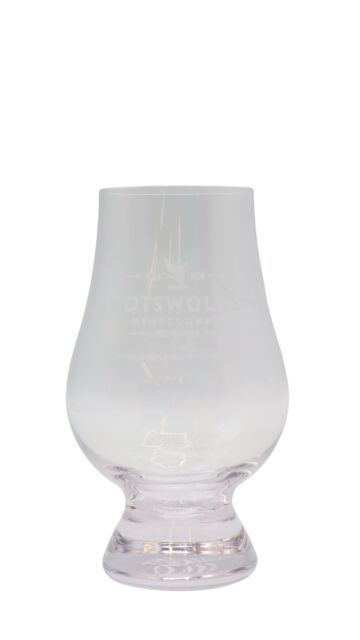
Pour a measure into a tulip-shaped tasting glass and allow it to rest for several minutes.
This gives the initial alcohol time to settle and allows the honey, butterscotch, stone fruit and red berries to open.
A Glencairn whisky glass is particularly effective for concentrating the richer fruit and spice aromas.
With a Few Drops of Water
A small amount of still water softens the spice and reveals more fruit.
Add the water gradually. A few drops can bring forward peach, apple, vanilla and honey while reducing the firmer tannic character of the STR casks.
Over Ice
A large ice cube provides controlled chilling and gradual dilution.
The lower temperature initially emphasises the whisky’s sweetness and creamy texture. As the ice begins to melt, more red fruit, malt and spice become apparent.
In a Whisky Highball
Cotswolds Signature can also be served as a highball with chilled soda water.
The carbonation lifts the citrus, orchard fruit and vanilla while creating a longer and more refreshing drink.
Use plenty of ice and avoid strongly flavoured mixers that could cover the whisky’s natural character.
Food Pairings for Cotswolds Signature
The whisky’s fruit, caramel and spice allow it to work with both sweet and savoury foods.
Mature Cheddar
Aged cheddar provides savoury depth and enough intensity to stand alongside the active cask character.
The cheese contrasts with the whisky’s honey, red fruit and butterscotch while drawing attention to its malt and oak.
Roast Pork with Apple
Roast pork complements the whisky’s rich texture, while apple reflects its orchard-fruit notes.
A lightly caramelised or cider-based sauce works particularly well with the honey, vanilla and warming spice.
Duck with Cherry Sauce
Duck has enough richness to balance the whisky, while cherry sauce connects naturally with the red wine cask influence.
Avoid making the sauce excessively sweet, as the whisky already contains plenty of fruit and caramel character.
Charcuterie
Cured meats provide a savoury contrast to the whisky’s honey and red fruit.
Mild salami, prosciutto and air-dried ham work better than heavily smoked or aggressively spiced options.
Apple Crumble
Cooked apple, cinnamon and buttery pastry mirror several of the principal flavours within the whisky.
A restrained amount of custard or vanilla ice cream can strengthen the connection with the bourbon-cask component.
Dark Chocolate
Dark chocolate complements the whisky’s berry fruit, dark sugar and spice.
Chocolate containing orange, cherry or roasted nuts creates an especially effective pairing.
Cotswolds Signature in an Old Fashioned
Although it is best tasted neat before being mixed, Cotswolds Signature has enough weight to work in a whisky Old Fashioned.
Its dark sugar, fruit and spice provide a strong foundation, while the higher bottling strength prevents the whisky from disappearing beneath dilution.
Combine a measure of Cotswolds Signature with a small amount of sugar syrup and two dashes of aromatic bitters.
Stir the ingredients with ice before serving over one large cube and garnishing with orange peel.
The cocktail brings out the whisky’s orange, butterscotch and red-fruit qualities while reinforcing its cinnamon and clove spice.
How Does It Compare with Scotch Single Malt?
Cotswolds Signature shares the fundamental production principles of single malt Scotch, including the use of malted barley and copper pot stills.
Its flavour profile, however, has a distinct identity.
Many traditional Scotch single malts rely heavily on ex-bourbon or sherry casks, often with a significant proportion of refill oak. Cotswolds uses highly active STR wine casks to create rich fruit and colour over a shorter maturation period.
The warmer and more variable English climate can also encourage greater interaction between spirit and wood.
This does not make English whisky automatically better, stronger or more mature than Scotch. It simply produces a different relationship between spirit, time and oak.
Cotswolds Signature should therefore be approached on its own terms rather than treated as an imitation of a particular Scottish region.
Its defining qualities are bold fruit, active cask influence, local barley and a full natural texture.
Explore More Cotswolds Whisky
The Signature Single Malt provides the clearest introduction to the distillery, but the wider Cotswolds range demonstrates how the house spirit responds to different types of oak.
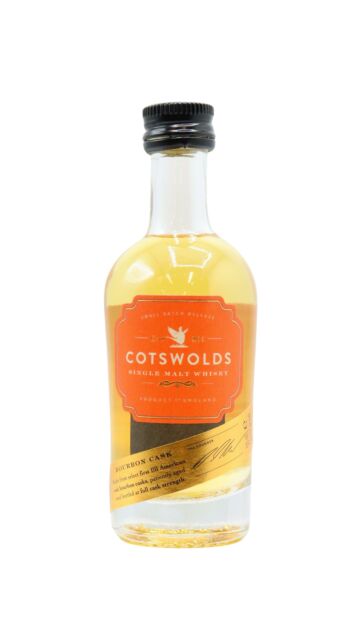
Cotswolds Bourbon Cask Matured
Cotswolds Bourbon Cask Matured English Single Malt Whisky focuses on first-fill ex-bourbon barrels.
Vanilla, honey, citrus and orchard fruit take a more prominent role, with less of the dark berry character found in the Signature release.
Cotswolds Sherry Cask Matured
Cotswolds Sherry Cask Matured English Single Malt Whisky explores a richer style shaped by sherry-seasoned oak.
Dried fruit, chocolate, nuts and warming spice make it a natural choice for drinkers who enjoy heavily sherried whisky.
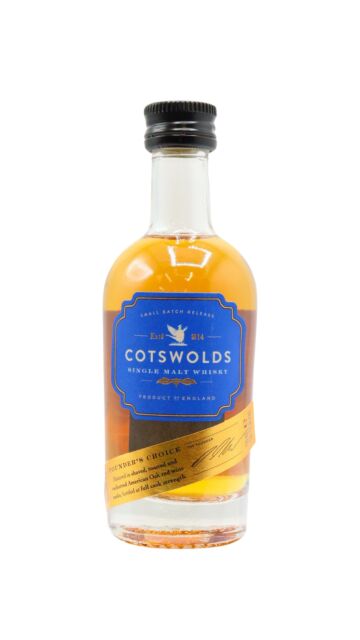
Cotswolds Founder’s Choice
Cotswolds Founder’s Choice English Single Malt Whisky is matured in STR American oak red wine casks and bottled at a higher strength.
It amplifies the distillery’s characteristic fruit, spice and dark sweetness, offering a more intense interpretation of the Cotswolds style.
Cotswolds Odyssey Barley
Cotswolds Odyssey Barley English Single Malt Whisky places further emphasis on the relationship between the distillery and locally grown barley.
It offers another opportunity to explore the rich, fruit-forward spirit that established the Cotswolds name.
Is Cotswolds Signature Single Malt Worth Trying?
Cotswolds Signature is an excellent introduction to English whisky.
It is modern in style without relying on novelty. Local barley, long fermentation and active casks each play a clear role in the finished whisky.
The STR red wine barriques deliver rich red fruit, spice and colour, while first-fill bourbon barrels bring honey, vanilla and balance.
Bottling the whisky at 46% ABV without chill filtration preserves its full texture and ensures that the fruit, malt and oak remain clearly expressed.
Its flavour profile is particularly suitable for drinkers who enjoy rich, unpeated single malts, wine-cask maturation or whiskies with a strong combination of fruit and spice.
It is also attractively versatile. The whisky has enough depth for slow neat drinking but remains accessible enough for gifting, food pairing or serving over a large cube.
For anyone interested in the development of English single malt, Cotswolds Signature is an important bottle to explore.
Buy Cotswolds Signature English Single Malt Whisky Online
Cotswolds Signature English Single Malt Whisky brings together locally grown barley, long fermentation and carefully selected STR red wine and first-fill bourbon casks.
Bottled at 46% ABV without chill filtration or added colouring, it delivers honey, butterscotch, ripe stone fruit, red berries, vanilla, dark sugar and warming spice across a full and naturally textured palate.
Its combination of local ingredients, bold cask influence and approachable fruit-led character makes it an excellent introduction to Cotswolds Distillery and the wider world of English single malt.
Explore the complete Cotswolds collection, browse more English whisky, or discover the wider selection of world whisky available from Hard To Find Whisky.