















Limited-edition whisky bottles are nothing new.
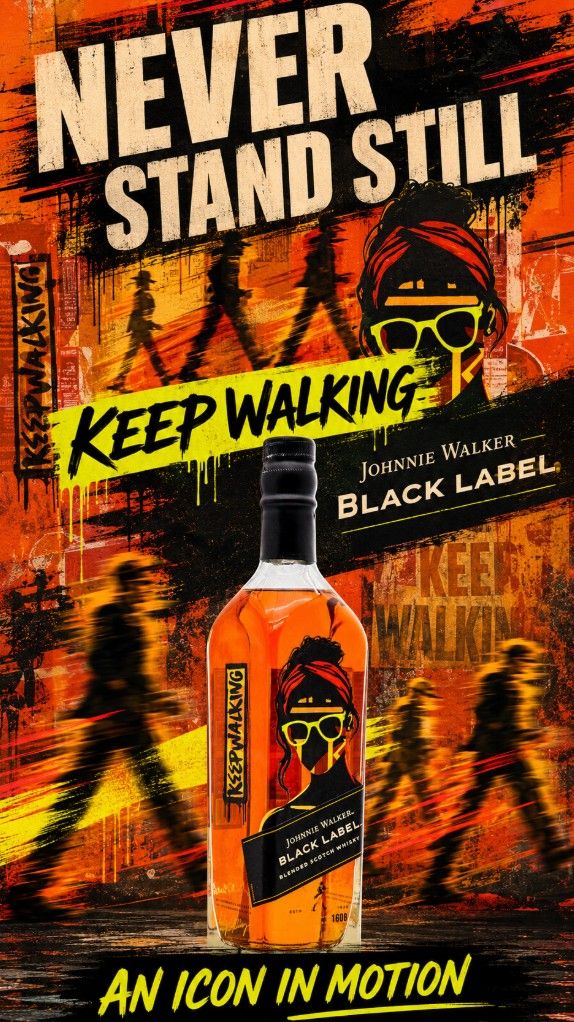
What makes Johnnie Walker Black Label x Andy Gellenberg different is that there is no single definitive bottle design.
Instead, Johnnie Walker collaborated with German illustrator and graphic artist Andy Gellenberg and used generative AI technology to transform his artwork into 5,000 unique bottle designs.
Every bottle is different.
The project began with 50 original artworks created by Gellenberg, which were then developed using generative AI into a collection where each bottle features its own individual design and human silhouette. Only 5,000 bottles were produced for public purchase, with the collection initially released exclusively in Germany.
Inside those highly individual bottles is the familiar Johnnie Walker Black Label, a 12 Year Old blended Scotch whisky combining malt and grain whiskies aged for at least 12 years, with the classic Black Label profile of dark fruit, vanilla, spice and smoke.
The Johnnie Walker Black Label x Andy Gellenberg at HTFW is presented in a 70cl bottle at 40% ABV.
For collectors exploring the wider Johnnie Walker range at Hard To Find Whisky, it represents an unusual intersection between Scotch whisky, contemporary illustration, artificial intelligence and personalised packaging.
What Is Johnnie Walker Black Label x Andy Gellenberg?
Johnnie Walker Black Label x Andy Gellenberg is a limited-edition 2024 release based around the established Black Label blended Scotch whisky.
The key details are:
- Brand: Johnnie Walker
- Expression: Black Label
- Collaboration: Andy Gellenberg
- Launch: October 2024
- Bottle size: 70cl
- Strength: 40% ABV
- Whisky: Black Label 12 Year Old blended Scotch
- Artist: Andy Gellenberg
- Initial artworks: 50
- Final designs: 5,000 unique bottles
- Technology: Generative AI
- Platform: Diageo Project Vision
- Original launch market: Germany
- Production: 5,000 bottles for public purchase.
The limited edition therefore changes the presentation rather than fundamentally reinventing the whisky.
Collectors receive the familiar Black Label liquid inside a bottle that may be visually different from every other example in the collection.
Are All 5,000 Bottles Really Different?
Yes.
This is the defining feature of the project.
Diageo states that the collection consists of 5,000 unique bottle designs, created by combining Andy Gellenberg’s original artwork with generative AI. Each design features the silhouette of an individual, intended to reflect the many different faces and personalities of modern whisky drinkers.
This makes the release fundamentally different from a conventional limited edition.
Normally, a producer might create:
One design.
5,000 identical bottles.
One total production number.
Here the structure is:
5,000 bottles.
5,000 designs.
That creates a different form of scarcity.
The overall edition may consist of 5,000 bottles, but an individual design is effectively unique within that collection.
Who Is Andy Gellenberg?
Andy Gellenberg is a German illustrator, graphic designer and artist known for bold, colourful work combining pop-art influences, collage, vector graphics, lettering and portraiture.
He studied communication design and became particularly recognised for a series of portraits of famous athletes made from Nike Swoosh symbols. That work attracted the attention of basketball star LeBron James and helped establish Gellenberg internationally.
His visual style is energetic, graphic and highly adaptable.
Portraits frequently combine:
Bold shapes.
Strong colour.
Geometric forms.
Collage.
Typography.
Pop-cultural references.
And simplified human figures.
That made him a particularly natural partner for a project built around creating thousands of individual human portraits.
Andy Gellenberg and Johnnie Walker
For the Johnnie Walker project, Gellenberg did not simply hand an AI system a short prompt and ask it to generate bottle designs.
The process began with actual artwork.
Gellenberg created 50 original pieces, drawing on the distinctive pop-art style for which he is known.
Those works then became the creative foundation for the generative system that produced the final 5,000 variations.
This distinction is important.
The creative process can broadly be understood as:
Artist creates the visual language.
Technology expands it into thousands of combinations.
Each consumer receives an individual result.
Gellenberg described the collaboration as a way of bringing art and technology together while celebrating individuality and the idea that different faces and stories contribute to a bigger picture.
How Was AI Used?
The limited edition was powered by Project Vision, a Diageo innovation platform developed to allow brands to produce one-of-a-kind bottle designs at scale.
Gellenberg's 50 artworks provided the source material.
Generative technology was then used to expand those visual ideas into 5,000 different final compositions.
Diageo also worked with AI, pre-press and printing specialists to convert those individually generated artworks into production-ready bottle designs.
The result demonstrates a potentially important change in drinks packaging.
Historically, personalisation usually meant:
Adding a name.
Changing a message.
Choosing between several predefined designs.
Project Vision moves much further.
The entire artwork can vary.
Why 5,000 Unique Designs Matter
From a collector perspective, the unusual aspect is not simply that 5,000 bottles exist.
Plenty of limited whiskies have smaller outturns.
What matters is that the visual appearance of each bottle is different.
Two collectors can own the same edition without owning the same design.
That potentially creates several layers of collecting:
Someone may want one example.
Another collector may seek a particular portrait.
Another may prefer a particular colour combination.
Someone else may collect multiple visually contrasting bottles.
This is closer to collecting artwork variants than conventional whisky packaging.
The Human Silhouette
Every bottle uses a silhouette or portrait representing an individual.
Diageo says the concept reflects the many faces of the modern whisky consumer, allowing people to select a bottle that feels more closely connected to their own personality and style.
That ties into Johnnie Walker’s longstanding Keep Walking positioning.
The brand has historically framed progress as something personal.
Here, individuality becomes visible on the bottle itself.
Rather than every drinker receiving the same artwork, each design presents a different person.
Art, Whisky and Personalisation
The project sits at the intersection of three trends.
Collectable Packaging
Limited-edition whisky bottles have long attracted collectors.
Artist Collaborations
Spirits brands increasingly work with artists, designers, fashion houses and musicians to create distinctive editions.
AI Personalisation
Generative systems allow thousands of variations to be produced without manually designing every bottle separately.
Johnnie Walker Black Label x Andy Gellenberg combines all three.
That is what makes it historically more interesting than a simple label redesign.
What Is Project Vision?
Diageo describes Project Vision as a breakthrough innovation designed to enable one-of-a-kind bottle designs for consumers at scale.
The Andy Gellenberg collaboration became one of its clearest commercial demonstrations.
Instead of using artificial intelligence simply to create advertising imagery, Diageo incorporated it directly into the physical product.
The output is therefore not just:
A campaign.
A social post.
Or promotional art.
It is the bottle itself.
That gives the project greater significance within packaging design.
Was This Johnnie Walker's First AI Bottle Project?
Johnnie Walker had already experimented with generative AI before the Gellenberg release.
Diageo's Blend of Artistry project at Johnnie Walker Princes Street in Edinburgh allowed visitors to co-create personalised Blue Label designs using generative technology and artwork from Scottish artist Scott Naismith.
The Gellenberg project took the concept into a broader limited-edition retail release.
Instead of personalisation happening only within a brand experience, thousands of physically different bottles entered the market.
That was a significant progression.
A Precursor to the Dubai AI Edition
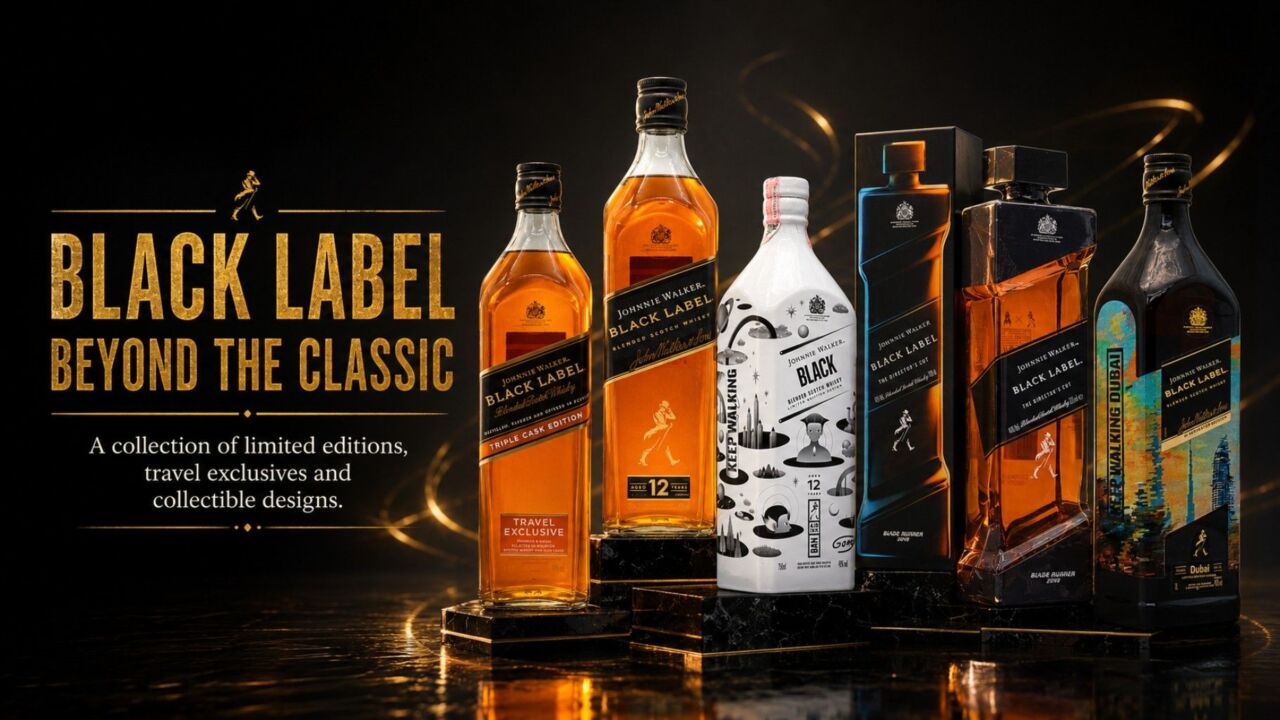
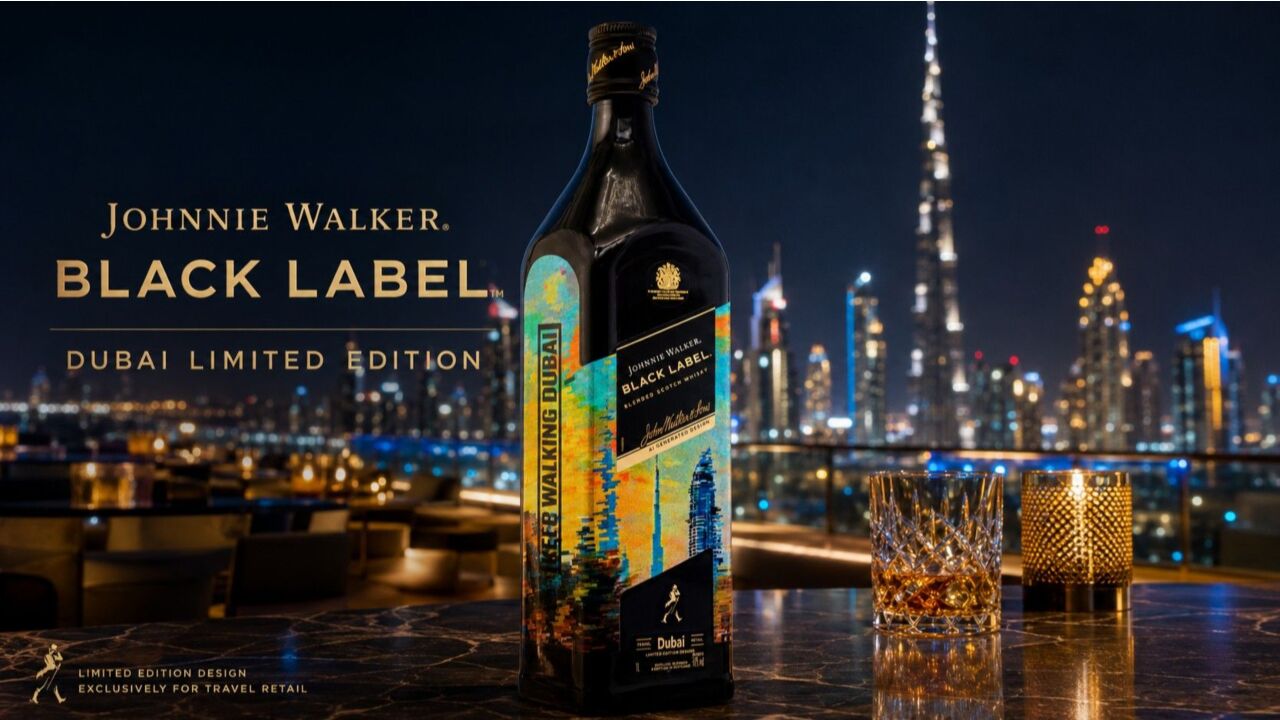
Collectors looking at Johnnie Walker's developing use of generative packaging can also explore the Johnnie Walker Black Label Dubai Limited Edition AI Design.
The Dubai edition uses the same broad concept of technology-assisted individuality, combining the familiar Black Label whisky with unique artwork inspired by the city.
This creates an interesting collecting theme:
Traditional Johnnie Walker limited editions.
Artist collaborations.
AI-assisted designs.
Location-specific AI designs.
For collectors interested in how spirits packaging is evolving, the Andy Gellenberg edition therefore occupies an important early position.
What Whisky Is Inside the Andy Gellenberg Bottle?
The whisky is Johnnie Walker Black Label.
That matters because the visual experiment sits around a genuinely established Scotch whisky rather than a new liquid created solely for the collaboration.
The standard Johnnie Walker Black Label 12 Year Old is made from malt and grain whiskies drawn from across Scotland, every component aged for at least 12 years.
Johnnie Walker describes the resulting profile around:
Sweet fruit.
Spice.
Vanilla.
And smoke.
HTFW's profile adds dark fruit, nuts, chocolate and warming spice.
Why the 12 Year Old Age Statement Matters
The age statement applies to the whisky rather than the packaging.
Under Scotch whisky rules, a 12 Year Old blend cannot contain whisky younger than 12 years.
Johnnie Walker therefore builds Black Label using mature malt and grain whisky rather than simply using one aged component to give the overall blend an older character.
The official brand describes Black Label as whisky that spends 12 years in cask before becoming the finished blend.
For a design-led limited release, maintaining that established liquid gives buyers confidence about what is inside.
The art changes.
The underlying Black Label proposition remains recognisable.
More Than 29 Malt and Grain Whiskies
Johnnie Walker's official gifting material describes Black Label as being crafted from a selection of more than 29 malt and grain whiskies, all aged for a minimum of 12 years.
That illustrates why blending at this level is complex.
The blender must balance numerous characteristics:
Fruit.
Smoke.
Vanilla.
Oak.
Cereal sweetness.
Spice.
Texture.
And finish.
The aim is not for one distillery to dominate.
It is for many components to create one consistent flavour.
What Does Johnnie Walker Black Label x Andy Gellenberg Taste Like?
HTFW describes the release as retaining the classic Black Label character.
Nose
Expect:
Soft smoke
vanilla
and
dark fruit.
These are the flavours that establish the whisky's character immediately.
The smoke is noticeable without becoming heavily medicinal or aggressively peated.
Palate
The palate is rounded and smoky, developing:
Toffee
oak
and
gentle spice.
The richer texture allows sweetness and smoke to work together rather than pulling in opposite directions.
Finish
The finish remains smooth, warming and gently smoky.
This is recognisably Black Label.
The artwork may be experimental.
The whisky is deliberately familiar.
Dark Fruit
Dark fruit is one of the most important elements in Black Label.
Think broadly around:
Plum.
Raisin.
Berry.
And dried fruit.
These flavours provide richness before vanilla and smoke begin to emerge.
They are part of what separates Black Label from lighter, younger blended Scotch styles.
Vanilla
Vanilla provides softness and accessibility.
It acts as a bridge between:
Fruit sweetness.
Oak.
Smoke.
And spice.
Johnnie Walker specifically highlights vanilla within the core Black Label flavour profile.
That makes the whisky approachable even for someone who does not normally drink smoky Scotch.
Toffee
Toffee deepens the sweetness.
Unlike fresh fruit, it introduces a richer caramelised flavour that works particularly well with oak.
HTFW's tasting profile for the Andy Gellenberg edition specifically highlights toffee on the palate.
Smoke
Smoke is essential to Black Label.
But it should not be confused with the extreme peat character of some Islay single malts.
Johnnie Walker describes the whisky as having sweetness, fruit, spice and vanilla wrapped in smoke.
That is an accurate description of the structure.
Smoke surrounds the whisky.
It does not completely dominate it.
Is Johnnie Walker Black Label x Andy Gellenberg Different in Flavour?
The principal change is the packaging and collectable concept.
This release uses Johnnie Walker Black Label rather than presenting a separately formulated Gellenberg whisky.
That means buyers should expect the established 12-year-old Black Label flavour profile rather than a radical new cask recipe.
For the collector, the rarity lies in the design.
For the drinker, the attraction remains Black Label.
Andy Gellenberg Edition vs Standard Black Label
The most obvious comparison is the standard Johnnie Walker Black Label 12 Year Old.
Standard Black Label
- 12 Years Old
- 70cl
- 40% ABV
- Continuing release
- Familiar black-and-gold packaging
- Dark fruit, vanilla, spice and smoke.
Andy Gellenberg Edition
- Black Label whisky
- 70cl
- 40% ABV
- Limited 2024 release
- 5,000 bottles
- 5,000 different designs
- Artwork derived from 50 Andy Gellenberg originals
- Generative AI production process
- Originally released in Germany.
For someone simply wanting Black Label to drink, the regular bottle is the logical choice.
For a design or Johnnie Walker collector, the Gellenberg release offers something fundamentally different.
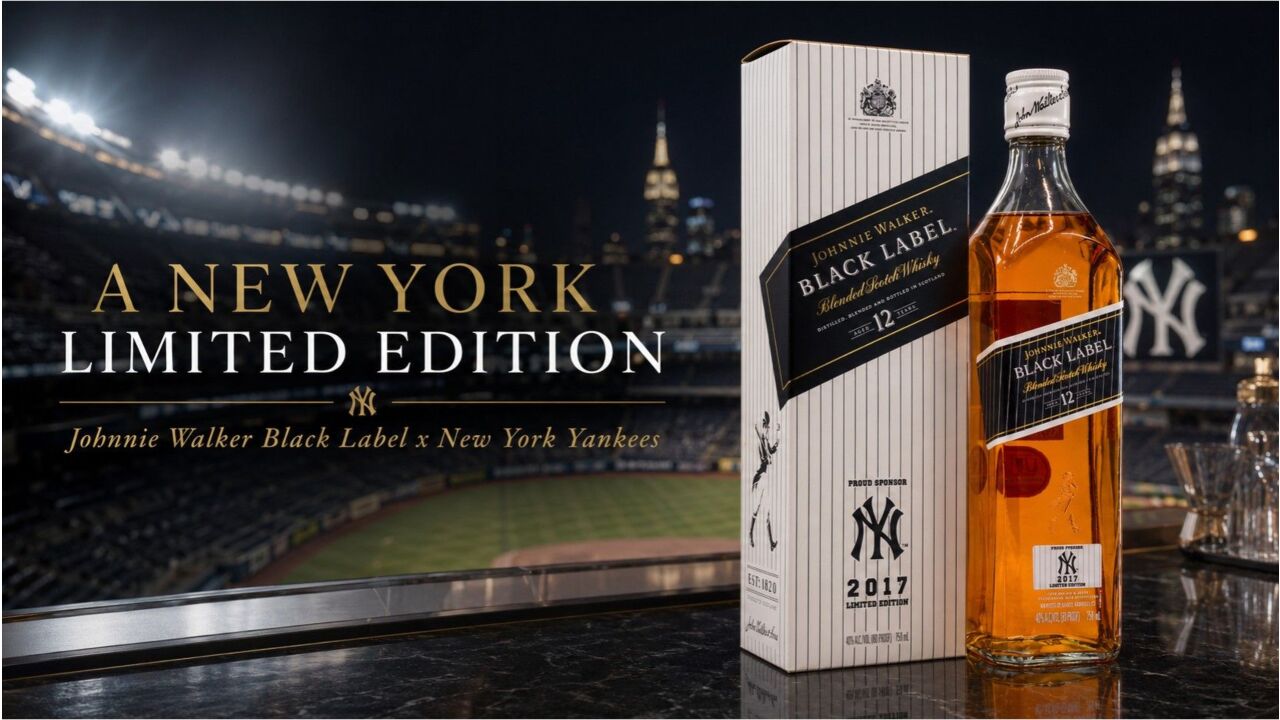
Andy Gellenberg vs Black Label Icons 200th Anniversary
HTFW also carries the Johnnie Walker Icons Black Label 200th Anniversary.
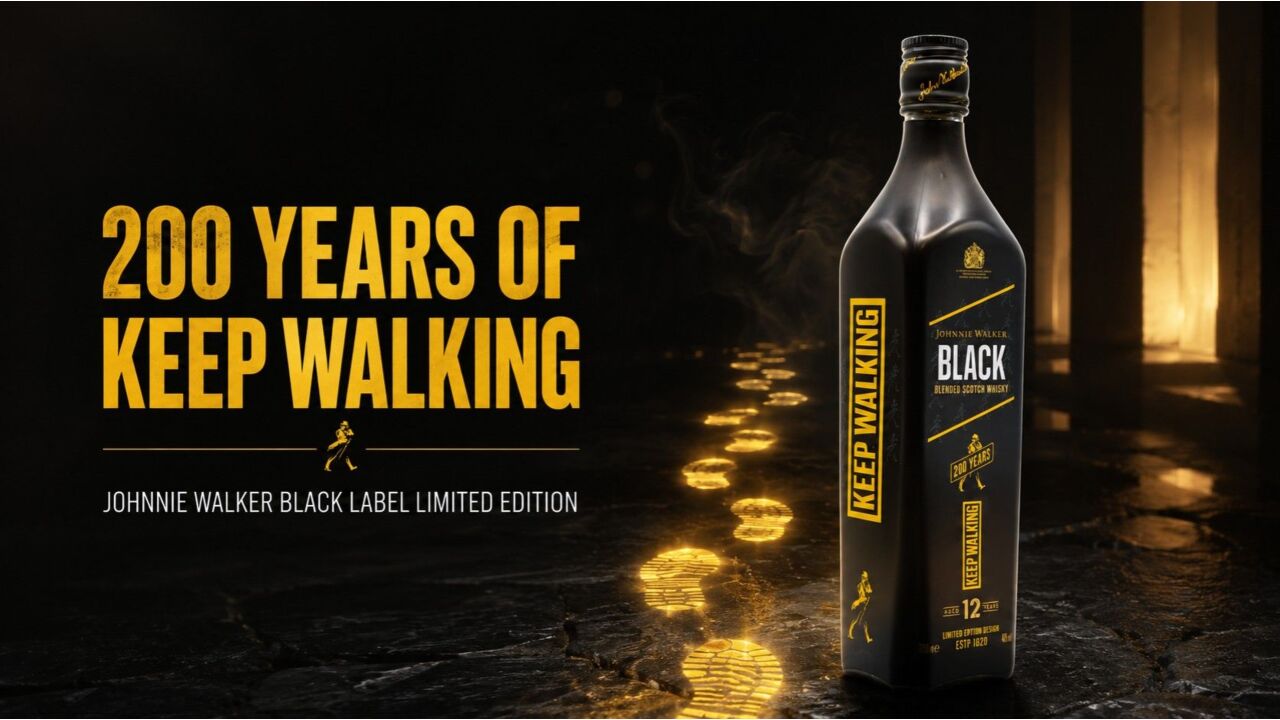
That edition celebrated 200 years of Johnnie Walker with a fashion-inspired limited-edition bottle design.
The two releases demonstrate different approaches to collectable packaging.
Icons
One special visual design.
Commemorative anniversary theme.
Traditional limited-edition production.
Andy Gellenberg
5,000 unique visual designs.
Artist-led.
Generative AI-assisted.
Focused on individuality.
Someone collecting the evolution of Black Label packaging could reasonably place both within the same broader collection.
Andy Gellenberg vs Icons 2.0
The Johnnie Walker Icons 2.0 Black Label provided another visual interpretation of the 200th anniversary theme.
Like the Gellenberg release, it places the established Black Label whisky inside an unconventional design.
But again, the crucial difference is repetition.
Every Icons 2.0 bottle shares the main edition design.
Every Gellenberg bottle can be different.
Andy Gellenberg vs Black Label Bold Steps
Another natural companion is Johnnie Walker Black Label Bold Steps Limited Edition.
Bold Steps uses colourful contemporary artwork to reinterpret the familiar Black Label bottle.
Both bottles therefore appeal to collectors who treat Johnnie Walker as more than simply a whisky brand.
They show how one of Scotch whisky's most recognisable bottles can act as a canvas.
Andy Gellenberg vs Blade Runner 2049 Director's Cut
At the more established end of Black Label collecting sits the Johnnie Walker Black Label Director's Cut Blade Runner 2049.
That release was created around a major film collaboration and was bottled at a much stronger 49% ABV, giving the whisky itself a more significant point of difference.
The collector proposition therefore differs.
Blade Runner Director's Cut
Entertainment collaboration.
Distinct whisky specification.
Film memorabilia appeal.
Andy Gellenberg
Artist collaboration.
AI-generated individuality.
Packaging and design appeal.
Both show the extraordinary range of limited editions that can grow from the Black Label platform.
Andy Gellenberg vs Double Black
Drinkers interested more in flavour than artwork can compare the bottle with Johnnie Walker Double Black.
Double Black takes the Black Label idea in a smokier direction, with a bolder profile of peat, charred oak, dried fruit and spice.
So:
Black Label x Andy Gellenberg
Classic Black Label liquid.
Design experimentation.
Double Black
Whisky experimentation.
More smoke.
More charred oak.
For a collector, Gellenberg is the interesting bottle.
For a drinker seeking more peat, Double Black is the more relevant comparison.
Andy Gellenberg vs Black Ruby
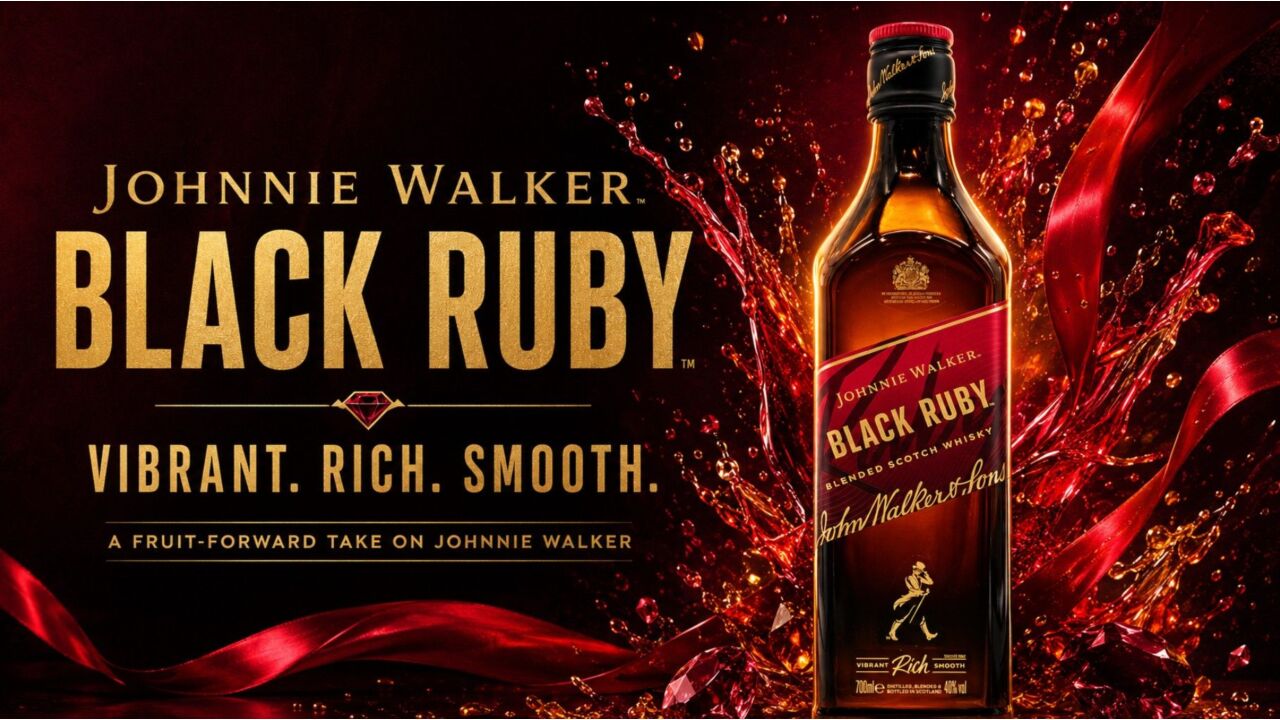
The newer Johnnie Walker Black Ruby explores another direction.
Black Ruby takes inspiration from Black Label but pushes the flavour towards a sweeter, fruitier profile. Diageo describes it as a modern reinterpretation designed around rich berry and honeyed sweetness.
The contrast is useful.
Gellenberg changes the bottle.
Black Ruby changes the flavour.
Both demonstrate how Johnnie Walker continues to reinterpret one of its best-known expressions.
Why Black Label Works for Collaborations
Black Label is particularly suitable for limited-edition design projects because the underlying bottle is so recognisable.
The rectangular shape.
The diagonal label.
The Striding Man.
The black-and-gold identity.
Change any one of those elements and the difference becomes immediately noticeable.
That allows an artist to create something visually dramatic without making the product unrecognisable.
The Gellenberg project pushes this concept further by changing the design thousands of times.
Johnnie Walker and the Striding Man
Johnnie Walker's visual identity has been evolving for more than a century.
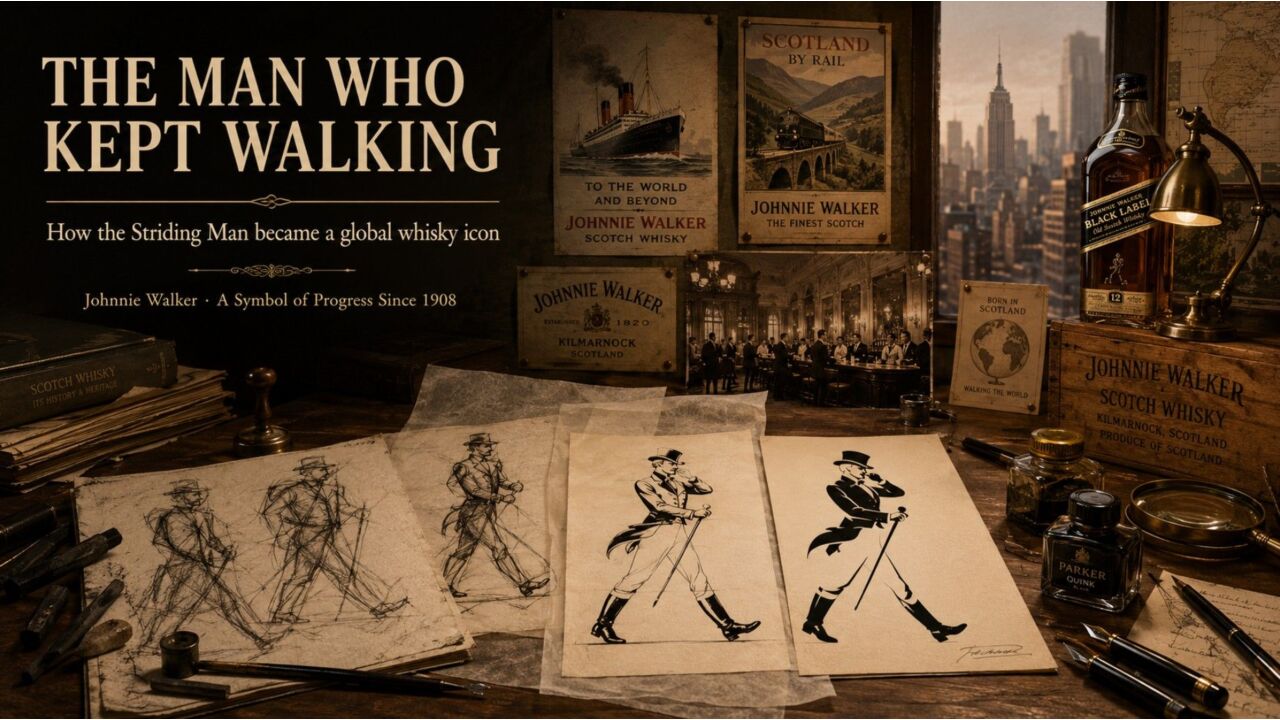
Diageo records that Alexander Walker introduced the famous slanted label, while in 1908 his son commissioned illustrator Tom Browne to sketch the Striding Man figure that would become one of whisky's most recognisable brand symbols.
That history gives the Gellenberg collaboration additional context.
Johnnie Walker has always used visual design as part of its identity.
The AI project is therefore technologically new but conceptually consistent.
The packaging keeps moving.
From the Striding Man to Generative AI
There is an interesting historical progression.
1908:
A commercial artist sketches one Striding Man.
2024:
An illustrator creates 50 works that become 5,000 generative bottle designs.
The tools have changed dramatically.
The principle has not.
Visual identity remains part of how Johnnie Walker communicates progress.
That makes the Gellenberg release particularly appropriate for a brand built around Keep Walking.
Is the Andy Gellenberg Edition Rare?
Yes, in a specific sense.
Only 5,000 bottles were produced for public purchase, initially for the German market.
That number alone would make it a limited release.
But the fact that each bottle carries a unique design gives it another form of rarity.
The exact artwork on one bottle may not appear on another.
It is therefore reasonable to think of the collection as:
A 5,000-bottle edition.
Made from 5,000 one-off visual variants.
Is It Collectable?
There is a strong collector argument.
Its main credentials include:
- Only 5,000 bottles
- Every design unique
- Andy Gellenberg collaboration
- 50 original artist-created source artworks
- Generative AI production
- Project Vision technology
- Original German-market release
- Johnnie Walker Black Label
- 12-year-old whisky
- Recognisable artist-led packaging
- Early example of AI personalisation in Scotch whisky.
None of those factors guarantees future financial appreciation.
But they clearly establish the bottle as more specialised than standard Black Label.
Art Collector or Whisky Collector?
The bottle potentially appeals to several audiences.
Johnnie Walker Collectors
May want it because it forms part of the extensive Black Label limited-edition history.
Whisky Collectors
May be interested in the unusual production quantity and packaging concept.
Design Collectors
May value Andy Gellenberg's involvement.
AI and Technology Collectors
May view it as an early physical consumer product generated through large-scale generative personalisation.
Art Buyers
May simply prefer a particular individual design.
That overlap is one reason the release is unusually interesting.
Can One Design Be More Collectable Than Another?
Potentially, but this becomes highly subjective.
Because the bottles are visually different, collectors may naturally develop preferences for particular:
Portraits.
Colour combinations.
Patterns.
Or compositions.
Unlike a numbered limited edition where every bottle looks identical, design preference can become part of the secondary-market decision.
There is no reliable rule saying one Gellenberg design is automatically more valuable than another.
The appeal will depend on the individual collector.
Why Condition Matters
Condition is especially important with this release because the artwork is the main point of differentiation.
Collectors should consider:
Bottle condition.
Label and artwork condition.
Closure.
Liquid level.
Any original presentation materials.
Design visibility.
Storage history.
And provenance.
Damage to the artwork arguably matters more here than it would on an ordinary Black Label bottle.
The design is not simply packaging.
It is the characteristic that makes the bottle unique.
Should You Open It?
There is a stronger argument for leaving this bottle sealed than standard Black Label.
The whisky itself remains readily available through Johnnie Walker Black Label 12 Year Old.
The Gellenberg design cannot be replaced so easily.
Therefore, someone whose main objective is to taste Black Label could purchase the continuing standard bottle.
Someone who owns the Gellenberg edition primarily for its artwork may reasonably choose to preserve it.
That said, whisky ultimately exists to be enjoyed.
Opening one is entirely legitimate.
How Should It Be Served?
If opened, Black Label is highly versatile.
Start neat to explore:
Dark fruit.
Vanilla.
Toffee.
Oak.
Spice.
And smoke.
At 40% ABV, additional water is not essential.
It can also work over ice or in simple long drinks, although collectors opening a limited Gellenberg bottle may reasonably want to taste it neat first.
Who Is Johnnie Walker Black Label x Andy Gellenberg For?
The bottle makes particular sense for:
- Johnnie Walker collectors
- Black Label collectors
- Andy Gellenberg fans
- Contemporary art collectors
- AI-design enthusiasts
- Packaging collectors
- Limited-edition whisky buyers
- Collectors of one-off bottle designs
- Buyers interested in the intersection of technology and Scotch whisky
- Gift buyers looking for an unusual Black Label presentation
Someone interested purely in drinking Black Label can choose the standard 12 Year Old.
This edition is really about the bottle and the story surrounding it.
Frequently Asked Questions
What is Johnnie Walker Black Label x Andy Gellenberg?
It is a limited-edition Johnnie Walker Black Label collection created in collaboration with German illustrator Andy Gellenberg and generative AI technology.
When was it released?
Diageo announced the collection on 23 October 2024.
How many bottles were produced?
Only 5,000 bottles were produced for public purchase.
Are all 5,000 bottles different?
Yes. Diageo describes the collection as 5,000 unique bottle designs.
Did AI create the artwork from scratch?
No. Andy Gellenberg first created 50 original artworks, which were then enhanced and expanded using generative AI into the 5,000 final bottle designs.
Who is Andy Gellenberg?
Andy Gellenberg is a German illustrator and graphic designer known for colourful pop-art-influenced portrait and collage work. He became particularly recognised for portraits created from Nike Swoosh symbols.
What is Project Vision?
Project Vision is Diageo's innovation platform for creating one-of-a-kind bottle designs at scale using technologies including generative AI.
Where was the edition originally released?
The 5,000-bottle release was initially made available in Germany through Johnnie Walker and selected retailers.
What whisky is inside?
The bottle contains Johnnie Walker Black Label, the brand's classic 12 Year Old blended Scotch whisky.
What ABV is it?
The HTFW bottle is 40% ABV.
What size is the bottle?
It contains 70cl.
How old is Johnnie Walker Black Label?
Black Label carries a 12 Year Old age statement, meaning the component Scotch whiskies have been aged for at least 12 years.
How many whiskies are used in Black Label?
Johnnie Walker states that Black Label is made using a selection of more than 29 malt and grain whiskies, each matured for at least 12 years.
What does it taste like?
Expect soft smoke, vanilla and dark fruit on the nose, followed by toffee, oak and gentle spice on a rounded palate, with a smooth smoky finish.
Is it heavily smoky?
No. Smoke is an important part of Black Label, but it is balanced with sweet fruit, vanilla and spice rather than dominating the whisky.
Is the whisky different from standard Black Label?
The collaboration is primarily centred on the bottle design. The underlying whisky is Johnnie Walker Black Label.
Does HTFW sell standard Black Label?
Yes. The regular Johnnie Walker Black Label 12 Year Old is available separately.
Are there other collectable Black Label editions?
Yes. HTFW lists releases including Icons Black Label 200th Anniversary, Icons 2.0, Bold Steps and the Blade Runner 2049 Director's Cut.
Is there another AI-designed Black Label at HTFW?
Yes. The Johnnie Walker Black Label Dubai Limited Edition AI Design continues the idea of generative bottle design in a Dubai-themed one-litre release.
Where can I find more Johnnie Walker?
The complete Johnnie Walker range at Hard To Find Whisky includes core expressions, discontinued bottles and numerous limited editions.
Buy Johnnie Walker Black Label x Andy Gellenberg
The Johnnie Walker Black Label x Andy Gellenberg represents an unusual point in the evolution of collectable whisky packaging.
The underlying whisky is reassuringly familiar.
Johnnie Walker Black Label brings together malt and grain whiskies matured for at least 12 years, delivering its established combination of dark fruit, vanilla, toffee, spice, oak and smoke.
The bottle is where things become considerably more unusual.
Andy Gellenberg created 50 original artworks.
Generative AI transformed that visual language into 5,000 different designs.
Every bottle features its own individual portrait.
And only 5,000 were released for public purchase.
Collectors interested in the whisky itself can compare it directly with the standard Black Label 12 Year Old.
Those interested in other visual reinterpretations can explore Icons Black Label 200th Anniversary, Icons 2.0 and Bold Steps.
For a more radical collector release, the Blade Runner 2049 Director's Cut takes Black Label into film memorabilia and a higher-strength 49% ABV interpretation.
And collectors interested specifically in Johnnie Walker's experiments with AI-generated packaging can continue with the Dubai Limited Edition AI Design.
The full portfolio can be explored through Johnnie Walker at Hard To Find Whisky.
The Andy Gellenberg release nevertheless has a particularly simple collector proposition.
One established 12-year-old whisky. Fifty original artworks. Five thousand bottles. Five thousand different designs.
Shop Johnnie Walker Black Label x Andy Gellenberg at Hard To Find Whisky.