



















Johnnie Walker has spent more than two centuries demonstrating that blending can be every bit as complex, expressive and collectable as single malt whisky.
Few bottles illustrate that point more convincingly than Johnnie Walker Master’s Ruby Reserve 40 Year Old.
Released in 2020, Master’s Ruby Reserve was created to celebrate Master Blender Dr Jim Beveridge OBE’s 40th anniversary with Johnnie Walker. Beveridge personally selected eight exceptionally rare whiskies from the Johnnie Walker reserves, every component having been matured for at least 40 years. Only 398 bottles were produced.
The blend reaches across Scotland and across whisky history.
It includes mature spirit from:
Cambus
Carsebridge
Pittyvaich
Port Ellen
Talisker
Royal Lochnagar
Glendullan
and
Cragganmore.
Four of those distilleries were described as ghost distilleries when the whisky was released, placing genuinely finite stocks alongside highly aged whisky from some of Scotland’s best-known operating producers.
The whisky is bottled at 43% ABV and presented in an extraordinary golden-red Baccarat crystal decanter, itself created to symbolise Beveridge’s ruby anniversary.
For collectors exploring Johnnie Walker at Hard To Find Whisky, the wider Old & Rare Scotch Whisky collection or HTFW’s specialist 40–50 Year Old Spirits range, Master’s Ruby Reserve sits firmly among the most ambitious blends ever released under the Striding Man.
What Is Johnnie Walker Master’s Ruby Reserve?
Johnnie Walker Master’s Ruby Reserve is a 40 Year Old blended Scotch whisky created by Dr Jim Beveridge OBE to commemorate four decades of his whisky-making career.
The key details are:
- Producer: Johnnie Walker
- Expression: Master’s Ruby Reserve
- Age: 40 Years Old
- Release year: 2020
- Bottle size: 70cl
- Strength: 43% ABV
- Number of casks: 8
- Number of bottles: 398
- Cask types listed by HTFW: Bourbon and sherry oak
- Presentation: Golden-red Baccarat crystal decanter
- Packaging: Wooden presentation box
- Blend includes four ghost-distillery whiskies
- Created to mark Jim Beveridge’s 40th anniversary.
HTFW identifies it as the second release in the Johnnie Walker Masters series. The series would later conclude with the Johnnie Walker Masters of Flavour 48 Year Old. Diageo confirms that Masters of Flavour was the third and final expression following The John Walker Master’s Edition and Master’s Ruby Reserve.
Why Is It Called Ruby Reserve?
The name refers directly to a ruby anniversary: 40 years.
Master’s Ruby Reserve was not created to commemorate a distillery anniversary or a major Johnnie Walker brand milestone.
It was a personal tribute to Jim Beveridge.
Johnnie Walker launched the whisky on 9 March 2020, explaining that Beveridge had spent four decades creating and working with Scotch whisky. He had also recently received an OBE for services to Scotch whisky.
The ruby idea extends from the name into the physical decanter.
Its rich red-gold Baccarat crystal is intended to represent the 40-year milestone visually.
The whisky and bottle therefore tell the same story.
Who Is Jim Beveridge?
Dr Jim Beveridge OBE became one of the defining figures in modern Johnnie Walker blending.
By the time Master’s Ruby Reserve was released, he had spent approximately four decades working with whisky and had encountered many of the distilleries whose stocks ultimately entered the blend. Johnnie Walker said Beveridge selected whiskies that evoked some of his earliest memories of whisky making.
That personal connection matters.
Master’s Ruby Reserve was not simply assembled by searching a warehouse database for eight very old casks.
Beveridge deliberately selected whiskies from distilleries with which he had worked during different stages of his career.
The bottle therefore acts almost like a liquid retrospective.
Each component represents part of a whisky-making life.
Eight Whiskies, Eight Distilleries
The blend combines whisky from eight Scottish distilleries:
Cambus
A historic Lowland grain distillery.
In Master’s Ruby Reserve, Cambus contributes rich treacle-toffee character, helping establish the sweeter base of the whisky.
Carsebridge
Another historic grain distillery whose old stocks have become increasingly prized.
Carsebridge contributes berry and currant character towards the later palate.
Pittyvaich
Pittyvaich contributes caramelised apple and autumnal soft fruit, building orchard-fruit richness around the older grain components.
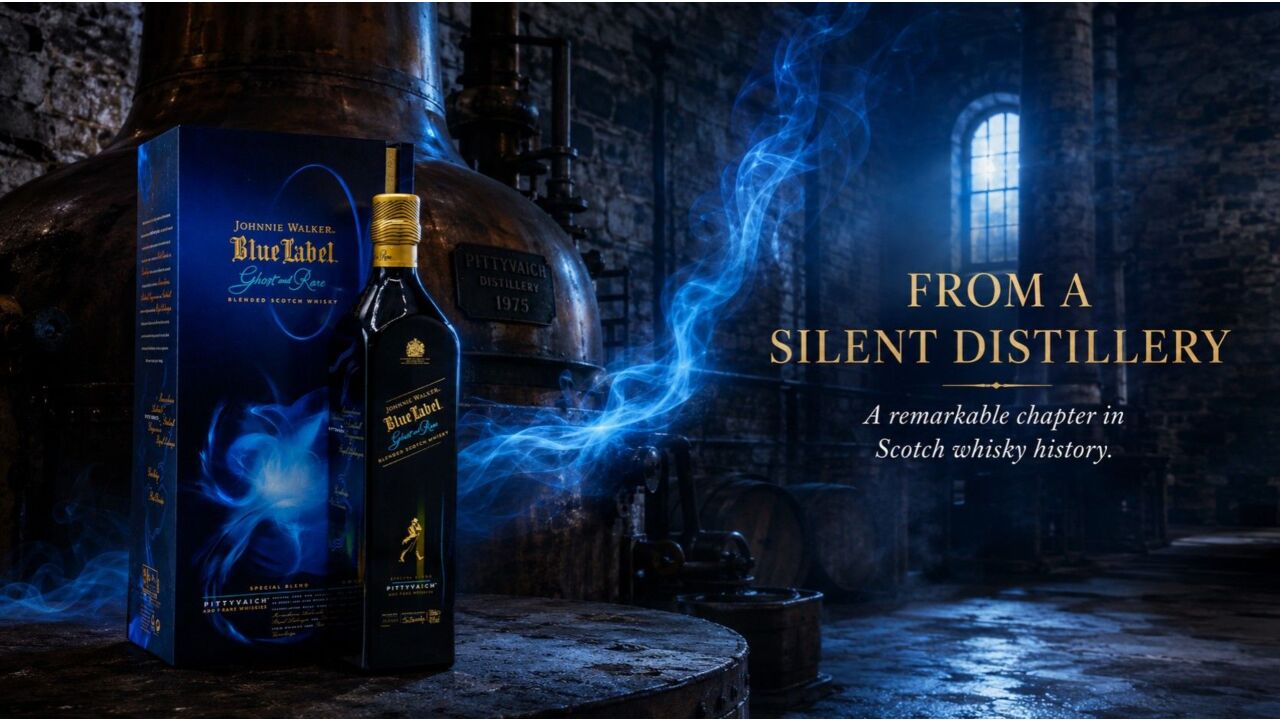
Collectors interested in the distillery can also explore Johnnie Walker Blue Label Ghost and Rare Pittyvaich, where Pittyvaich plays an even more explicit starring role.
Port Ellen
Port Ellen provides the Islay dimension.
Its mature whisky contributes maritime smoke and sea-salt character, helping stop the blend becoming overly sweet or fruit-dominated.
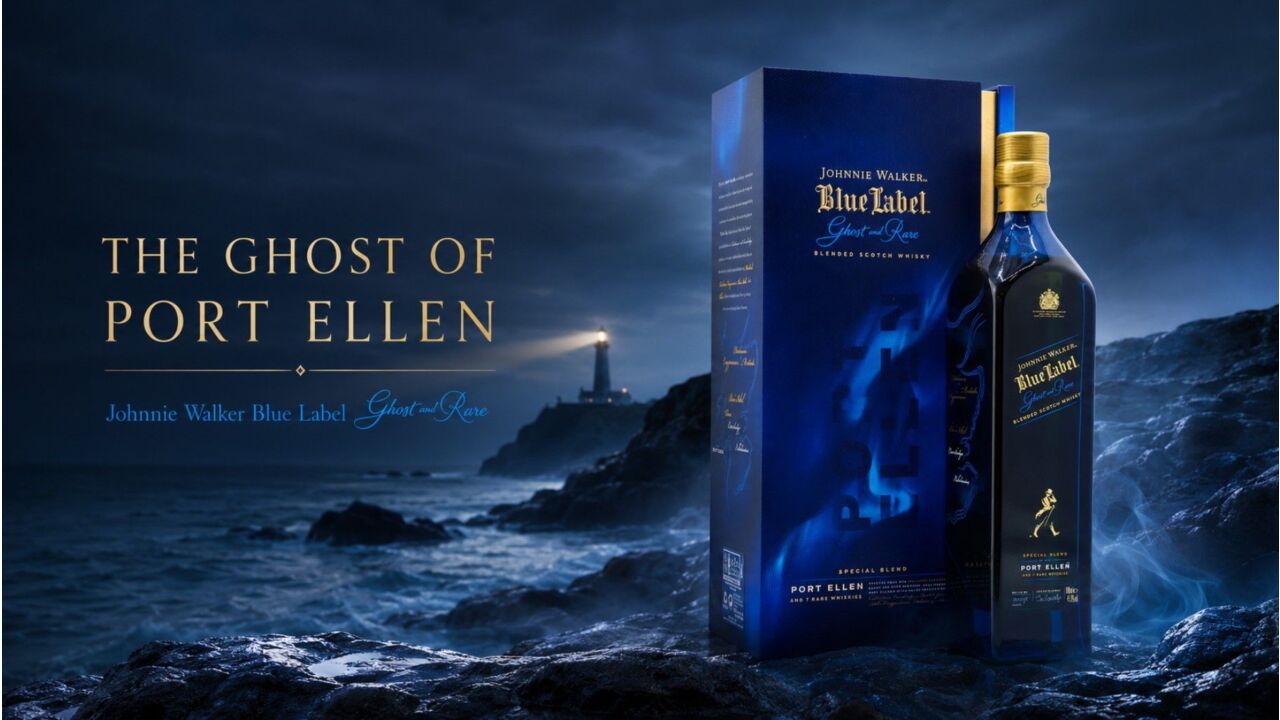
HTFW also carries Johnnie Walker Blue Label Ghost and Rare Port Ellen for collectors wanting a Johnnie Walker release where this famous Islay name sits closer to the centre of the composition.
Talisker
Talisker reinforces the maritime side of the whisky with pepper, smoke and coastal character.
Its inclusion alongside Port Ellen gives Master’s Ruby Reserve an important structural counterpoint to the rich dark fruits and sugars.
Royal Lochnagar
Royal Lochnagar adds mature dark-fruit character, contributing to the plums and cherries that become increasingly evident on the nose.
Glendullan
Glendullan provides fruit, particularly berry and currant tones towards the palate and finish.
Cragganmore
Cragganmore contributes additional depth through mature dark fruit and complexity, helping reinforce the richer Speyside side of the blend.
Four Ghost Distilleries
At launch, Johnnie Walker highlighted Cambus, Carsebridge, Pittyvaich and Port Ellen as the four ghost distilleries represented in Master’s Ruby Reserve.
The phrase “ghost distillery” is particularly evocative in whisky because it means the spirit comes from a producer that had ceased production.
That makes the surviving casks finite.
Once old Cambus, Carsebridge or Pittyvaich whisky has been consumed, there is no modern production line simply replacing those casks with identical new make.
Even where a distillery name later returns to production, an old cask remains a product of its original production era.
For Master’s Ruby Reserve, this gives the blend genuine historical depth.
It is not merely 40 years old.
Parts of it come from distilleries whose production histories had already ended before the bottle itself was created.
Why Grain Whisky Matters
Ultra-old grain whisky is sometimes overlooked beside mature single malt.
Master’s Ruby Reserve provides an excellent reminder of how important it can be.
Cambus and Carsebridge contribute texture, sweetness and fruit while supporting the more assertive malt whiskies.
After four decades of maturation, mature grain whisky can become extraordinarily complex.
Rather than behaving simply as a neutral base, it can develop flavours such as:
Toffee.
Vanilla.
Caramel.
Berries.
Soft fruits.
Polished oak.
This is one reason exceptionally old blended Scotch can be so sophisticated.
The blender is not merely combining young grain whisky with older malt.
In this case, everything is at least 40 years old.
What Does a 40 Year Old Age Statement Mean?
Scotch whisky age statements are governed by the youngest whisky in the blend.
Therefore, when Master’s Ruby Reserve is labelled 40 Years Old, every whisky inside must be at least 40 years old.
Johnnie Walker explicitly confirmed this at launch.
Some components may be older.
But none can be younger.
This is especially important in a blended Scotch.
A 40-year age statement applies equally to the grain and malt whisky components used in the final blend.
That makes Master’s Ruby Reserve fundamentally different from standard premium blends where components may span a much wider range of ages.
Why Only 398 Bottles?
Only 398 bottles of Master’s Ruby Reserve were released worldwide.
That figure reflects the extraordinary scarcity of the component whiskies.
Johnnie Walker selected just eight exceptionally mature casks, including whisky from distilleries whose historic stocks were already finite.
It therefore could not be produced on anything approaching conventional commercial scale.
For perspective, Johnnie Walker is a globally distributed Scotch brand.
A release of 398 bottles is tiny.
That scarcity places Master’s Ruby Reserve naturally within HTFW’s Whisky Over £2,000 collection rather than alongside ordinary premium blended whisky.
The Baccarat Crystal Decanter
The liquid is only one part of the Master’s Ruby Reserve presentation.
Every bottle is housed in a hand-crafted golden-red Baccarat crystal decanter.
The colour deliberately references Beveridge’s ruby anniversary. Johnnie Walker explained at launch that Baccarat achieves the golden-red finish by gradually fusing clear crystal with 24-carat gold powder at 540°C.
That process reinforces the bottle’s collector status.
This is not standard glass with a red coating.
The colour is created within the crystal-making process itself.
Why Baccarat?
Baccarat has long been associated with high-end crystal and luxury presentation.
For an extremely limited Scotch marking the career of a Master Blender, Johnnie Walker needed a bottle that visually separated the release from even its established luxury range.
The resulting decanter does exactly that.
The colour immediately communicates the ruby-anniversary theme.
The substantial crystal presentation reinforces scarcity.
And the wooden case turns the complete release into something closer to a display object.
For serious collectors, retaining the decanter and its original presentation together is therefore particularly important.
Master’s Ruby Reserve and the Johnnie Walker Masters Series
Master’s Ruby Reserve sits in the middle of a three-part prestige sequence.
Diageo identifies Masters of Flavour 48 Year Old as the third and final release, following:
The John Walker Master’s Edition
Master’s Ruby Reserve
and finally
Masters of Flavour 48 Year Old.
Each takes a slightly different approach to extraordinarily old blending.
The series represents a level of Johnnie Walker far above the standard colour-label hierarchy.
This is important because many drinkers think of Johnnie Walker primarily through:
Red Label.
Black Label.
Green Label.
Gold Label.
Blue Label.
The Masters series shows what becomes possible when the blending team gains access to some of the oldest stocks in the wider reserves.
Master’s Ruby Reserve vs Masters of Flavour 48 Year Old
The natural comparison is Johnnie Walker Masters of Flavour 48 Year Old.
Masters of Flavour was released after Ruby Reserve and completed the Masters trilogy.
Master’s Ruby Reserve
- 40 Years Old
- 43% ABV
- Eight casks
- 398 bottles
- Cambus
- Carsebridge
- Pittyvaich
- Port Ellen
- Talisker
- Royal Lochnagar
- Glendullan
- Cragganmore
- Golden-red Baccarat decanter
- Created around Jim Beveridge’s 40-year career.
Masters of Flavour
- 48 Years Old
- 41.8% ABV
- 288 bottles
- Includes Port Dundas
- Brora
- Glen Albyn
- Glenury Royal
- Cameronbridge
- Blair Athol
- Dalwhinnie
- Baccarat presentation
- Third and final Masters release.
Masters of Flavour is technically older and scarcer by bottle count.
Ruby Reserve, however, has arguably the more personal story.
Its eight whiskies were deliberately chosen around the career memories of Jim Beveridge.
Master’s Ruby Reserve vs Blue Label
The familiar benchmark for luxury Johnnie Walker is Blue Label.
Blue Label is created around rare and carefully selected Scotch whiskies, but it does not carry a 40-year age statement and is produced on a vastly larger scale than Master’s Ruby Reserve.
Master’s Ruby Reserve occupies a very different category.
It has:
A stated 40-year minimum age.
Eight specifically identified whisky sources.
Four historic ghost distilleries at launch.
398 bottles.
A Baccarat decanter.
And a personal connection to a Master Blender’s career.
Someone wanting to understand everyday luxury Johnnie Walker should start with Blue Label.
Someone looking for one of the brand’s genuine trophy releases should look much higher towards the Masters series.
Master’s Ruby Reserve vs King George V
Johnnie Walker King George V is another prestige expression, bottled at 43% ABV.
King George V is built around heritage and access to rare stocks.
Master’s Ruby Reserve goes considerably further in scarcity.
The difference is less about whether one is “better” and more about purpose.
King George V
A prestige Johnnie Walker designed to be enjoyed as part of the continuing range.
Master’s Ruby Reserve
A 398-bottle commemorative release built from eight 40+ year-old whiskies.
For collectors, Ruby Reserve is therefore substantially more specialised.
Master’s Ruby Reserve vs Ghost and Rare
Johnnie Walker’s Ghost and Rare collection provides another interesting comparison because it also uses whiskies from closed or historically silent distilleries.
HTFW carries releases including:
and
Those releases generally build the composition around one especially notable ghost distillery.
Master’s Ruby Reserve combines four historically ghosted names at once, alongside four heavily aged operating-distillery whiskies.
This gives it a different structure.
Ghost and Rare asks:
What happens when one lost distillery becomes a central flavour theme?
Ruby Reserve asks:
What happens when a Master Blender uses multiple rare historical stocks to tell the story of his career?
Master’s Ruby Reserve vs Johnnie Walker Excelsior 1947 50 Year Old
Collectors interested in exceptionally old Johnnie Walker may also encounter Johnnie Walker Excelsior 1947 50 Year Old.
Excelsior represents another generation of ultra-aged Johnnie Walker.
Its appeal centres on age, vintage and historic presentation.
Master’s Ruby Reserve is more explicitly built around blending biography.
The two demonstrate different ways old blended Scotch becomes collectable.
One is linked strongly with vintage.
The other with the human craft of blending.
Bourbon and Sherry Oak
HTFW lists the cask wood for Master’s Ruby Reserve as bourbon and sherry oak.
That combination helps explain the whisky’s broad flavour spectrum.
Bourbon-influenced maturation can bring:
Vanilla.
Caramel.
Toffee.
Orchard fruit.
Sweet oak.
Sherry influence contributes towards:
Plum.
Cherry.
Dark fruit.
Chocolate.
Spice.
The blend then brings in maritime smoke and salinity from Talisker and Port Ellen.
The result is not simply sweet or smoky.
It moves across several flavour families.
What Does Johnnie Walker Master’s Ruby Reserve Taste Like?
The official launch description and HTFW tasting notes reveal a whisky built around mature fruit, dark sweetness and restrained maritime smoke.
Colour
HTFW describes a deep ruby-red appearance with golden-amber and copper highlights.
The colour immediately matches the wider ruby theme.
Nose
The nose begins with:
Treacle toffee
from Cambus.
Then:
Caramelised apple
and autumnal fruit from Pittyvaich.
The darker side gradually emerges through:
Dark chocolate
plums
cherries
and further dark-fruit character from Royal Lochnagar and Cragganmore.
Pink peppercorn and sea salt add contrast.
This creates a particularly rich opening.
Sweetness first.
Fruit next.
Then spice and coastal character.
Palate
The palate is full-bodied.
Talisker and Port Ellen introduce warming maritime smoke, while cocoa nibs deepen the profile.
Berries and currants from Glendullan and Carsebridge then provide another layer of fruit.
The key is balance.
The coastal malts prevent the mature grain and fruit components becoming too sweet.
Finish
The finish returns to fruit:
Caramelised apple
pear
maraschino cherry
before moving into:
pepper
and
demerara sugar.
It is a mature but energetic finish rather than a purely woody one.
Treacle Toffee and Mature Grain Whisky
Cambus provides one of the whisky’s most recognisable opening flavours: treacle toffee.
This is significant because grain whisky sometimes receives less attention in premium blends than the famous malt components.
Here, it is instrumental.
Treacle gives the nose weight.
It provides a dark sweetness against which the orchard fruit, chocolate and coastal smoke can develop.
Without that mature grain foundation, the blend would be structurally very different.
Caramelised Apple and Pittyvaich
Pittyvaich contributes another important flavour theme.
Its caramelised apple and soft autumnal fruit sit between fresh orchard fruit and dessert sweetness.
That bridges the gap between grain sweetness and the darker Speyside fruits.
It is also historically interesting.
Pittyvaich had a comparatively short production life, making mature surviving stocks especially notable.
This is why Ghost and Rare Pittyvaich has become such a natural companion bottle for collectors interested in Master’s Ruby Reserve.
Dark Chocolate, Plum and Cherry
Royal Lochnagar, Glendullan and Cragganmore help move the whisky into darker territory.
Johnnie Walker highlighted dark chocolate, plums and cherries among the characteristics contributed by its highly aged malt whiskies.
Those flavours make the whisky feel appropriately mature without drifting completely into leather and antique oak.
Fruit remains central.
That is particularly important for a 40-year-old blend.
Age should bring complexity.
It should not simply produce wood.
Port Ellen and Talisker: The Maritime Counterpoint
Port Ellen and Talisker provide some of the most important structural flavours in Master’s Ruby Reserve.
Johnnie Walker specifically identified their soft aromatic sea-salt character, while HTFW adds warming maritime smoke on the palate.
This prevents the blend becoming overly rich.
Imagine the whisky without them:
Treacle.
Caramelised apple.
Dark chocolate.
Plum.
Cherry.
Currants.
Demerara.
It could become extremely sweet and heavy.
Smoke, pepper and sea salt provide tension.
That is blending.
Is Master’s Ruby Reserve Smoky?
Yes, but smoke is not the dominant character.
Talisker and Port Ellen contribute maritime smoke and coastal character, yet the overall profile remains strongly built around:
Fruit.
Toffee.
Chocolate.
Berries.
Caramelised apple.
Cherry.
The smoke acts more like a structural seasoning than the primary flavour.
Drinkers accustomed to heavily peated Islay single malt should therefore not expect an equivalent level of peat intensity.
This is sophisticated old blended Scotch with smoke woven through it.
Is It Sweet?
There is substantial sweetness.
HTFW’s notes include:
Treacle toffee.
Caramelised apple.
Maraschino cherry.
Demerara sugar.
But sweetness is balanced by:
Pink peppercorn.
Sea salt.
Cocoa.
Smoke.
Mature oak.
That balance matters.
A 40-year-old luxury blend should feel layered rather than syrupy.
Master’s Ruby Reserve appears to achieve that through the sheer diversity of its component whiskies.
Why 43% ABV?
Master’s Ruby Reserve is bottled at 43% ABV.
That may appear relatively restrained beside modern cask-strength whisky.
But the objective here is elegance and integration.
A blend built from eight whiskies aged for at least four decades contains enormous flavour concentration already.
Higher alcohol strength is not automatically necessary.
At 43%, the dark fruit, sweet grain, spice and maritime smoke can remain expressive without making alcohol itself a dominant part of the tasting experience.
How Should Master’s Ruby Reserve Be Served?
If opened, neat is unquestionably the place to begin.
A quality tulip-shaped or dedicated whisky tasting glass would allow the whisky to open gradually.
Give it time.
The nose contains multiple layers that should develop with exposure to air:
Treacle.
Apple.
Plum.
Cherry.
Chocolate.
Pepper.
Sea salt.
At 43% ABV, substantial water should not be necessary.
A few drops could be tested after the first neat pour, but heavy dilution would risk flattening the subtle differences between the old malt and grain components.
Ice would suppress aroma and makes little sense for a whisky created from such rare stocks.
Should You Open One of Only 398 Bottles?
This is ultimately a personal decision.
From the collector’s perspective, the argument for keeping it sealed is obvious.
Only 398 bottles were released.
Each contains mature whisky from several historically important distilleries.
The Baccarat presentation is part of the object.
And the expression belongs to a completed three-release Masters sequence.
But the other side is equally valid.
Jim Beveridge selected these whiskies because of how they smelled and tasted.
Master’s Ruby Reserve was ultimately created as Scotch whisky.
Opening one provides access to a blend that cannot simply be recreated once the remaining bottles disappear.
Is Master’s Ruby Reserve Collectable?
Very much so, although collectability should not be confused with guaranteed future investment returns.
Its collector credentials include:
Only 398 Bottles
The entire global release is tiny.
Minimum 40-Year Age Statement
Every whisky is at least four decades old.
Eight Specifically Selected Whiskies
The blend is unusually transparent about the distilleries represented.
Four Ghost Distilleries at Launch
Cambus, Carsebridge, Pittyvaich and Port Ellen provide strong historical interest.
Jim Beveridge Tribute
The bottle marks one of the most important careers in modern Scotch blending.
Baccarat Crystal
The ruby-coloured decanter was created specifically for the commemorative release.
Masters Series
Ruby Reserve occupies a defined position within a completed prestige trilogy.
These factors make it substantially more specialised than a normal premium Johnnie Walker release.
Why Complete Presentation Matters
HTFW lists Master’s Ruby Reserve with its wooden box and glass stopper.
For a bottle at this level, collectors should consider:
Decanter condition.
Stopper condition.
Liquid level.
Original wooden presentation case.
Any documentation.
Numbering.
Storage history.
Provenance.
The Baccarat decanter is integral to the concept.
Separating it from its original case removes part of the release.
That matters far more at this level than it would with a standard bottle of blended Scotch.
Johnnie Walker and the Art of Blending
Master’s Ruby Reserve also provides a useful answer to the misconception that blending is simply a way to make cheaper whisky.
At entry level, blending can certainly provide consistency and accessibility.
At the highest level, however, the task becomes extraordinarily complicated.
Jim Beveridge had to balance:
40-year-old grain whisky.
Old Speyside malt.
Maritime Island malt.
Islay smoke.
Sherry-derived dark fruits.
Bourbon-derived sweetness.
Eight individual whisky personalities.
And finite ghost-distillery stocks.
The target is not for one component to dominate.
The target is harmony.
That is why the phrase Master Blender matters.
Johnnie Walker: From Kilmarnock to Master’s Ruby Reserve
Johnnie Walker’s blending heritage can be traced back to the Walker family’s work in Kilmarnock during the 19th century, eventually developing into one of the world’s most recognisable Scotch whisky names.
For a deeper overview, HTFW’s Complete History of Johnnie Walker explores the journey from John Walker’s grocery business through the development of the modern brand.
Master’s Ruby Reserve represents the opposite end of that timeline.
The company that built its global reputation through consistent blending was able, two centuries later, to use the same core skill to create a release of only 398 bottles.
Blended Scotch at Its Most Extreme
The broader Blended Scotch Whisky collection at HTFW contains whiskies covering almost every price and style.
Master’s Ruby Reserve demonstrates just how wide that category can be.
Blended Scotch can be:
Affordable.
Everyday.
Cocktail-friendly.
Luxury.
Vintage.
Ultra-aged.
Or extraordinarily scarce.
The category itself does not tell you the level of quality or rarity.
The component whiskies do.
And here, the components are exceptional.
Who Is Johnnie Walker Master’s Ruby Reserve For?
This release makes the most sense for:
- Serious Johnnie Walker collectors
- Collectors of old blended Scotch
- Ghost-distillery enthusiasts
- Port Ellen collectors
- Pittyvaich collectors
- Baccarat collectors
- Jim Beveridge / Johnnie Walker history collectors
- Buyers assembling the Masters trilogy
- Ultra-premium Scotch collections
- Collectors of 40-year-old whisky
Someone simply wanting a superb Johnnie Walker to drink has far more accessible choices.
King George V is one.
Ghost and Rare provides another path.
Ruby Reserve belongs in a much narrower collector category.
Is Johnnie Walker Master’s Ruby Reserve Worth Buying?
At this level, conventional value comparisons become less useful.
Someone buying Master’s Ruby Reserve is not simply purchasing 70cl of 43% ABV whisky.
The buyer is acquiring:
Eight exceptionally rare casks.
Every component aged at least 40 years.
Whisky from four historic ghost distilleries.
A Jim Beveridge career retrospective.
One of only 398 bottles.
A golden-red Baccarat crystal decanter.
The second chapter of a completed Masters trilogy.
That is the framework in which the bottle should be assessed.
For a normal drinker, there are more rational purchases.
For a serious Johnnie Walker or blended Scotch collector, there are very few comparable releases.
Frequently Asked Questions
How old is Johnnie Walker Master’s Ruby Reserve?
It carries a 40 Year Old age statement, and Johnnie Walker confirmed that every whisky used in the blend was aged for at least 40 years.
What ABV is Master’s Ruby Reserve?
It is bottled at 43% ABV.
What size is the bottle?
The HTFW release contains 70cl.
When was Master’s Ruby Reserve released?
Johnnie Walker announced the release in March 2020. HTFW also records 2020 as the bottling year.
Why was Master’s Ruby Reserve created?
It was made to celebrate Dr Jim Beveridge OBE’s 40 years of whisky-making craft and dedication at Johnnie Walker.
How many bottles were produced?
Only 398 bottles were released.
How many casks were used?
HTFW records eight exceptionally rare casks.
Which distilleries are in Master’s Ruby Reserve?
The blend includes whisky from Cambus, Carsebridge, Pittyvaich, Port Ellen, Talisker, Royal Lochnagar, Glendullan and Cragganmore.
Which ghost distilleries are represented?
At launch, Johnnie Walker identified Cambus, Carsebridge, Pittyvaich and Port Ellen as the ghost-distillery components.
What casks were used?
HTFW lists the cask wood types as bourbon and sherry oak.
What does Master’s Ruby Reserve taste like?
Expect treacle toffee, caramelised apple, soft autumnal fruits, dark chocolate, plums and cherries on the nose. The palate adds cocoa nibs, berries, currants, maritime smoke and sea-salt character before a finish of apple, pear, maraschino cherry, pepper and demerara sugar.
Is Master’s Ruby Reserve smoky?
Yes, although moderately. Talisker and Port Ellen provide warming maritime smoke and coastal character rather than overwhelmingly heavy peat.
Is it sweet?
It has significant sweetness from treacle, caramelised fruit and demerara sugar, balanced by dark chocolate, pepper, smoke and sea salt.
Who designed the bottle?
The whisky is presented in a golden-red Baccarat crystal decanter. Johnnie Walker says the colour is created by fusing clear crystal with 24-carat gold powder.
Why is the decanter red?
The colour symbolises Jim Beveridge’s ruby – 40th – anniversary.
Is Master’s Ruby Reserve part of a series?
Yes. It is the second expression in the Johnnie Walker Masters sequence. Diageo identifies Masters of Flavour 48 Year Old as the third and final release following The John Walker Master’s Edition and Master’s Ruby Reserve.
What came after Master’s Ruby Reserve?
The final expression was Johnnie Walker Masters of Flavour 48 Year Old, limited to 288 bottles.
Is Master’s Ruby Reserve rarer than Blue Label?
By production quantity, enormously so. Master’s Ruby Reserve was limited to just 398 bottles worldwide.
Does HTFW sell other rare Johnnie Walker?
Yes. The wider Johnnie Walker range at HTFW includes Masters of Flavour 48 Year Old, Ghost and Rare Port Ellen, Ghost and Rare Brora, Ghost and Rare Pittyvaich, King George V and numerous collectable Blue Label editions.
Buy Johnnie Walker Master’s Ruby Reserve 40 Year Old
Johnnie Walker Master’s Ruby Reserve 40 Year Old represents blended Scotch at a level few releases ever reach.
It was created not simply around age, but around a person.
To celebrate 40 years of Dr Jim Beveridge OBE’s whisky-making career, Johnnie Walker gave its Master Blender access to some of the rarest mature stocks in its reserves.
He selected eight whiskies.
Every one was at least 40 years old.
Four came from distilleries described at launch as ghosts:
Cambus.
Carsebridge.
Pittyvaich.
Port Ellen.
They were joined by old whisky from Talisker, Royal Lochnagar, Glendullan and Cragganmore.
The result moves from treacle toffee and caramelised apple into dark chocolate, plum and cherry, before Talisker and Port Ellen introduce maritime smoke, cocoa and sea-salt character. Berries and currants deepen the palate before apple, pear, maraschino cherry, pepper and demerara sugar carry the finish.
Only 398 bottles exist.
Each is presented in a golden-red Baccarat crystal decanter whose colour was specifically chosen to represent Beveridge’s ruby anniversary.
For collectors wishing to continue the story, the natural companion is Johnnie Walker Masters of Flavour 48 Year Old, the third and final Masters release and an even smaller 288-bottle edition.
The individual ghost-distillery themes can be explored through Ghost and Rare Port Ellen, Ghost and Rare Pittyvaich and Ghost and Rare Brora.
The full portfolio can be explored through Johnnie Walker at Hard To Find Whisky, while similarly exceptional bottles sit within HTFW’s Old & Rare Scotch Whisky, 40–50 Year Old and Whisky Over £2,000 collections.
Master’s Ruby Reserve nevertheless has a story entirely its own.
Forty years of whisky. Forty years of one Master Blender’s career. Eight remarkable casks. And only 398 bottles worldwide.
Shop Johnnie Walker Master’s Ruby Reserve 40 Year Old at Hard To Find Whisky.