





















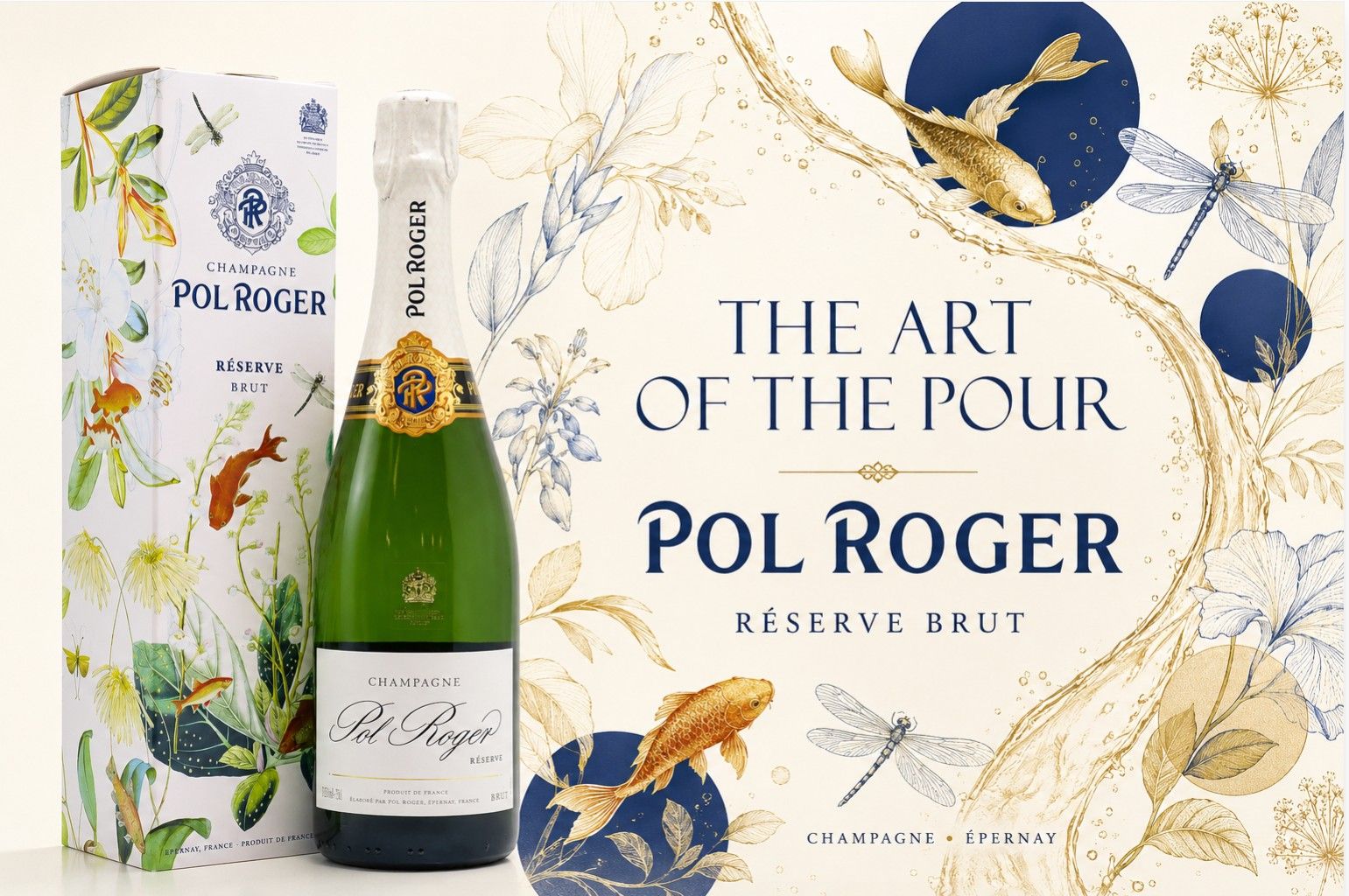
Some Champagnes are built around a particular vintage. Pol Roger Brut Réserve is built around consistency.
The Pol Roger Brut Réserve Champagne Gift Box is the house's classic non-vintage expression, combining Pinot Noir, Pinot Meunier and Chardonnay in equal proportions from around 30 different crus across Champagne. Around 25% reserve wines are incorporated into the blend, helping Pol Roger maintain its recognisable style from one release to the next.
The finished Champagne spends four years ageing in Pol Roger's cellars, 33 metres beneath Épernay, before traditional hand riddling, disgorgement and further resting prior to release.
For anyone searching for Pol Roger Champagne, Pol Roger Brut Réserve, Pol Roger gift box, Pol Roger non-vintage Champagne or simply trying to understand what separates the house from other major Champagne producers, Brut Réserve is the natural place to start.
Explore Pol Roger Brut Réserve Champagne at Hard To Find Whisky.
Pol Roger Brut Réserve at a Glance
- Producer: Champagne Pol Roger
- Expression: Brut Réserve
- Region: Champagne, France
- Bottle size: 75cl
- ABV: 12.5%
- Blend: Equal proportions Pinot Noir, Pinot Meunier and Chardonnay
- Vineyard sourcing: Approximately 30 crus
- Reserve wines: Around 25%
- Cellar ageing: Four years
- Cellar depth: 33 metres below street level
- Production: Traditional bottle fermentation and hand riddling
- Presentation: Gift box
- Style: Fresh, elegant, fruit-led, floral and subtly brioche-rich.
What Is Pol Roger Brut Réserve?
Pol Roger Brut Réserve is the house's signature non-vintage Champagne, created to reproduce a consistent balance of elegance, freshness, structure and complexity year after year.
Unlike a vintage Champagne, which comes predominantly from one harvest and reflects the character of that particular year, Brut Réserve combines wines from the current base harvest with older reserve wines.
That allows the house to maintain a recognisable Pol Roger style regardless of annual differences in weather and grape character.
The blend is remarkably symmetrical:
- One-third Pinot Noir
- One-third Pinot Meunier
- One-third Chardonnay
Each grape has a different role.
Pinot Noir
The Pinot Noir comes mainly from leading crus in the Montagne de Reims.
Pol Roger uses it to provide:
- Structure
- Body
- Power.
Pinot Meunier
Pinot Meunier comes from the Vallée de la Marne and Épernay area.
Its role is primarily:
- Freshness
- Roundness
- Fruit.
Chardonnay
The Chardonnay comes from Épernay and highly regarded crus of the Côte des Blancs.
It contributes:
- Aromatic complexity
- Finesse
- Elegance
- Lightness.
The equal blend is important because no single grape variety is supposed to dominate.
Pinot Noir gives the backbone, Meunier supplies fruit and Chardonnay provides lift.
Why Are Reserve Wines Important?
Pol Roger incorporates around 25% reserve wines into Brut Réserve.
Reserve wines are wines from previous harvests retained specifically for future blending.
Their role is particularly important in non-vintage Champagne because weather conditions in Champagne vary considerably from one year to another.
One season may produce especially strong Chardonnay.
Another may favour Pinot Noir.
Reserve wines give the blending team more options when recreating the established house style.
That is why Brut Réserve is better understood as a blend across vineyards, grape varieties and years rather than simply Champagne without a vintage date.
Why Does Pol Roger Use Around 30 Different Crus?
The three grape varieties are sourced across roughly 30 different crus.
That wide sourcing gives Pol Roger another layer of blending flexibility.
Different areas contribute different characteristics:
Montagne de Reims brings particularly important Pinot Noir.
Vallée de la Marne provides much of the Pinot Meunier.
Côte des Blancs contributes fine Chardonnay.
Rather than attempting to showcase one village or one vineyard, Brut Réserve is designed to represent the Pol Roger house style.
That distinguishes it from something like the Pol Roger Blanc de Blancs Vintage 2016, where Chardonnay and the Côte des Blancs become the focus.
Four Years in the Cellars
One of the more impressive details behind Brut Réserve is its maturation.
Pol Roger gives the Champagne four years of ageing in its cellars before release.
Those cellars lie around 33 metres beneath street level in Épernay, providing the cool conditions required for slow secondary fermentation and maturation.
This extended lees ageing helps explain why the Champagne combines fresh fruit with more developed flavours such as:
- Brioche
- Vanilla
- Honey
- Cooked fruit
rather than tasting purely youthful and citrus-driven.
Is Pol Roger Brut Réserve Hand Riddled?
Yes.
Pol Roger states that each Brut Réserve bottle undergoes traditional remuage – hand riddling – before disgorgement.
Riddling gradually moves the sediment created during bottle fermentation towards the neck so that it can eventually be removed.
After disgorgement and dosage, Brut Réserve is rested for at least another three months before leaving the house.
So the production sequence includes:
- Separate vinification of grapes and villages.
- Blending with reserve wines.
- Secondary fermentation in bottle.
- Four years of cellar maturation.
- Traditional hand riddling.
- Disgorgement and dosage.
- Additional resting before release.
That is considerably more involved than simply producing a young sparkling wine.
What Does Pol Roger Brut Réserve Taste Like?
Pol Roger Brut Réserve balances fresh fruit with floral, pastry and lightly spiced flavours.
Appearance
The Champagne has a golden straw colour with abundant fine bubbles.
Nose
The official profile begins with fruit before becoming more floral and pastry-led.
Expect:
- Pear
- Mango
- Honeysuckle
- White jasmine
- Vanilla
- Brioche.
HTFW similarly highlights a fresh, fruit-driven Champagne profile.
Palate
The palate develops into richer fruit and honeyed notes:
- Quince jelly
- Apricot jam
- Beeswax
- Acacia honey.
There is enough freshness to prevent the Champagne becoming heavy, but the four years of cellar ageing gives it more depth than a purely youthful style.
Finish
The finish introduces:
- Candied orange peel
- Tangerine
- Cardamom
- Anise.
That transition from fruit through pastry and honey into citrus and spice is one reason Brut Réserve works both as an aperitif and alongside food.
Is Pol Roger Brut Réserve Dry?
Yes.
It is a Brut Champagne, placing it firmly within the dry style of Champagne rather than the sweeter Demi-Sec category.
Anyone wanting a noticeably sweeter expression can instead look towards Pol Roger Rich Demi-Sec Champagne, which uses the same broad three-grape approach but is produced to offer a richer and sweeter drinking style.
At the opposite end of the spectrum sits Pol Roger Pure Extra Brut, designed for drinkers looking for an even drier expression.
That makes the wider range relatively easy to navigate:
- Pure Extra Brut – driest
- Brut Réserve – classic balanced Brut
- Rich Demi-Sec – sweeter
Pol Roger Brut Réserve vs Pol Roger Vintage
The Pol Roger Vintage 2018 serves a different purpose.
Brut Réserve is designed around consistency across different years.
The Vintage expression is designed around the character of one particularly strong harvest.
The 2018 Vintage uses the traditional Pol Roger vintage formula of 60% Pinot Noir and 40% Chardonnay sourced from Grand and Premier Cru vineyards.
Brut Réserve
- Non-vintage
- Pinot Noir, Pinot Meunier and Chardonnay
- Equal proportions
- Around 30 crus
- 25% reserve wines
- Four years cellar ageing
- House-style focus.
Vintage 2018
- Single vintage
- 60% Pinot Noir
- 40% Chardonnay
- Grand and Premier Cru sourcing
- Vintage-character focus.
Brut Réserve tells you what Pol Roger tastes like.
Vintage tells you what Pol Roger tasted like in a particular year.
Pol Roger Brut Réserve vs Blanc de Blancs
The Pol Roger Blanc de Blancs Vintage 2016 removes Pinot Noir and Pinot Meunier altogether.
It is built from Chardonnay, with the 2016 expression displaying strong minerality, citrus and a particularly delicate texture.
This makes the comparison useful.
Brut Réserve provides:
- More breadth
- More fruit
- Greater Pinot structure
- Meunier roundness
- Chardonnay freshness
Blanc de Blancs provides:
- Greater Chardonnay purity
- More obvious minerality
- Citrus
- Finesse
For someone new to Pol Roger, Brut Réserve remains the more complete introduction to the house.
Pol Roger and Winston Churchill
No discussion of Pol Roger lasts very long without Sir Winston Churchill.
The relationship developed during the 1940s, when Churchill became friends with Odette Pol-Roger. Pol Roger's historical records specifically identify their friendship during this period.
Churchill became one of the house's most famous admirers, and the relationship eventually inspired Pol Roger's prestige cuvée in his name.
Today, the Pol Roger Cuvée Sir Winston Churchill sits at the top of the house's range. It is produced only in selected vintages from Pinot Noir and Chardonnay, with Pinot Noir predominating to provide the structure and robustness associated with Churchill's preferred Champagne style.
Brut Réserve is not the Churchill cuvée.
But the famous relationship has become inseparable from the wider Pol Roger story.
Brut Réserve vs Cuvée Sir Winston Churchill
These two Champagnes sit at very different positions within the range.
Pol Roger Brut Réserve
- Non-vintage
- Equal Pinot Noir, Meunier and Chardonnay
- 25% reserve wines
- Four years cellar ageing
- Designed to represent the consistent Pol Roger house style.
Pol Roger Cuvée Sir Winston Churchill
- Prestige vintage cuvée
- Pinot Noir and Chardonnay
- Pinot Noir-led
- Made only in strong vintages
- Designed for greater power, maturity and structure.
Brut Réserve is the everyday benchmark for the house.
Sir Winston Churchill is the prestige expression.
What Food Goes With Pol Roger Brut Réserve?
Pol Roger describes Brut Réserve as capable of being served either as an aperitif or throughout an entire meal because of its balance between freshness, structure and vinosity.
Its flavour profile makes it particularly versatile.
Good pairings include:
- Oysters and shellfish
- Smoked salmon
- Sushi and sashimi
- White fish
- Roast chicken
- Lightly creamy dishes
- Soft cheeses
- Charcuterie
The Chardonnay provides enough freshness for seafood, while Pinot Noir gives the wine enough structure to handle richer dishes.
The brioche, honey and cooked-fruit notes also allow it to work well where an extremely lean Champagne might feel too austere.
What Temperature Should Pol Roger Champagne Be Served At?
Brut Champagne is best served well chilled but not freezing cold.
Around 8–10°C is a useful starting point.
Serving it excessively cold suppresses much of the:
- Mango
- Pear
- Floral character
- Brioche
- Honey
- Spice
that makes Brut Réserve interesting.
A white-wine-shaped Champagne glass is also useful because it gives the aromas more space to develop than an extremely narrow flute.
Is the Pol Roger Gift Box Worth Choosing?
The Pol Roger Brut Réserve Gift Box contains the same classic Brut Réserve style but adds branded presentation, making it particularly suitable when the bottle is being bought as a gift rather than purely for immediate drinking.
For larger celebrations, HTFW also carries the Pol Roger Brut Réserve 1.5 Litre Magnum Gift Box.
A magnum contains the equivalent of two standard bottles and creates a much stronger presentation for larger gatherings or milestone occasions.
There is also a Pol Roger Brut Réserve case of six for occasions where multiple bottles are required.
A Short History of Pol Roger
Pol Roger was founded in 1849, when the young Pol Roger began selling wine in Champagne. The house has remained closely associated with the Pol-Roger and de Billy families across successive generations.
Its relationship with Britain became particularly important, culminating in the famous friendship between Winston Churchill and the Pol-Roger family during the 1940s.
Today, Brut Réserve remains the best starting point for understanding the house because so much of the Pol Roger philosophy is visible in one bottle:
blending rather than novelty, extended cellar ageing rather than rapid release, and balance rather than one dominant grape variety.
Frequently Asked Questions
What is Pol Roger Brut Réserve?
It is Pol Roger's classic non-vintage Brut Champagne, blended from equal proportions of Pinot Noir, Pinot Meunier and Chardonnay.
What percentage is Pol Roger Brut Réserve?
The HTFW gift-box bottling is 12.5% ABV.
Which grapes are used?
Brut Réserve uses approximately:
- 33% Pinot Noir
- 33% Pinot Meunier
- 33% Chardonnay.
How many vineyards are used?
Pol Roger sources the blend from around 30 different Champagne crus.
Does Pol Roger use reserve wines?
Yes. Around 25% reserve wines are used in Brut Réserve.
How long is Pol Roger Brut Réserve aged?
The Champagne spends four years ageing in Pol Roger's cellars.
How deep are the Pol Roger cellars?
The maturation cellars are around 33 metres below street level in Épernay.
Is Pol Roger hand riddled?
Yes. Pol Roger states that Brut Réserve undergoes traditional hand riddling before disgorgement.
What does Pol Roger Brut Réserve taste like?
Expect pear, mango, honeysuckle and jasmine alongside vanilla and brioche, followed by quince, apricot, honey, candied citrus and gentle spice.
Is Pol Roger Brut Réserve sweet?
It is a Brut, so it is a dry Champagne. Those wanting a sweeter expression can explore Pol Roger Rich Demi-Sec, while Pol Roger Pure Extra Brut offers a drier alternative.
What is Pol Roger's connection with Winston Churchill?
Churchill became friends with Odette Pol-Roger during the 1940s and developed a famous association with the house. Pol Roger subsequently created its prestige Cuvée Sir Winston Churchill in his honour.
Where can I buy Pol Roger Brut Réserve?
You can view Pol Roger Brut Réserve Champagne Gift Box at Hard To Find Whisky.
Final Thoughts
The Pol Roger Brut Réserve Champagne does not depend on an unusual limited-edition bottle or an enormous vintage story.
Its appeal is much more fundamental.
Three grapes in equal proportions.
Around 30 crus.
25% reserve wines.
Four years in deep cellars.
Traditional hand riddling.
That production creates a Champagne with enough freshness for an aperitif but enough depth to continue through a meal.
Pear and mango become flowers.
Flowers become vanilla and brioche.
Quince and apricot lead into honey.
Then candied citrus, cardamom and anise extend the finish.
For someone exploring Pol Roger for the first time, Brut Réserve is therefore the logical starting point.
From there, the range can move drier with Pure Extra Brut, sweeter with Rich Demi-Sec, into individual harvests with Vintage 2018, towards Chardonnay purity with Blanc de Blancs 2016 or ultimately to the prestige Cuvée Sir Winston Churchill.
Explore the Pol Roger Brut Réserve Gift Box at HTFW or browse the wider Pol Roger Champagne collection.