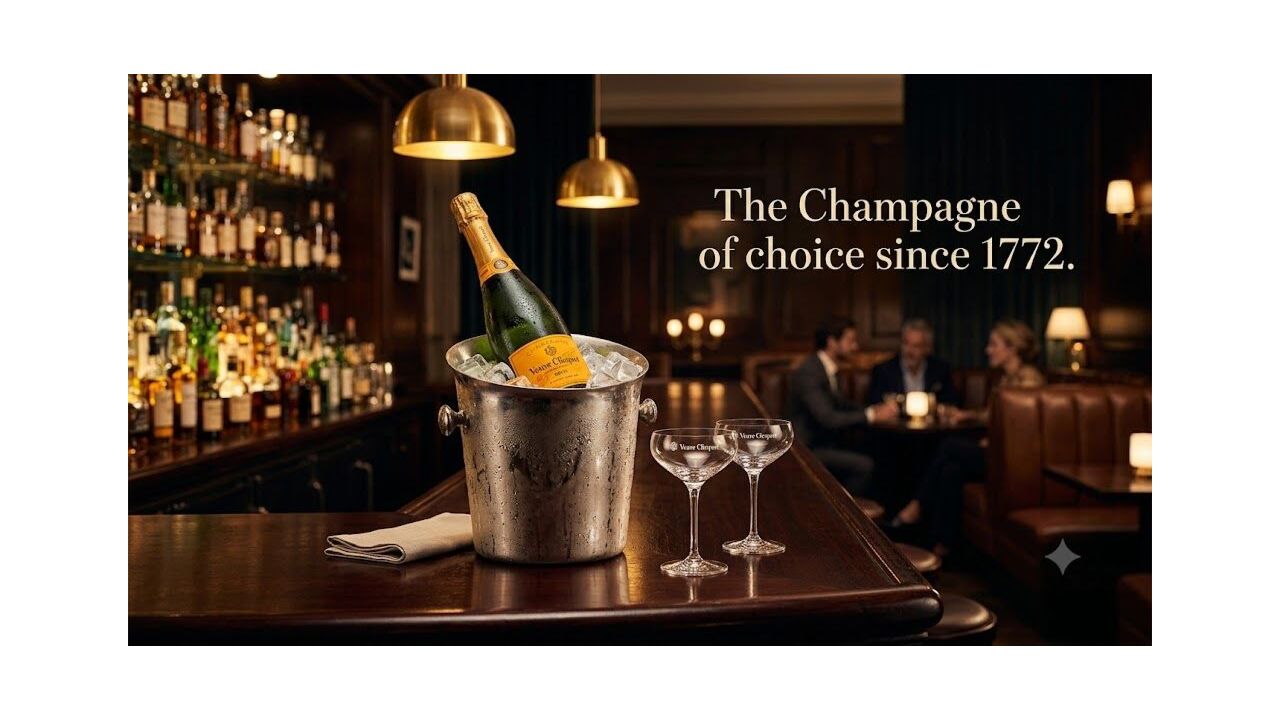


















Few Champagnes are as instantly recognisable as Veuve Clicquot Yellow Label Brut Champagne. Its vivid yellow label has become a familiar sight at weddings, anniversaries, restaurants, luxury events and celebrations around the world, but the story behind the bottle extends far beyond its distinctive appearance.
Yellow Label is the signature non-vintage Champagne of the House of Veuve Clicquot. Predominantly built around Pinot Noir, it combines the grape’s structure and depth with the elegance of Chardonnay and the rounded fruit character of Meunier. A substantial proportion of reserve wines helps the house maintain a consistent style, bringing together freshness, strength, ripe fruit and recognisable brioche notes.
It is a Champagne designed to be dependable without becoming ordinary. The blend is approachable enough to serve at a large celebration, yet structured and complex enough to accompany a full meal. That versatility has helped Veuve Clicquot Yellow Label remain one of the most famous Brut Champagnes in the world.
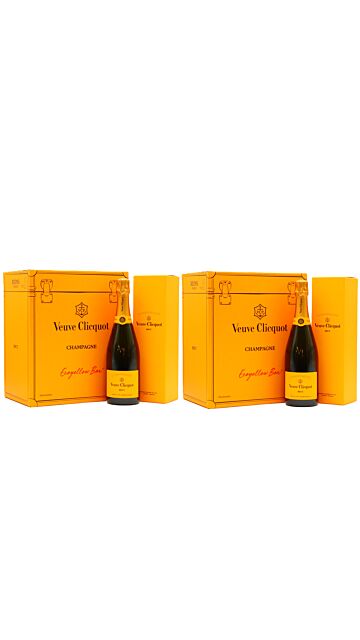
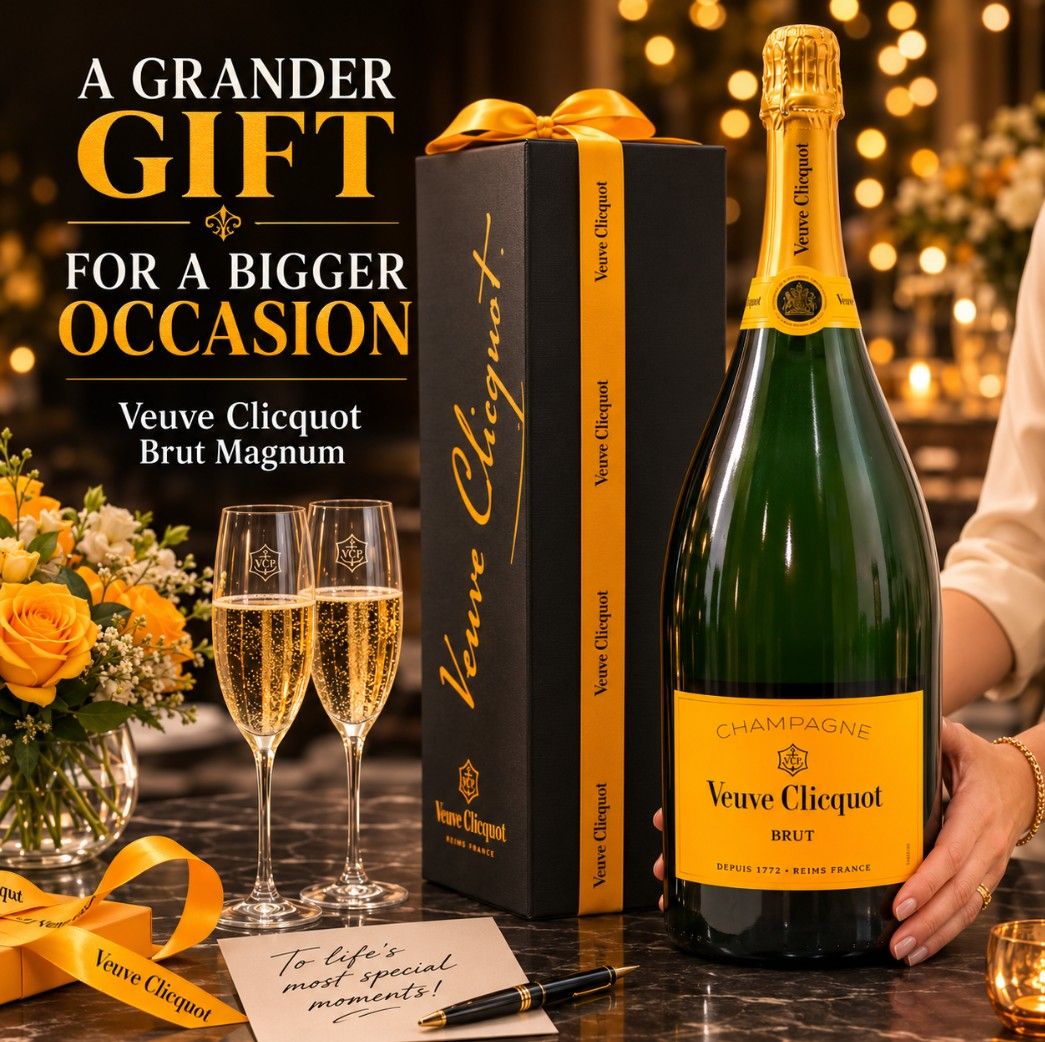
Available in a smart branded gift box, the Veuve Clicquot Yellow Label Brut Champagne Gift Box is an excellent choice for birthdays, weddings, anniversaries, corporate gifts and other important occasions.
The History of Veuve Clicquot
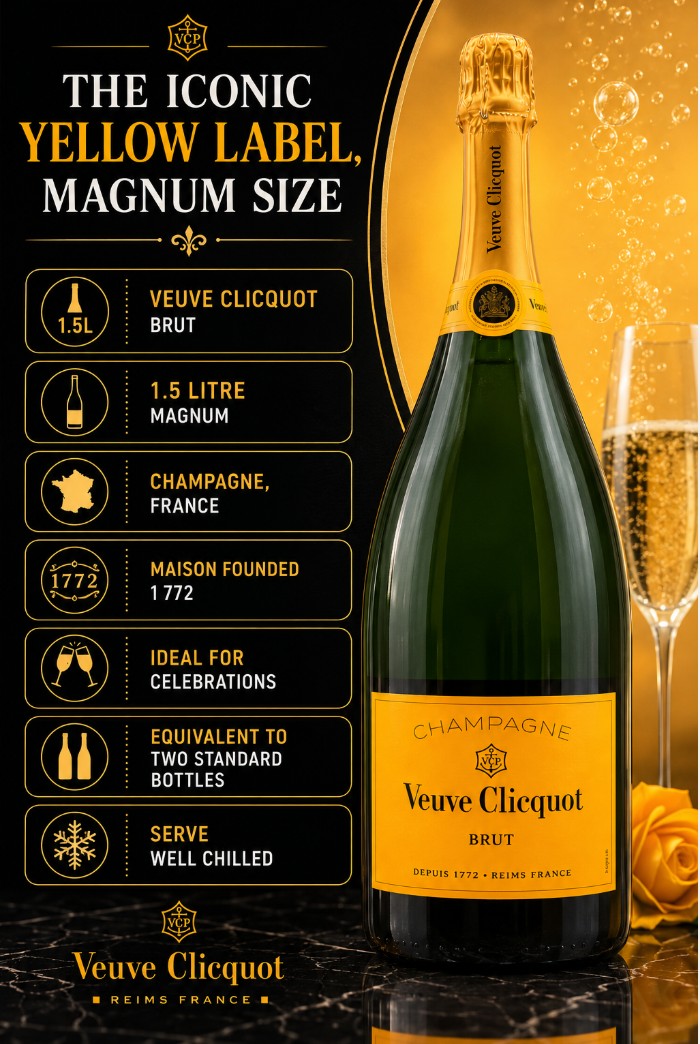
The House of Veuve Clicquot was founded in Reims in 1772 by Philippe Clicquot-Muiron. At the time, the family already had interests in banking and textiles, but Philippe recognised the growing international potential of Champagne and established a wine business under the Clicquot name.
The defining period in the house’s history began several decades later with Barbe-Nicole Ponsardin.
Barbe-Nicole married Philippe Clicquot’s son, François, in 1798. François became closely involved in the family Champagne business but died unexpectedly in 1805, leaving Barbe-Nicole widowed at the age of 27.
Rather than allowing the business to be sold or closed, she persuaded her father-in-law to let her take control. She became known as La Veuve Clicquot, meaning the Widow Clicquot, and went on to become one of the most influential figures in Champagne history.
Operating a major commercial business was highly unusual for a woman in early 19th-century France. Madame Clicquot not only maintained the house but expanded its reach, improved its wines and pursued new international markets at a time of political instability, war and difficult trading conditions.
Her work established the foundations of the modern Veuve Clicquot identity: confidence, innovation, quality and determination.
Today, those wishing to explore beyond Yellow Label can browse the complete Veuve Clicquot Champagne collection at Hard To Find Whisky.
Who Was Madame Clicquot?
Barbe-Nicole Clicquot Ponsardin is often referred to as the Grande Dame of Champagne.
After taking control of the house in 1805, she demonstrated an unusually ambitious approach to both winemaking and international trade. Rather than simply continuing the existing business, she introduced changes that helped establish Veuve Clicquot as one of Europe’s most prestigious Champagne houses.
One of her greatest commercial achievements involved sending Champagne to the Russian market following the Napoleonic Wars. Despite blockades and unstable trading conditions, Madame Clicquot recognised the demand for Champagne among the Russian aristocracy and moved quickly when access to the market reopened.
This helped Veuve Clicquot establish a powerful reputation in Russia and throughout Europe.
Her influence was not limited to commercial expansion. Madame Clicquot is closely associated with advances in Champagne production, including the development of the riddling table and the creation of one of the earliest known blended rosé Champagnes.
Her legacy remains central to the house, particularly in the prestige cuvée that bears her title: Veuve Clicquot La Grande Dame.
What Does “Veuve Clicquot” Mean?
The word veuve is French for widow.
The name Veuve Clicquot therefore means Widow Clicquot and refers directly to Barbe-Nicole Clicquot Ponsardin, who assumed control of the Champagne house after the death of her husband.
Although the name reflects a personal tragedy, it became associated with one of the most remarkable business stories in wine history. Madame Clicquot transformed widowhood, which could have severely restricted her prospects, into an opportunity to lead and expand the family business.
The name has since become inseparable from the distinctive yellow label, the Veuve Clicquot anchor emblem and the house’s reputation for structured Pinot Noir-led Champagne.
Why Is Veuve Clicquot Yellow Label So Famous?
Several factors have contributed to the lasting success of Yellow Label.
The first is consistency. As a non-vintage Champagne, Yellow Label is produced using wines from multiple harvests. The cellar team can draw upon an extensive collection of reserve wines to recreate the familiar Veuve Clicquot style each year, regardless of variations in the latest harvest.
The second is its distinctive flavour profile. Pinot Noir forms the backbone of the blend, giving Yellow Label greater strength and structure than many lighter, Chardonnay-led Champagnes. This makes it immediately recognisable and particularly versatile with food.
The third is presentation. The yellow label is one of the most recognisable pieces of packaging in the wine world. It stands out clearly on a shelf, at a dinner table or within a gift presentation.
Finally, Veuve Clicquot has built a powerful international reputation over more than two centuries. Yellow Label acts as the principal introduction to the house and remains closely associated with celebration, hospitality and luxury gifting.
The Origins of the Yellow Label
The famous yellow label was registered as a trademark in 1877.
Its introduction helped distinguish Veuve Clicquot’s dry Champagne from the sweeter styles that were common during the 19th century. The colour was unusual for the time and made the bottles easier to identify, gradually becoming one of the house’s defining visual features.
The precise shade is often described by Veuve Clicquot as yellow, although it can appear closer to orange or saffron depending on the light and surrounding colours.
Whatever its exact description, the label has become unmistakable. Even without reading the name, many Champagne drinkers recognise a bottle of Yellow Label immediately.
That combination of visual identity and consistent house style has helped Veuve Clicquot Yellow Label Brut retain its position as the house’s flagship non-vintage expression.
How Is Veuve Clicquot Yellow Label Made?
Yellow Label is a blended, non-vintage Brut Champagne made using the traditional Champagne method.
The blend is structured around approximately:
- 50% Pinot Noir
- 30% Chardonnay
- 20% Meunier
The precise composition can vary slightly as the cellar team adjusts the blend to preserve the house style.
Pinot Noir provides the strength, body and structure for which Veuve Clicquot is known. Chardonnay adds elegance, freshness and finesse, while Meunier contributes roundness, softness and expressive fruit.
The blend may also contain up to 45% reserve wines. These are wines retained from previous harvests and stored by the house for use in future cuvées.
Reserve wines are particularly important in non-vintage Champagne. They allow the cellar team to balance the characteristics of the latest harvest with older wines that have developed greater richness and complexity.
The result is intended to remain recognisably Veuve Clicquot from one release to the next.
Why Are Reserve Wines Important?
Weather conditions vary significantly between Champagne harvests. One year may deliver greater ripeness and body, while another may produce wines with higher acidity or a more delicate aromatic profile.
A non-vintage Champagne house cannot rely entirely on the latest harvest if it wants to maintain a consistent style. Reserve wines provide the cellar team with a much broader collection of flavours, structures and maturity levels.
By incorporating wines from previous years, Veuve Clicquot can preserve the balance of fruit, freshness, structure and brioche character expected from Yellow Label.
The reserve wine collection also adds depth. Younger base wines contribute freshness and energy, while older reserves can bring rounder fruit, greater integration and more developed pastry or toasted notes.
Using up to 45% reserve wines is therefore not simply a way to make the Champagne consistent. It is an important part of the wine’s complexity and identity.
What Is Non-Vintage Champagne?
Veuve Clicquot Yellow Label is a non-vintage Champagne, often abbreviated to NV.
A vintage Champagne is primarily produced from grapes harvested in one declared year. A non-vintage Champagne blends wines from different years to maintain a consistent house style.
Non-vintage does not mean that the Champagne lacks age or quality. Yellow Label includes reserve wines from previous harvests and undergoes extended ageing before release.
The non-vintage approach gives Veuve Clicquot greater freedom when creating the blend. Rather than expressing the conditions of a single year, Yellow Label expresses the established style of the house.
Drinkers interested in the influence of an individual harvest can compare it with Veuve Clicquot Vintage Brut Champagne, which offers a more specific reflection of its declared vintage.
How Long Is Veuve Clicquot Yellow Label Aged?
After secondary fermentation in the bottle, Yellow Label spends an extended period ageing on its lees in Veuve Clicquot’s cellars.
Lees are the spent yeast cells remaining after fermentation. Contact with them helps Champagne develop greater texture and introduces flavours associated with bread, pastry, biscuits and brioche.
This ageing process helps explain why Yellow Label offers more than fresh orchard fruit. The pear, apple, peach and citrus notes are joined by rounder aromas of brioche, vanilla and toasted pastry.
The balance between fresh fruit and mature lees character is one of the defining qualities of the cuvée.
The Importance of Riddling
One of the most important developments in the history of Champagne is closely associated with Madame Clicquot: the riddling table.
Following secondary fermentation, Champagne contains yeast sediment inside the bottle. Early producers struggled to remove this sediment efficiently without losing a significant amount of wine or carbonation.
Madame Clicquot and her cellar master developed a process in which bottles were placed at an angle in a specially designed table. The bottles were then gradually turned and tilted, encouraging the sediment to move towards the neck.
Once the sediment collected near the closure, it could be removed through disgorgement.
This process, known as remuage or riddling, helped Champagne become clearer and more visually refined. Modern producers may use mechanised gyropalettes, but the basic principle remains an essential stage of traditional-method sparkling wine production.
Madame Clicquot’s contribution helped improve both the appearance and production efficiency of Champagne and remains one of the principal reasons she occupies such an important place in wine history.
What Does Veuve Clicquot Yellow Label Taste Like?
Yellow Label is known for combining ripe fruit, freshness, structure and a recognisable pastry character.
Appearance
The Champagne has a bright golden-yellow appearance with a persistent stream of fine bubbles.
Its colour reflects both the blend and its period of ageing, while the lively mousse creates a creamy but energetic texture.
Nose
The nose opens with yellow and white fruits, including pear, green apple and peach.
These are followed by fresher citrus notes of mandarin, lemon and grapefruit. With time in the glass, the Champagne reveals deeper aromas of brioche, croissant, vanilla and lightly toasted pastry.
Subtle dried-fruit and almond notes add further complexity.
Palate
The palate is fresh, structured and rounded.
Pear, apple and peach lead into lemon, mandarin and grapefruit, while the Pinot Noir gives the wine a firm backbone. Chardonnay keeps the blend lively and refined, with Meunier contributing soft, approachable fruit.
The bubbles are fine and well integrated, creating a silky texture without taking away from the wine’s energy.
Finish
The finish is clean, persistent and gently savoury, with lingering orchard fruit, citrus, brioche and subtle toasted notes.
Is Veuve Clicquot Yellow Label Sweet or Dry?
Yellow Label is a Brut Champagne and is therefore considered dry.
The current style has a dosage of approximately 9 grams per litre. Dosage is the small quantity of wine and sugar added after disgorgement to balance Champagne’s naturally high acidity.
Although Yellow Label contains ripe fruit flavours and rounded pastry notes, it does not taste like a sweet sparkling wine. Its fruit is balanced by fresh acidity, citrus and a structured finish.
Drinkers who prefer a noticeably sweeter style may wish to explore the Demi-Sec Champagne collection, where the higher dosage produces a softer and more dessert-friendly profile.
For those seeking a classic dry style, Yellow Label remains a dependable introduction to Brut Champagne.
Is Veuve Clicquot Yellow Label a Good Champagne?
Yellow Label is designed to deliver a reliable and recognisable house style rather than the individuality of a single vineyard or harvest.
Its strengths are consistency, structure, versatility and accessibility. The Pinot Noir-led blend gives it more body than many delicate non-vintage Champagnes, while the reserve wines and lees ageing add depth beyond the initial fruit.
It is also widely available in different bottle formats and gift presentations, making it particularly suitable for celebrations.
Experienced Champagne drinkers may choose to explore vintage releases, prestige cuvées or smaller growers for more individual expressions. However, Yellow Label remains a well-made, historically significant and highly versatile example of non-vintage Brut Champagne.
Its broad appeal is one of the reasons it has become such an important reference point within the category.
What Food Goes with Veuve Clicquot Yellow Label?
Yellow Label is more food-friendly than many people expect.
The acidity refreshes the palate, while the Pinot Noir structure allows it to accompany richer dishes. Its combination of fruit, citrus and brioche works across seafood, poultry, cheese and lighter meat dishes.
Seafood and Fish
Suitable pairings include:
- Oysters
- Smoked salmon
- Grilled prawns
- Lobster
- Crab
- Scallops
- Fish and chips
- Sushi
- Sashimi
- Tuna tartare
The Champagne’s acidity complements fresh seafood, while the fuller body works well with richer dishes such as lobster or smoked salmon.
Fish and chips can be an especially effective pairing. The bubbles and acidity cut through the fried coating, while the brioche character complements the crisp batter.
Poultry and Meat
Yellow Label pairs well with:
- Roast chicken
- Chicken in a light cream sauce
- Turkey
- Pork tenderloin
- Parma ham
- Charcuterie
- Veal
- Lightly seasoned lamb
- Duck pâté
The Pinot Noir gives Yellow Label enough structure to stand alongside poultry and lighter meats without overwhelming them.
Cheese
Good cheese pairings include:
- Brie
- Camembert
- Comté
- Gruyère
- Parmesan
- Aged Cheddar
- Goat’s cheese
Soft cheeses work with the Champagne’s creamy texture, while harder, nutty cheeses complement its brioche and almond notes.
Vegetarian Food
Yellow Label can be served with:
- Mushroom tart
- Truffle risotto
- Roasted vegetables
- Asparagus
- Goat’s cheese salad
- Vegetable tempura
- Parmesan pastries
- Truffle fries
Earthy mushroom and truffle flavours are particularly effective alongside the wine’s developed pastry notes.
Can It Be Served with Dessert?
As a Brut Champagne, Yellow Label is usually better with savoury food than very sweet desserts.
A dessert that is much sweeter than the Champagne can make the wine appear sharper and drier. Lighter options such as an apple tart, almond pastry or citrus-based dessert can work, provided the sugar level is restrained.
For richer desserts, a sweeter Demi-Sec Champagne is generally the better choice.
What Temperature Should Veuve Clicquot Be Served At?
Yellow Label is best served at approximately 8°C to 10°C.
Serving Champagne too warm can make it appear heavy and reduce the freshness of its bubbles. Serving it extremely cold can mute its fruit, brioche and citrus aromas.
A bottle can be chilled in a refrigerator before serving or placed in an ice bucket containing both ice and water.
An ice bucket filled only with ice is less effective because the bottle does not make complete contact with the cold surface. Adding water allows the chilled mixture to surround the bottle and cool it evenly.
Once served, the Champagne can gradually warm in the glass, revealing more of its orchard-fruit, pastry and toasted character.
What Is the Best Glass for Veuve Clicquot Yellow Label?
A tulip-shaped Champagne glass is an excellent choice.
Its narrow opening helps retain the bubbles, while the slightly broader bowl gives the aromas more room to develop than a traditional narrow flute.
A medium-sized white-wine glass can also work particularly well. This allows the pear, apple, peach, citrus and brioche notes to open more fully.
A coupe may look elegant, but its broad, shallow shape allows carbonation and aromas to escape relatively quickly.
For a short toast or visual presentation, a flute remains suitable. For tasting the Champagne in greater detail or serving it with food, a tulip glass or white-wine glass is usually preferable.
How Should a Bottle of Champagne Be Opened?
Remove the foil and loosen the wire cage while keeping firm control of the cork.
Hold the bottle at approximately a 45-degree angle and point it away from people, glassware and fragile objects. Keep one hand over the cork and use the other to turn the bottle slowly.
The cork should be eased out under control, producing a quiet sigh rather than a loud pop.
A dramatic release may look celebratory, but it allows more pressure and carbonation to escape. Opening the bottle gently helps preserve the bubbles and reduces the risk of spilling the wine.
How Long Does Veuve Clicquot Last Once Opened?
Yellow Label is best enjoyed on the day it is opened.
A proper sparkling-wine stopper can help preserve the pressure, allowing the Champagne to retain some freshness and carbonation until the following day.
The bottle should be returned to the refrigerator immediately after serving. A standard wine stopper or spoon placed in the neck will not create the same secure seal as a purpose-designed Champagne closure.
Even with a good stopper, the wine will gradually lose bubbles and aromatic intensity. It may remain enjoyable the following day, but it will not have quite the same liveliness as a newly opened bottle.
Can Veuve Clicquot Yellow Label Be Cellared?
Yellow Label is ready to drink when purchased, but it can develop further when stored correctly.
Fresh bottles emphasise pear, apple, peach, citrus and lively acidity. With additional bottle age, these notes may become softer and more integrated, while brioche, toast, dried fruit and nutty flavours can become more noticeable.
Those who enjoy freshness and vibrant fruit will generally prefer to drink it younger. Those who appreciate a rounder and more developed Champagne may choose to keep it for several years.
The house indicates an ageing potential of approximately three to five years, although storage conditions and personal preference will affect the result.
Bottles should be kept in a cool, dark environment with a stable temperature, away from vibration and strong light.
Is Veuve Clicquot Yellow Label a Good Gift?
Yellow Label is one of the most recognisable Champagne gifts available.
Its famous label immediately communicates celebration, while the established reputation of Veuve Clicquot makes it suitable for recipients with varying levels of wine knowledge.
It works particularly well for:
- Birthdays
- Weddings
- Engagements
- Anniversaries
- New homes
- Promotions
- Retirements
- Christmas
- Thank-you gifts
- Corporate presentations
- Dinner-party hosts
- Milestone celebrations
The Veuve Clicquot Yellow Label Brut Champagne Gift Box adds a polished presentation and protects the bottle during gifting or storage.
It is a safe choice when the recipient’s exact Champagne preferences are unknown because the style combines fruit, freshness and richness without moving too far towards either extreme.
Veuve Clicquot Yellow Label for Weddings
Yellow Label is particularly well suited to weddings because it is recognisable, dependable and widely appealing.
It can be used for:
- The wedding toast
- Reception drinks
- Table service
- Bridal party gifts
- Gifts for parents
- Wedding anniversaries
- Engagement celebrations
Its fuller body also allows it to continue from the reception into the meal, rather than being limited to a brief toast.
For larger celebrations, magnums and other large-format bottles can create a more impressive visual centrepiece while serving more guests.
Those planning an event can explore the wider Champagne collection for additional bottle formats, rosé options and vintage releases.
How Does Yellow Label Compare with Veuve Clicquot Rosé?
Yellow Label and Veuve Clicquot Rosé share the same broad house identity, but their flavour profiles are noticeably different.
Yellow Label focuses on:
- Pear
- Apple
- Peach
- Citrus
- Brioche
- Toasted pastry
- Subtle dried fruit
Veuve Clicquot Rosé adds a proportion of red wine to the blend, bringing more pronounced flavours of:
- Strawberry
- Raspberry
- Red cherry
- Redcurrant
- Spice
The rosé retains the structure associated with Veuve Clicquot but offers a more obviously berry-led profile.
Yellow Label is generally the more versatile choice for classic gifting and broad food pairing. Veuve Clicquot Rosé can be especially appealing for romantic occasions, summer celebrations and dishes built around salmon, tuna, duck or red berries.
Customers interested in pink Champagne can explore the complete rosé Champagne collection at Hard To Find Whisky.
How Does Yellow Label Compare with Veuve Clicquot Vintage?
Yellow Label is created to express a consistent house style across different releases.
Veuve Clicquot Vintage Brut Champagne, by contrast, is produced from grapes associated with one declared harvest. It therefore reflects the character of a particular year as well as the house style.
Vintage Champagne generally receives longer ageing and may show greater complexity, depth and individuality. Depending on the release, this can introduce more developed flavours of toast, nuts, spice, dried fruit and minerals.
Yellow Label remains fresher, more immediate and more widely suited to everyday celebrations. Vintage Veuve Clicquot is an excellent choice for milestone birthdays, anniversaries, collectors or anyone interested in exploring a more mature expression of the house.
How Does Yellow Label Compare with La Grande Dame?
La Grande Dame is the prestige cuvée of Veuve Clicquot and is named in honour of Madame Clicquot.
It sits at a significantly higher level within the range and places an even greater emphasis on Pinot Noir from selected historic vineyards.
Where Yellow Label is created for consistency, accessibility and versatility, La Grande Dame is intended as a more refined and age-worthy expression of the house’s winemaking.
La Grande Dame typically offers greater precision, complexity and depth, with a structure suited to extended cellaring and fine dining.
Yellow Label is the ideal introduction to Veuve Clicquot. La Grande Dame is the natural progression for collectors or enthusiasts looking to explore the house at its most prestigious.
Available releases can be found within the Veuve Clicquot range.
Veuve Clicquot Yellow Label Compared with Other Champagnes
Yellow Label occupies a distinctive position among the major non-vintage Champagnes. Its Pinot Noir-led structure makes it richer and firmer than some alternatives, while its fruit and brioche notes keep it approachable.
Moët & Chandon Brut Impérial
Moët & Chandon Brut Impérial is generally bright, polished and fruit-forward, with orchard fruit, citrus and subtle pastry notes.
It can feel lighter and more immediately refreshing than Yellow Label, making it especially suited to aperitifs and larger celebrations.
Yellow Label offers a firmer structure and a more pronounced Pinot Noir character.
Bollinger Special Cuvée
Bollinger Special Cuvée is also Pinot Noir-led but usually presents a broader, richer and more vinous style.
Its deeper toasted, nutty and spiced character makes it particularly effective with food. Drinkers who enjoy the strength of Yellow Label but want greater richness may find Bollinger a natural alternative.
Laurent-Perrier La Cuvée
Laurent-Perrier La Cuvée places more emphasis on Chardonnay, resulting in a fresher, lighter and more citrus-led Champagne.
It offers elegance and purity rather than the fuller structure associated with Yellow Label.
Those who enjoy the Laurent-Perrier style may also wish to explore Laurent-Perrier Cuvée Rosé Champagne, a 100% Pinot Noir rosé known for its expressive raspberry and strawberry character.
Taittinger Brut Réserve
Taittinger Brut Réserve contains a comparatively high proportion of Chardonnay, giving it a refined, delicate and fresh profile.
Yellow Label is generally broader and more structured, while Taittinger can appear lighter and more floral.
Pol Roger Brut Réserve
Pol Roger Brut Réserve is known for its balance, fine mousse and combination of fruit, flowers and pastry.
It provides a composed and traditional alternative to Yellow Label, with a slightly more understated style.
Ruinart Blanc de Blancs
Ruinart Blanc de Blancs is made entirely from Chardonnay and therefore sits in a very different stylistic position.
It emphasises citrus, white flowers, fresh fruit and mineral elegance rather than Pinot Noir structure. It is a strong alternative for drinkers who prefer a lighter, more refined Champagne.
These styles and houses can be explored within the complete Champagne and sparkling wine selection.
What Makes Pinot Noir So Important to Veuve Clicquot?
Pinot Noir is described as the backbone of Yellow Label.
The grape contributes body, structure and depth, helping the Champagne remain present when served with food. It also provides ripe fruit flavours that complement the fresher character of Chardonnay and Meunier.
This emphasis on Pinot Noir appears throughout the Veuve Clicquot portfolio, particularly in its vintage releases and La Grande Dame.
The house’s preference for structure does not mean Yellow Label is heavy. Chardonnay provides acidity and finesse, while Meunier brings softness and fruit. The value of Pinot Noir lies in the foundation it provides for the rest of the blend.
This makes Yellow Label a useful choice for drinkers who find very delicate Champagnes too light but do not want the full richness of a heavily mature or oak-influenced cuvée.
The Veuve Clicquot Cellars in Reims
Veuve Clicquot stores and matures its Champagne in historic chalk cellars beneath Reims.
These underground spaces, known as crayères, were originally excavated from the region’s chalk. They provide naturally stable temperatures and humidity levels, creating excellent conditions for ageing Champagne.
The chalk also has an important relationship with the vineyards above ground. Champagne’s chalk-rich soils store water while providing drainage, helping vines survive both wet and dry conditions.
Within the cellars, bottles can mature in darkness and at a consistent temperature as secondary fermentation and lees ageing take place.
The historic cellars associated with major Reims Champagne houses form part of the region’s wider winemaking heritage and help connect modern bottles such as Yellow Label with centuries of local production.
Frequently Asked Questions
What grapes are used in Veuve Clicquot Yellow Label?
The blend is approximately 50% Pinot Noir, 30% Chardonnay and 20% Meunier, although the exact proportions may vary slightly.
Is Veuve Clicquot Yellow Label vintage?
No. Yellow Label is a non-vintage Champagne made using wines from multiple harvests.
What is the alcohol percentage?
Veuve Clicquot Yellow Label is bottled at 12% ABV.
Is Yellow Label dry?
Yes. It is classified as Brut and has a dosage of approximately 9 grams per litre.
What does it taste like?
The principal flavours include pear, apple, peach, lemon, mandarin, grapefruit, brioche, vanilla and toasted pastry.
How cold should it be served?
Serve Yellow Label at approximately 8°C to 10°C.
Is it suitable for food?
Yes. Its Pinot Noir-led structure works particularly well with seafood, roast chicken, charcuterie, cheese, mushrooms and fried dishes.
Is Veuve Clicquot suitable for vegans?
Production methods and certification may change. Customers requiring a strictly vegan Champagne should confirm the latest product information before purchasing.
Does Yellow Label come in a gift box?
The Veuve Clicquot Yellow Label Brut Champagne available at Hard To Find Whisky is supplied in a branded gift box.
How long can it be stored?
Yellow Label is ready to drink but may develop for approximately three to five years under suitable storage conditions.
Can it be used in Champagne cocktails?
It can be used in cocktails such as a Mimosa, Bellini or French 75, although its flavour and quality also make it very enjoyable served on its own.
Is Veuve Clicquot a good wedding Champagne?
Yes. Its recognisable presentation, consistent style and broad appeal make it a popular choice for wedding receptions, toasts and gifts.
Why Veuve Clicquot Yellow Label Remains a Champagne Icon
Yellow Label has achieved its status through more than visual recognition.
Behind the famous packaging is a carefully maintained house style built around Pinot Noir, a significant collection of reserve wines and extended cellar ageing. The result balances strength with freshness and ripe fruit with developed brioche character.
Its history also carries genuine importance. Veuve Clicquot’s development is inseparable from Madame Clicquot, whose leadership, international ambition and work on the riddling process helped shape the wider Champagne industry.
Yellow Label brings that history into an accessible non-vintage expression. It can be opened for an informal toast, served throughout a meal or presented as a luxury gift without requiring extensive explanation.
That combination of history, consistency, versatility and recognisable presentation has allowed it to remain one of the world’s best-known Champagnes.
Buy Veuve Clicquot Yellow Label Brut Champagne
Whether purchased for a wedding, birthday, anniversary, dinner or important gift, Veuve Clicquot Yellow Label offers a classic expression of the house’s Pinot Noir-led style.
Its combination of pear, apple, peach, citrus, brioche and toasted pastry makes it immediately approachable, while the reserve wines and firm structure provide enough depth for more serious dining.
Shop the Veuve Clicquot Yellow Label Brut Champagne Gift Box, discover more from the Veuve Clicquot collection, or explore the complete selection of Champagne and sparkling wine available from Hard To Find Whisky.