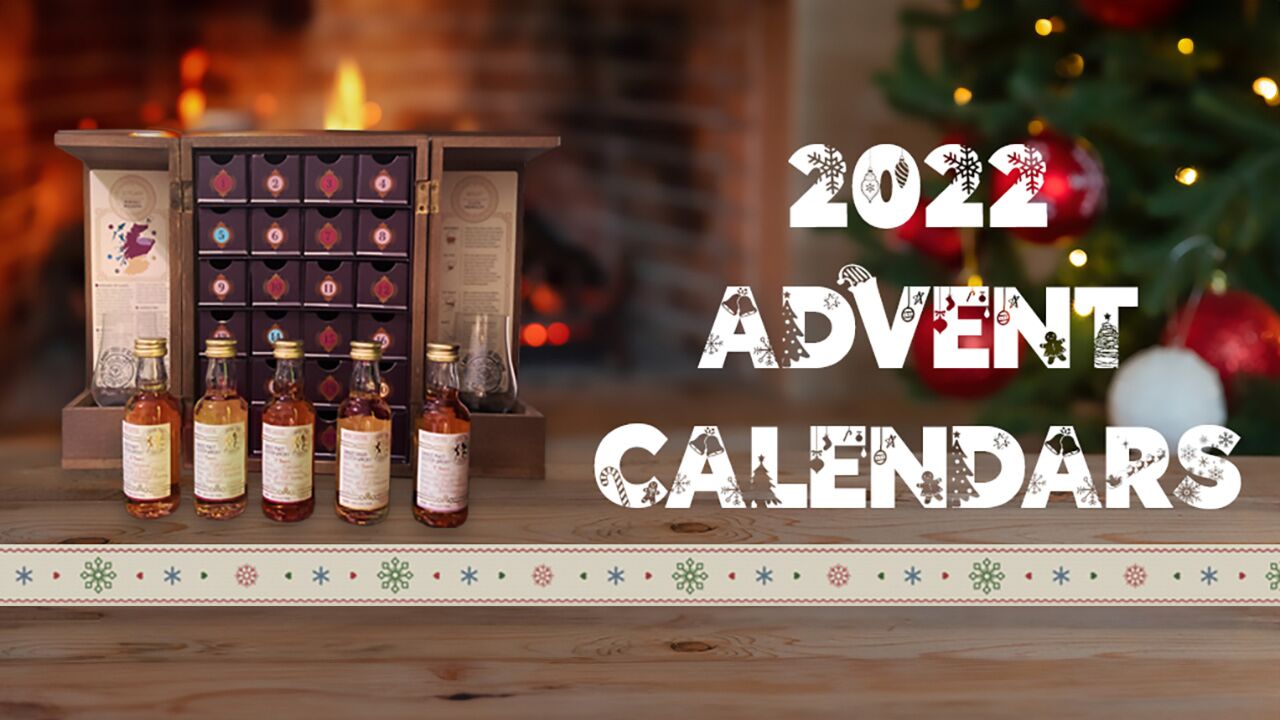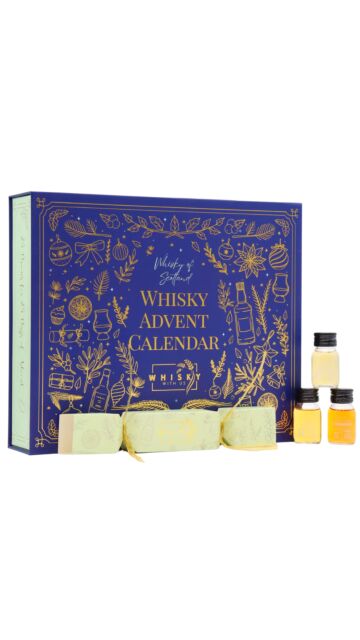





























A bottle of Scotch whisky provides the opportunity to understand one distillery, blend or maturation style in detail. A well-curated whisky advent calendar opens a much broader door.
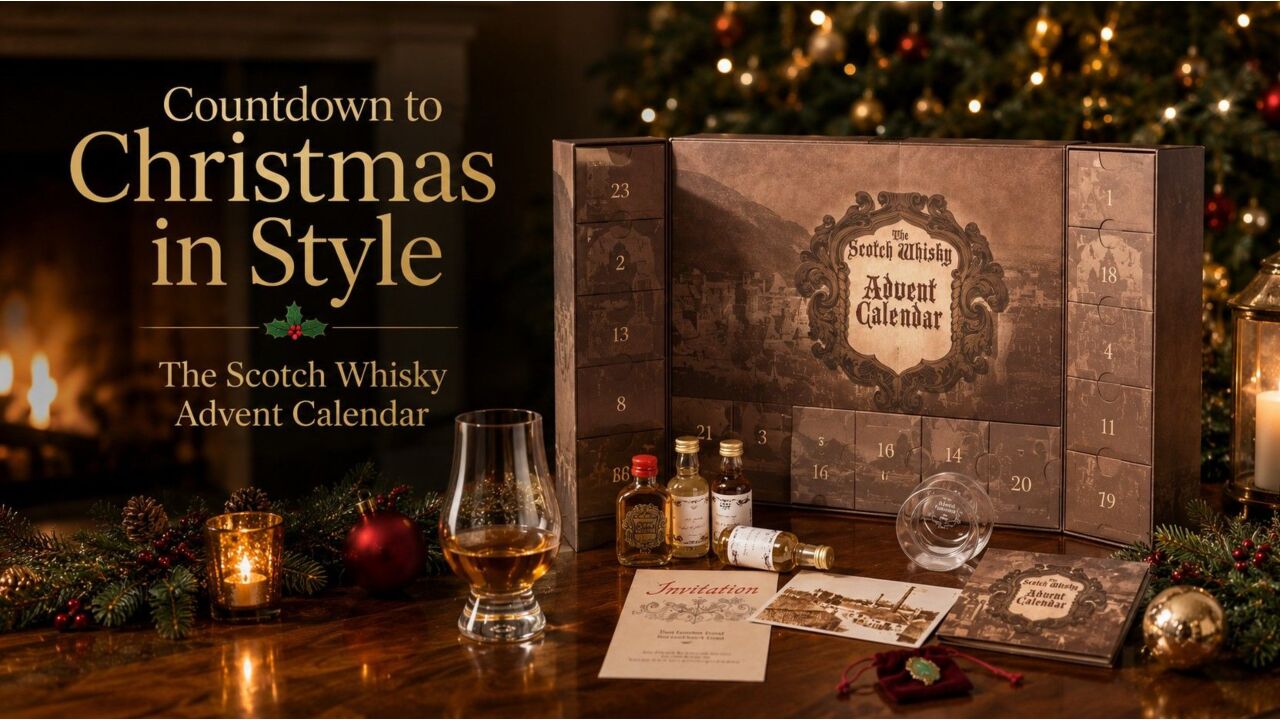
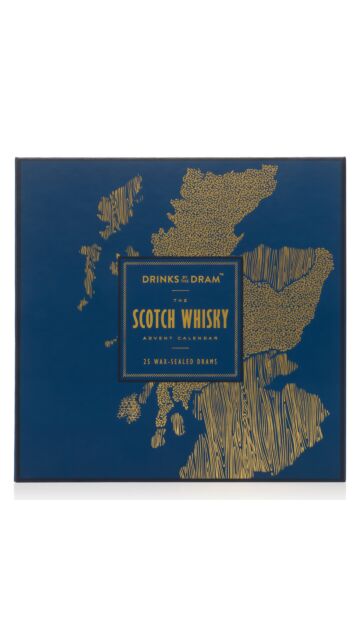
The Scotch Whisky 24 Day Advent Calendar contains 24 individual 3cl whisky samples, each sealed with wax and hidden behind its own numbered door. Beginning on 1 December, a new Scotch whisky can be discovered every evening until Christmas Eve.
Created by Drinks by the Dram, the calendar draws its whiskies from producers and distilleries across Scotland. The selection is listed at an average strength of 46% ABV, providing enough body to preserve character, texture and cask influence across a varied range of drams.
The calendar is designed as both a festive gift and a structured tasting journey. Honeyed malt, orchard fruit, citrus and vanilla may give way to sherry richness, toasted oak, dark chocolate, spice, coastal salinity or peat smoke as December progresses.
Because the exact daily line-up is not revealed on the HTFW product page, each door retains a genuine element of surprise. There is no need to choose one distillery, region or flavour profile in advance. The calendar allows the drinker to explore Scotch whisky gradually, compare contrasting styles and identify bottles they may want to revisit in full size.
Scotch Whisky Advent Calendar at a Glance
- Calendar type: Scotch whisky advent calendar
- Number of drams: 24
- Sample size: 3cl per dram
- Total whisky volume: 72cl
- Listed average strength: 46% ABV
- Producer: Drinks by the Dram
- Country of origin: Scotland
- Bottle type: Miniature samples
- Closures: Individual wax seals
- Packaging: Festive gift packaging
- Countdown: 1–24 December
- Whisky styles: A varied selection of Scotch whisky
- Typical flavour range: Malt, orchard fruit, citrus, vanilla, toffee, oak, spice, sherry richness, chocolate, coastal notes and peat smoke
The combined 72cl volume is slightly greater than a conventional 70cl bottle, but it is divided into 24 separate tasting measures. This creates a very different experience from purchasing one full-sized whisky.
Rather than returning to the same flavour each evening, the owner receives a sequence of new aromas, distillery styles and cask influences throughout the festive period.
What Is Inside the Scotch Whisky 24 Day Advent Calendar?
The calendar contains 24 different wax-sealed 30ml drams sourced from Scotch whisky distilleries and producers.
Each miniature is concealed behind a numbered door. The individual whisky can therefore remain a surprise until that date arrives.
The HTFW product page does not publish a complete dram list. That prevents the calendar from being reduced to a checklist before December has even begun and avoids revealing the order in which the whiskies appear.
The overall tasting profile indicates a broad journey through flavours including:
- Honeyed malt
- Orchard fruit
- Citrus zest
- Creamy vanilla
- Toffee
- Toasted oak
- Gentle spice
- Sherry warmth
- Espresso
- Chocolate
- Sea air
- Peat smoke
Not every dram will contain all these qualities. They describe the range of experiences offered across the calendar rather than one uniform flavour profile.
One door may reveal a light, citrus-led whisky, while the next introduces darker dried fruit and sherry oak. A coastal dram may bring salt and smoke before a softer vanilla-led whisky changes the pace the following evening.
That variation is the point.
Why the Contents Remain a Surprise
Whisky enthusiasts often research a bottle extensively before purchasing it. They may know the distillery, age, casks, strength and tasting notes before the cork is removed.
An advent calendar reverses that process.
The whisky arrives before the information.
This encourages the drinker to focus first on what is in the glass:
- Is the whisky light or full-bodied?
- Does it smell of citrus or dried fruit?
- Is the sweetness honeyed, creamy or caramelised?
- Does the oak feel fresh, toasted or mature?
- Is there peat smoke?
- Does the whisky suggest a coastal location?
- Is the strength immediately noticeable?
- What style of cask might have been used?
The label can then be checked after forming an initial impression.
This makes the calendar more than a collection of miniatures. It can become a series of informal blind tastings, helping the owner recognise personal preferences without being guided by brand reputation, packaging or price.
Who Makes the Scotch Whisky Advent Calendar?
The calendar is assembled by Drinks by the Dram, a specialist producer of individual spirit samples and curated tasting collections.
Drinks by the Dram presents spirits in individual 30ml wax-sealed measures, allowing customers to taste a whisky, rum, gin or other spirit without purchasing an entire bottle. Its wider range includes individual drams, tasting sets and advent calendars.
The format is particularly effective for Scotch whisky.
A standard bottle may provide more than 20 generous servings, representing a significant commitment when the drinker is unfamiliar with the distillery or style. A 3cl sample provides enough whisky for a considered tasting while leaving room to explore something different the following day.
The wax seal also contributes to the experience.
Breaking the seal feels more deliberate than opening a conventional plastic miniature, reinforcing the sense that each dram is a small individual release rather than simply one part of a larger container.
Why 3cl Is a Useful Whisky Tasting Measure
Each door contains 3cl, equivalent to 30ml.
This is large enough to divide into several small sips and observe how the whisky develops over time.
A suggested approach is:
- Taste a small amount neat.
- Allow the remaining whisky to rest.
- Return to the aroma after several minutes.
- Add a few drops of water where appropriate.
- Compare the diluted and undiluted profiles.
A 3cl measure can therefore provide two distinct tasting experiences from one miniature.
Half can be explored neat, while the remainder can be opened with water. Alternatively, the sample can be shared between two people for a shorter comparative tasting.
The complete calendar contains 72cl of Scotch whisky. Its value lies not simply in the total volume, but in the opportunity to taste 24 separate expressions without purchasing 24 full-sized bottles.
Why the 46% Average Strength Matters
The calendar is listed at 46% ABV.
Individual whiskies may vary, but this average is significant because 46% has become a widely respected bottling strength for characterful Scotch whisky.
At approximately 46%, a whisky can retain:
- More texture
- Stronger aromatic concentration
- Clearer cask character
- A longer finish
- Greater resilience when water is added
- More definition than many lower-strength bottlings
The selection is not restricted to soft 40% introductory whiskies. Some drams may feel richer, oilier or more intense, making the calendar suitable for established enthusiasts as well as newer drinkers.
The higher average strength also means each sample should be approached slowly. A full 3cl dram does not need to be finished in one sitting, and unopened samples can be saved for later.
A Journey Through Scotch Whisky
Scotch whisky is not one uniform drink.
UK law recognises five principal categories:
- Single Malt Scotch Whisky
- Single Grain Scotch Whisky
- Blended Malt Scotch Whisky
- Blended Grain Scotch Whisky
- Blended Scotch Whisky
All Scotch whisky must be distilled and matured in Scotland for at least three years in oak and bottled at no less than 40% ABV.
The calendar offers an opportunity to encounter the diversity created by those categories, even where the exact composition of the daily selection remains secret.
A single malt can reveal the identity of one distillery. A blend may demonstrate how malt and grain whiskies can be combined for balance. A blended malt can bring together the character of several malt distilleries without using grain whisky.
Understanding these distinctions makes each door more informative.
Single Malt Scotch Whisky
Single malt must be produced at one distillery from water and malted barley, without the addition of other cereals, and distilled in batches through copper pot stills.
The word “single” refers to the distillery, not one cask or one batch.
Single malts can vary enormously.
Depending on production and maturation, they may offer:
- Fresh apple and pear
- Lemon and orange
- Honey and vanilla
- Malt and biscuits
- Dried fruit and chocolate
- Nuts and spice
- Sea salt and smoke
- Earthy peat and ash
A Scotch advent calendar allows several of these interpretations to be tasted without assuming that every single malt will follow one familiar pattern.
Single Grain Scotch Whisky
Single grain whisky is produced at one distillery but may include cereals other than malted barley.
It is commonly distilled through continuous stills, creating a lighter initial spirit than traditional pot-distilled single malt.
After sufficient maturation, single grain can develop:
- Vanilla
- Coconut
- Caramel
- Custard
- Toffee
- Tropical fruit
- Polished oak
- Gentle spice
Grain whisky is best known as an essential component of blended Scotch, but independently bottled and mature single grains can be highly complex.
A grain dram within a varied calendar can provide a useful contrast with heavier malt whisky.
Blended Scotch Whisky
Blended Scotch combines one or more single malt whiskies with one or more single grain whiskies.
The grain creates softness, sweetness and structure, while the malts introduce fruit, smoke, spice and regional character.
Blending should not be confused with reducing quality.
A skilled blender may work with numerous whiskies, cask types and ages to create a profile that remains balanced from the first aroma to the finish.
Blended Scotch accounts for the great majority of Scotch whisky enjoyed internationally and remains fundamental to the category’s history and reach.
Blended Malt Scotch Whisky
Blended malt contains single malt whiskies from more than one distillery without the addition of grain whisky.
This allows a blender to combine complementary malt styles.
A fruity Speyside whisky may be joined by a coastal Highland malt, while a smaller quantity of peated whisky adds smoke and length.
The resulting blend can possess a complexity that would be difficult for one distillery to create alone.
Blended Grain Scotch Whisky
Blended grain combines single grain whiskies produced at more than one distillery.
It is less commonly encountered than blended Scotch or blended malt, but it forms one of the five legally recognised categories.
The profile may include vanilla, sweet grain, coconut, caramel, fruit and oak, particularly where mature grain whiskies are used.
Exploring Scotland’s Whisky Regions
Scotland is traditionally divided into five Scotch whisky regions:
- Speyside
- Highland
- Islay
- Lowland
- Campbeltown
Each region offers a useful geographical framework, although individual distilleries can differ considerably from their neighbours.
A calendar cannot guarantee that every region will appear unless the contents explicitly say so. However, a varied Scotch selection can still introduce many of the flavours traditionally associated with whisky production across Scotland.
Speyside Whisky
Speyside contains the greatest concentration of Scotch whisky distilleries.
Its whiskies are commonly associated with:
- Apple
- Pear
- Honey
- Vanilla
- Malt
- Baking spice
- Dried fruit
- Sherry casks
Peat is generally used more sparingly than on Islay, although several Speyside distilleries produce smoky whisky.
A Speyside dram may provide one of the calendar’s most immediately approachable doors, particularly when orchard fruit, honey and vanilla are prominent.
Explore further through the Speyside whisky collection at HTFW.
Highland Whisky
The Highlands form Scotland’s largest whisky-producing region and include an exceptionally broad range of styles.
A Highland whisky may be:
- Light and floral
- Rich and sherried
- Waxy and oily
- Coastal and salty
- Heather-led
- Gently smoky
- Fruit-forward
- Spicy and oak-driven
The region’s size makes broad generalisations difficult.
This diversity is ideal for an advent calendar because two Highland whiskies may offer completely different experiences.
Explore the Highland whisky range for full-sized examples.
Islay Whisky
Islay is famous for heavily peated whisky, although not every distillery on the island produces the same level or style of smoke.
Common Islay characteristics include:
- Peat smoke
- Seaweed
- Brine
- Iodine
- Ash
- Tar
- Citrus
- Vanilla
- Coastal minerals
Some Islay malts are intensely medicinal, while others combine smoke with sherry, tropical fruit or creamy bourbon oak.
A peated Islay sample can provide one of the calendar’s most dramatic contrasts, particularly after a lighter fruit-led whisky the previous day.
The wider Islay whisky collection provides further opportunities to explore the island.
Lowland Whisky
Lowland whisky was historically associated with lighter, grassy and floral styles, although the rapid growth of new distilleries has made the modern region increasingly diverse.
Potential flavours include:
- Fresh grass
- Lemon
- White flowers
- Vanilla
- Cereal
- Orchard fruit
- Light spice
- Creamy oak
Some Lowland producers use triple distillation, while others work with rye, peat, wine casks or unusual fermentation methods.
A Lowland dram may act as a lighter point within the calendar, offering contrast with richer sherry or smoky whisky.
Browse the Lowland whisky range.
Campbeltown Whisky
Campbeltown was once one of the world’s most important whisky-producing towns.
Its surviving and revived distilleries are known for robust, distinctive whiskies that may combine:
- Sea salt
- Oily malt
- Smoke
- Vanilla
- Toffee
- Orchard fruit
- Earth
- Industrial or mineral notes
Campbeltown whisky can be difficult to summarise, but it is rarely anonymous.
Even a small sample can offer a distinctive combination of coastal character, weight and complexity.
Explore the Campbeltown whisky collection.
What Flavours Might Appear Across the Calendar?
The published profile suggests a journey rather than one repeated tasting experience.
Honeyed Malt
Honey and cereal sweetness can emerge from the malt itself, fermentation and bourbon-cask maturation.
These flavours often make a dram immediately approachable.
Orchard Fruit
Apple and pear are closely associated with fruit-driven new make and ex-bourbon casks.
They may appear fresh, baked, poached or caramelised.
Citrus
Lemon zest, orange peel and mandarin bring brightness.
Citrus can lift a rich sherry whisky or make peat smoke feel more aromatic.
Vanilla and Toffee
American oak commonly contributes vanilla, caramel and toffee.
These flavours may appear creamy and soft or dark and toasted, depending on the cask and maturation period.
Sherry Warmth
Former sherry casks can introduce:
- Raisins
- Sultanas
- Figs
- Chocolate
- Nuts
- Orange peel
- Baking spice
- Polished oak
The exact result depends on the style of sherry, cask construction and length of maturation.
Espresso and Chocolate
Coffee and cocoa notes may come from active oak, roasting-like cask flavours, heavy spirit or sherry maturation.
These darker flavours often appear in richer after-dinner whiskies.
Coastal Character
Sea air, brine, wet stones and mineral notes can suggest a distillery situated near Scotland’s coastline.
These descriptors do not mean seawater has been added. They describe the sensory character found in the finished whisky.
Peat Smoke
Peat can range from a faint earthy trace to a powerful combination of smoke, iodine and ash.
A small amount may add background depth, while a heavily peated dram can dominate the entire tasting.
How Casks Change the Daily Experience
Every Scotch whisky must mature in oak, but producers have access to an enormous range of cask types.
The calendar may demonstrate some of the following influences even where each individual cask recipe is not disclosed in advance.
Ex-Bourbon Casks
Former American bourbon barrels commonly add:
- Vanilla
- Caramel
- Coconut
- Honey
- Citrus
- Sweet oak
- Gentle spice
These casks often allow the original distillery fruit to remain particularly clear.
Sherry Casks
Sherry-seasoned oak can provide:
- Dried fruit
- Nuts
- Chocolate
- Orange
- Leather
- Tobacco
- Baking spice
- Deeper colour
Pedro Ximénez casks tend towards richer sweetness, while Oloroso influence is frequently drier, nuttier and more structured.
Wine Casks
Red- and white-wine casks may introduce:
- Berries
- Plum
- Grapes
- Tropical fruit
- Floral notes
- Tannin
- Sweet spice
Wine finishing can produce some of the calendar’s most distinctive or unexpected drams.
Port Casks
Port-seasoned oak commonly adds red fruit, cherries, dried fruit, chocolate and a velvety texture.
Rum Casks
Rum casks may bring molasses, tropical fruit, brown sugar, banana and sweet spice.
Virgin Oak
New oak is highly active and can add vanilla, caramel, cinnamon, toasted nuts and substantial tannin.
How to Taste Each Advent Calendar Dram
The calendar can be enjoyed casually, but a simple tasting routine will make the differences between doors easier to recognise.
Choose a Suitable Glass
A tulip-shaped whisky glass concentrates aroma and is ideal for comparative tasting.
A small wine glass can also work.
A wide tumbler is comfortable but allows delicate aromas to disperse more quickly.
Examine the Colour
Colour may provide clues about maturation, although it should never be treated as proof of age or quality.
A pale whisky may have matured in refill bourbon oak. A darker dram may indicate active sherry, wine or new oak.
Added caramel colouring is legally permitted in Scotch whisky, so colour cannot always be attributed solely to the cask.
Nose Gently
Begin with the glass below the nose.
High-strength alcohol can temporarily overwhelm the senses when inhaled too closely.
Look for broad groups before trying to identify precise flavours:
- Fruit
- Sweetness
- Grain
- Oak
- Spice
- Smoke
- Coastal notes
Take a Small First Sip
The first taste prepares the palate.
A second, smaller sip often reveals considerably more detail.
Add Water Where Useful
A few drops can reduce alcohol heat and reveal fruit, vanilla or sweetness.
Water is particularly useful for stronger drams, but it should be added gradually.
Record the Impression
A simple score or note makes the calendar more valuable.
By Christmas Eve, the drinker may have identified clear patterns in their preferences.
A Simple Daily Tasting Template
Each dram can be recorded using five headings.
Appearance
Is the whisky pale gold, amber, copper or mahogany?
Nose
What appears first?
- Fruit
- Vanilla
- Malt
- Oak
- Spice
- Smoke
Palate
Is the texture light, creamy, oily or full-bodied?
Which flavours become stronger after the first sip?
Finish
Does the whisky finish sweet, dry, spicy, smoky or coastal?
How long do the flavours remain?
Verdict
Would the drinker purchase a full bottle?
A five-point rating can keep the process simple:
- 1: Not for this drinker
- 2: Interesting but unlikely to revisit
- 3: Enjoyable
- 4: Strong full-bottle candidate
- 5: A standout dram
Blind Tasting the Calendar
A blind tasting removes information that may influence expectation.
The miniature label can be covered or left unread until after the whisky has been tasted.
The drinker can then guess:
- Region
- Category
- Cask type
- Approximate strength
- Peated or unpeated
- Younger or more mature style
- Full-bottle price range
The aim is not to identify every bottle correctly.
Even experienced whisky professionals can struggle to name a distillery blind. The value lies in forming an independent judgement before seeing the brand.
This can reveal surprising preferences.
A drinker who normally buys only single malt may discover a favourite blended Scotch. Someone who avoids peat may enjoy a gently smoky dram when the label does not create expectations in advance.
Sharing the Calendar
The 3cl samples can be divided between two people.
Each person receives 1.5cl, enough for several small sips and a brief comparison.
Sharing creates opportunities to discuss:
- Which aroma appeared first
- Whether water improved the whisky
- How strong the peat feels
- What cask may have been used
- Whether the finish is sweet or dry
- Who would buy the full bottle
The calendar can also create a December group tasting.
Friends or family members with the same calendar can compare each door remotely, exchange tasting notes and rank the drams as Christmas approaches.
Can the Drams Be Saved?
Yes.
There is no requirement to open or finish every sample on its numbered date.
The wax-sealed miniatures can be saved for:
- A weekend tasting
- Christmas Day
- A New Year gathering
- A comparative regional session
- A future whisky evening
Once opened, the whisky should be consumed reasonably promptly or transferred into a tightly sealed container if only part is tasted.
The small amount of liquid inside a miniature is more exposed to air than whisky in a nearly full bottle, so long-term storage after opening is not ideal.
Is the Calendar Suitable for Whisky Beginners?
Yes, provided the recipient is interested in exploring flavour and is of legal drinking age.
The calendar avoids the need to choose one full-sized bottle before knowing which styles the recipient enjoys.
Over 24 days, a beginner may discover preferences for:
- Fruity Speyside whisky
- Coastal Highland malt
- Rich sherry maturation
- Vanilla-led bourbon casks
- Blended Scotch
- Peat smoke
- Higher bottling strengths
The average 46% ABV is stronger than some introductory whisky, so each dram should be tasted slowly. Water can be added whenever a sample feels too intense.
The calendar also provides a useful vocabulary for future purchases. By the end of December, the owner should have a clearer idea whether phrases such as “peated”, “sherry cask”, “coastal” or “bourbon matured” describe flavours they enjoy.
Is It Suitable for Experienced Whisky Drinkers?
The calendar is equally relevant to established enthusiasts.
An experienced drinker may already understand the major Scotch regions and cask types, but 24 concealed samples still create several benefits:
- A structured blind-tasting opportunity
- Access to expressions they may not otherwise purchase
- Daily comparisons between contrasting styles
- A convenient supply of travel-sized drams
- Potential discovery of overlooked blends or distilleries
- A shared tasting activity
Experienced enthusiasts may wish to taste each whisky blind and identify the category, region or maturation before checking the label.
The average 46% strength should also provide more character than calendars built largely around lower-strength entry-level whisky.
Is It a Good Christmas Gift?
The Scotch Whisky 24 Day Advent Calendar is particularly suitable for someone who values experience as much as the final bottle.
It provides:
- 24 separate gifts
- A daily December ritual
- Broad whisky discovery
- Premium wax-sealed presentation
- More than one full bottle’s total volume
- Opportunities for blind tasting
- A reason to compare and discuss whisky
- No need to know one favourite distillery in advance
A conventional bottle is opened once.
An advent calendar creates anticipation throughout most of December, making the gift feel active long after it has been presented.
It is especially well suited to:
- Scotch whisky enthusiasts
- Curious beginners
- Couples who taste together
- Parents or relatives who enjoy whisky
- Colleagues and business contacts
- Collectors interested in sampling before buying
When Should a Whisky Advent Calendar Be Ordered?
Advent calendars are seasonal products and demand typically rises as December approaches.
Ordering earlier provides several advantages:
- Greater availability
- More time for delivery
- Less risk of festive courier disruption
- A wider choice of calendar styles
- The ability to send the gift before 1 December
The calendar can still be enjoyed if it arrives after the beginning of December. Several doors can be opened together, or the tasting can continue beyond Christmas Eve.
However, anyone purchasing it specifically as a daily countdown should allow enough time for delivery before 1 December.
Scotch Whisky Advent Calendar Versus Scottish Choice
The Scottish Choice 2025 Edition 24 Day Advent Calendar provides another Scotland-focused countdown.
Both calendars contain 24 wax-sealed 3cl Scotch whisky drams, but their listed strengths differ.
Scotch Whisky 24 Day Calendar
- 24 x 3cl
- Listed at 46% ABV
- Drinks by the Dram
- Broad Scotch whisky discovery
- Higher average strength
- Designed around varied Scottish producers and styles
Scottish Choice 2025
- 24 x 3cl
- Listed at 40% ABV
- Scotland-focused selection
- Potentially gentler overall strength
- A separate curated line-up
The Scotch Whisky calendar may appeal more strongly to drinkers who value robust bottling strengths and a fuller tasting experience.
Scottish Choice offers an alternative route through 24 Scotch whiskies and may feel more approachable to those accustomed to 40% expressions.
Scotch Whisky Calendar Versus the Four Nations Calendar
The English, Irish, Welsh & Scotch Whisky 2025 Edition 25 Day Advent Calendar expands beyond Scotland.
It contains 25 x 3cl samples and is listed at 42.5% ABV.
Scotch Whisky Calendar
- Scotland only
- 24 drams
- 3cl samples
- Average 46% ABV
- Deeper focus on Scotch categories, regions and casks
Four Nations Calendar
- England, Ireland, Wales and Scotland
- 25 drams
- 3cl samples
- Average 42.5% ABV
- Broader exploration of British and Irish whisky production
The Scotch calendar is the better choice for someone who wants to explore one country in greater depth.
The Four Nations calendar is more suitable for drinkers interested in comparing production traditions across the UK and Ireland.
Scotch Whisky Calendar Versus Japanese Whisky
The Japanese Whisky 24 Day Advent Calendar contains 24 wax-sealed 3cl drams at an average 43.8% ABV.
Scotch Whisky Calendar
- Scotland
- 24 x 3cl
- 46% average ABV
- Five legally defined categories
- Five established whisky regions
- Potential for malt, grain, blends, sherry and peat
Japanese Whisky Calendar
- Japan
- 24 x 3cl
- 43.8% average ABV
- Focused on Japanese whisky
- Potential for delicate blends, malts, grain whisky and varied casks
The Scotch calendar provides a journey through the world’s largest concentration of whisky distilleries.
The Japanese calendar offers a more specialised exploration of a comparatively smaller and highly sought-after whisky-producing country.
Scotch Whisky Calendar Versus Mixed Spirits
The Mixed Spirits Selection 24 Day Advent Calendar is designed for variety across several drinks categories.
Its doors may introduce whisky alongside rum, gin, vodka, Cognac, tequila and liqueurs.
Scotch Whisky Calendar
- One spirit category
- Deeper comparison
- Scotland only
- Particularly suitable for whisky enthusiasts
Mixed Spirits Calendar
- Multiple spirit categories
- Greater day-to-day contrast
- Suitable for adventurous drinkers
- Less detailed focus on one country or production tradition
The Scotch calendar is the stronger educational tasting experience for someone committed to whisky.
Mixed Spirits is better suited to a recipient who enjoys variety and does not want every door to contain the same broad category.
Scotch Whisky Calendar Versus A Whisky Tour of the World
A Whisky Tour of the World 2nd Edition contains 24 generous 5cl miniatures at an average 45% ABV.
Scotch Whisky Calendar
- 24 x 3cl
- Scotland only
- 72cl total
- Average 46% ABV
- Wax-sealed tasting drams
- Focused regional and category exploration
Whisky Tour of the World
- 24 x 5cl
- Multiple whisky-producing countries
- 120cl total
- Average 45% ABV
- Larger individual servings
- Broader international journey
The Scotch calendar offers greater depth within one nation.
The Whisky Tour provides larger measures and a wider international comparison, making it suitable for someone interested in Japanese, Irish, American and world whisky alongside Scotch.
Scotch Whisky Calendar Versus Premium Secret Spirits
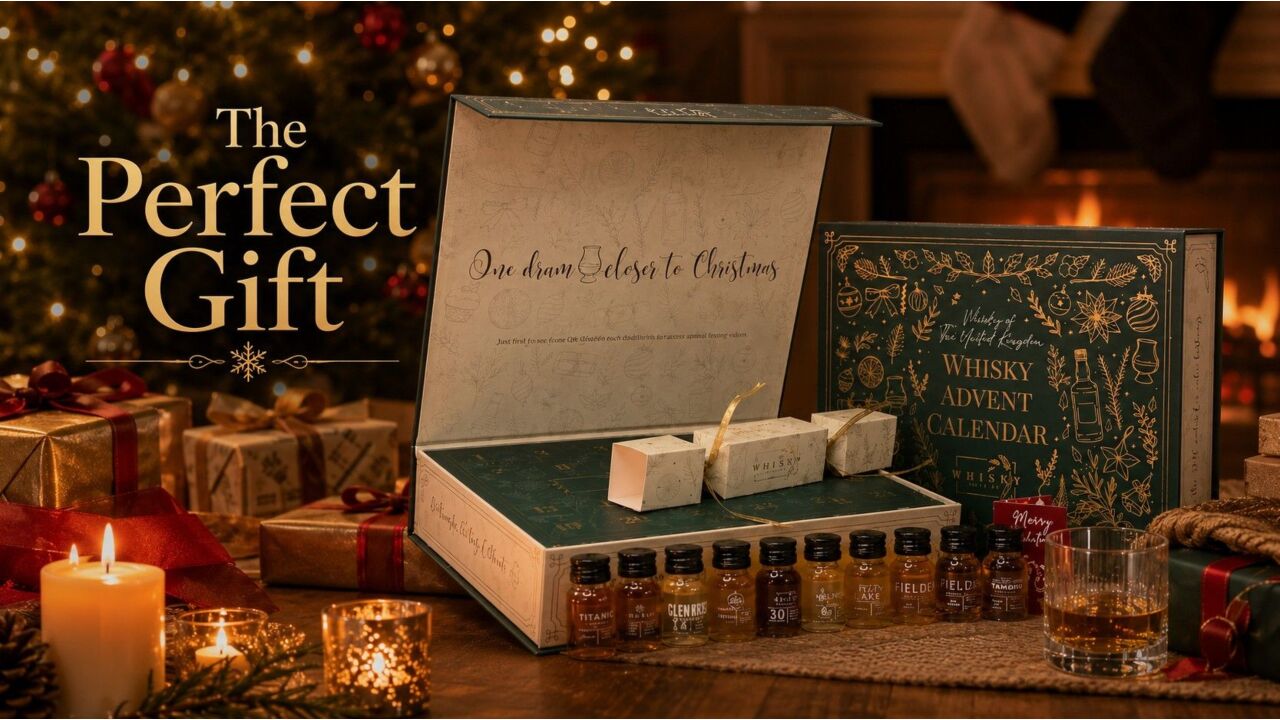
The Premium Whisky Secret Spirits 25 Day Advent Calendar takes a more specialised independent-bottling approach.
It contains 25 generous 5cl whiskies at an average 48% ABV and is presented in an elegant wooden box.
Scotch Whisky Calendar
- 24 x 3cl
- 46% average ABV
- Broad Scotch selection
- More accessible price position
- Compact wax-sealed drams
Premium Secret Spirits
- 25 x 5cl
- 48% average ABV
- Independently bottled Scotch
- Wooden presentation box
- Greater total whisky volume
- Premium enthusiast focus
The standard Scotch calendar is a more accessible entry into daily whisky tasting.
Secret Spirits is designed for established enthusiasts seeking larger measures, independent bottlings and a more elaborate presentation.
Scotch Whisky Calendar Versus Old & Rare Whisky
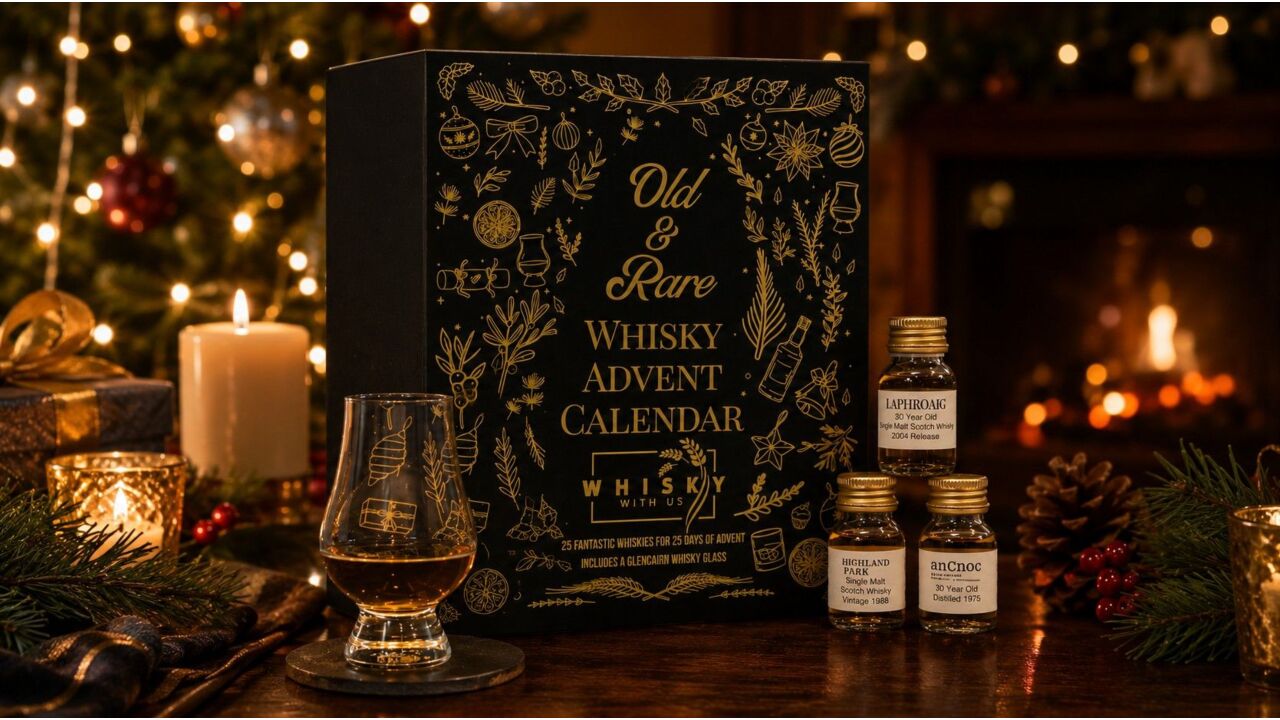
The Old & Rare Whisky 2025 Edition 25 Day Advent Calendar moves into a considerably more exclusive category.
It contains 25 x 3cl samples at an average 50% ABV, selected from old, rare and collectable whisky.
Scotch Whisky Calendar
- Broad discovery
- 24 drams
- 46% average ABV
- Suitable for beginners and enthusiasts
- Designed for everyday festive exploration
Old & Rare Calendar
- 25 rare whisky samples
- 50% average ABV
- Older and more collectable liquid
- Higher price category
- Designed for serious enthusiasts
The Scotch calendar is the more versatile gift.
The Old & Rare edition is intended for drinkers already familiar with whisky who want access to bottles that may be difficult or expensive to purchase in full size.
Creating a December Whisky Tasting Routine
The calendar works best when each dram is given enough attention.
A simple routine could be:
Monday to Thursday
Taste the dram neat and record three quick flavours.
Friday
Compare the week’s five whiskies and choose a favourite.
Saturday
Return to any unfinished samples with water.
Sunday
Research the winning distillery, category or cask style and identify a potential full bottle.
This turns the calendar into a progressive learning experience without making every evening feel like a formal examination.
Food Pairings Across the Calendar
Because the exact whiskies vary, one pairing will not suit every door.
Useful flexible options include:
- Oatcakes
- Mature cheddar
- Salted almonds
- Dark chocolate
- Shortbread
- Dried fruit
- Smoked salmon
- Charcuterie
- Apple slices
- Christmas cake
Light and Fruity Whisky
Pair with:
- Apple
- Pear
- Shortbread
- Mild cheese
Sherry-Matured Whisky
Pair with:
- Dark chocolate
- Dried fruit
- Christmas cake
- Mature cheddar
Peated Whisky
Pair with:
- Smoked salmon
- Blue cheese
- Barbecued meat
- Dark chocolate
Bourbon-Cask Whisky
Pair with:
- Vanilla shortbread
- Salted nuts
- Toffee
- Apple tart
Food should remain secondary. Strong flavours can cover a delicate dram, so the whisky is best tasted alone before any pairing is introduced.
Responsible Enjoyment
A whisky advent calendar is a tasting collection rather than a challenge.
There is no need to finish every 3cl sample on the day it is opened.
Drams can be:
- Shared
- Divided into two tastings
- Saved for the weekend
- Revisited after Christmas
- Tasted only when convenient
The average 46% ABV strength makes slow, measured tasting especially important.
Water should be available, and the calendar should be kept entirely out of reach of children. It is intended only for adults of legal drinking age.
Can the Calendar Help Choose a Full Bottle?
Yes.
One of the greatest practical benefits of an advent calendar is that it reduces the uncertainty involved in buying full-sized whisky.
After each tasting, record:
- The name of the whisky
- Category
- Region
- Cask type
- Strength
- Three main flavours
- Personal score
- Whether a full bottle is worth considering
Patterns will emerge.
The owner may discover that their highest-rated whiskies share one characteristic:
- Sherry casks
- Coastal locations
- Peat smoke
- Bourbon maturation
- Speyside fruit
- Blended malt
- Higher strength
That information can then guide future purchases through the wider Scotch whisky collection at HTFW.
Is the Scotch Whisky Advent Calendar Worth Buying?
The Scotch Whisky 24 Day Advent Calendar offers something one full bottle cannot: contrast.
A single whisky develops familiarity over repeated pours. The calendar creates a new starting point every day.
Across its 24 wax-sealed drams, the owner may encounter honeyed malt, orchard fruit, citrus, vanilla, toffee, toasted oak, sherry warmth, chocolate, sea air and peat smoke.
The average 46% ABV strength gives the selection enough body for serious tasting, while each 3cl measure remains manageable and easy to share.
Its value extends beyond the countdown itself.
The calendar can reveal which Scotch regions, categories and cask styles the drinker genuinely prefers. It creates opportunities for blind tasting, shared discussion and future full-bottle discovery.
For a beginner, it provides a structured introduction to Scotch.
For an enthusiast, it offers 24 concealed samples and a reason to taste without preconceptions.
For a gift recipient, it turns most of December into one extended whisky experience.
Frequently Asked Questions
What is the Scotch Whisky 24 Day Advent Calendar?
It is a festive tasting collection containing 24 different Scotch whisky samples, with one dram hidden behind each numbered door.
How many whiskies are included?
The calendar contains 24 individual whisky drams.
How large is each sample?
Each wax-sealed miniature contains 3cl, equivalent to 30ml.
What is the total volume?
The 24 samples contain 72cl of whisky in total.
What strength are the whiskies?
The calendar is listed at an average strength of 46% ABV.
Individual samples may vary in strength.
Who produces the calendar?
It is created by Drinks by the Dram.
Are all the whiskies from Scotland?
Yes. The calendar is dedicated to Scotch whisky.
Are the contents listed?
The exact dram list is not published on the HTFW product page, preserving the surprise behind each door.
Are the samples in glass bottles?
They are presented as individual miniature drams with wax seals.
Is it a 24- or 25-day calendar?
This edition contains 24 drams and runs from 1 December to Christmas Eve.
Does it include Christmas Day?
No. The final door is intended for 24 December.
Does it contain only single malt whisky?
The product is described as a Scotch whisky calendar rather than a single malt-only selection.
Buyers should not assume every dram belongs to one category unless confirmed on the individual sample.
Could it include blended Scotch?
A broad Scotch whisky selection may contain different categories, including single malt or blended whisky.
The exact contents remain part of the surprise.
Does it contain peated whisky?
The overall tasting profile includes a trace of peat and coastal character, so smoky whisky may form part of the experience.
The exact number of peated drams is not specified.
Does it contain sherry-cask whisky?
The published profile refers to sherry warmth, espresso and chocolate among the flavours encountered across the calendar.
Specific cask details will depend on the individual drams.
Is it suitable for whisky beginners?
Yes. It allows a beginner to explore 24 whiskies without purchasing full bottles.
The 46% average strength means water may be useful with some samples.
Is it suitable for experienced drinkers?
Yes. The concealed selection can be used for blind tasting and may introduce unfamiliar distilleries, blends or cask styles.
Can two people share it?
Yes. Each 3cl dram can be divided into two 1.5cl tasting measures.
Must every dram be consumed on its numbered day?
No. Samples can be saved, shared or revisited later.
Can water be added?
Yes. A few drops may reveal more fruit, sweetness and aroma, particularly in stronger whiskies.
Can the whisky be served over ice?
Yes, although neat tasting is recommended initially so the individual aromas can be assessed before dilution.
Does Scotch whisky contain allergens?
The HTFW product listing does not identify any special allergen warning for the calendar.
Anyone with a specific allergy or dietary concern should check the individual miniature and packaging before consumption.
Is it a good Christmas gift?
Yes. It provides 24 separate tasting experiences and is particularly suitable for whisky enthusiasts or adults beginning to explore Scotch.
When should it be ordered?
Earlier ordering is advisable because advent calendars are seasonal and demand increases before December.
How should the calendar be stored?
Keep it upright in a cool, dry place away from direct sunlight and strong heat.
What is the difference between this and Scottish Choice?
Both contain 24 Scotch whisky drams. The Scotch Whisky calendar is listed at 46% ABV, while Scottish Choice is listed at 40% ABV and contains a separate curated selection.
What is the difference between this and the Four Nations calendar?
This calendar focuses exclusively on Scotland.
The Four Nations calendar contains whisky from England, Ireland, Wales and Scotland and includes 25 drams.
What is the difference between this and the Japanese Whisky calendar?
The Scotch calendar explores Scottish whisky at an average 46% ABV.
The Japanese calendar contains whisky from Japan and is listed at an average 43.8% ABV.
What is the difference between this and A Whisky Tour of the World?
The Scotch calendar contains 24 x 3cl samples from Scotland.
A Whisky Tour of the World contains 24 larger 5cl miniatures from several whisky-producing countries.
Where can I buy the Scotch Whisky Advent Calendar?
The Scotch Whisky 24 Day Advent Calendar is available from Hard To Find Whisky while stocks remain.
Twenty-Four Doors into Scotch Whisky
Scotch whisky can take years to understand, but discovering it should never feel like a lesson that must be completed before the first glass is enjoyed.
The Scotch Whisky 24 Day Advent Calendar turns that exploration into a simple daily ritual.
Open a door. Break the wax. Pour the dram. Taste without assumptions.
One evening may introduce orchard fruit and vanilla. Another may bring dried fruit, chocolate and sherry oak. Later doors can move towards sea salt, toasted malt or a final curl of peat smoke.
By Christmas Eve, the owner will have tasted 24 individual interpretations of Scotland’s national spirit.
Some will confirm existing favourites. Others may challenge them. One or two may lead directly to the next full-sized bottle.
That is what makes a whisky advent calendar more than festive packaging.
It creates discovery through contrast, one 3cl dram at a time.