

















Premium lager is often presented as a polished version of something familiar. NOAM Premium Lager takes a more considered approach, combining traditional Bavarian brewing with contemporary design and a deliberately refined flavour profile.
Produced in Bavaria and bottled at 5.2% ABV, NOAM is inspired by the classic Munich Helles style. It is brewed with regional barley malt, pure water and two aroma-hop varieties from the Hallertau: Hallertauer Tradition and Hallertauer Smaragd. The beer remains unfiltered and is neither pasteurised nor stabilised, preserving a lively texture and more of the malt and hop character created during brewing.
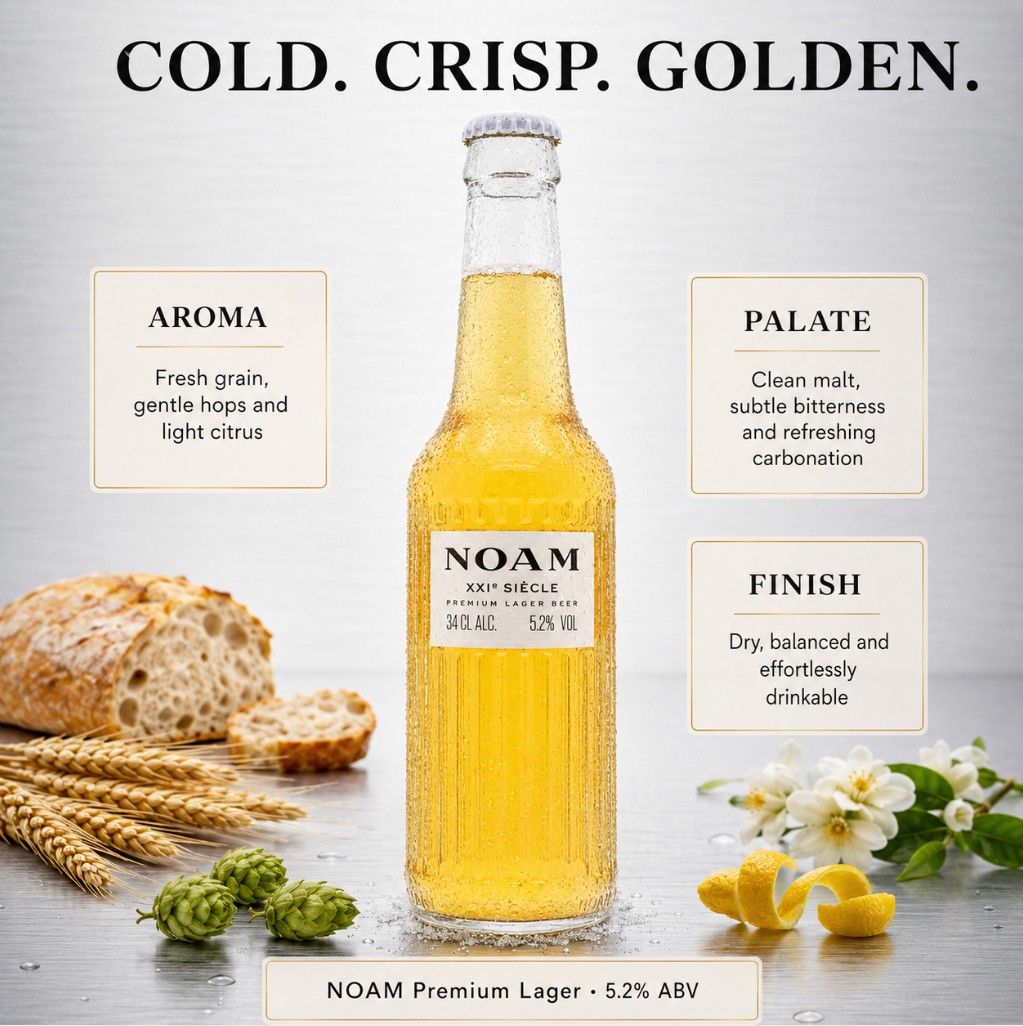
In the glass, NOAM balances soft malt sweetness with delicate herbs, fresh citrus and restrained bitterness. It is light and highly refreshing without becoming thin or anonymous, finishing cleanly with enough floral hop and cereal character to reward slower drinking.
Its presentation is equally distinctive. The sculpted clear-glass bottle, precisely positioned label and minimalist identity were developed to elevate beer beyond conventional lager packaging. The result is a drink designed to sit naturally at restaurants, bars, parties and dinner tables where both flavour and presentation matter.
NOAM Premium Lager at a Glance
- Beer style: Bavarian-inspired Helles lager
- Country of origin: Germany
- Bottle size: 340ml
- Strength: 5.2% ABV
- Ingredients: Water, barley malt, hops and yeast
- Hop varieties: Hallertauer Tradition and Hallertauer Smaragd
- Malt: Regional Bavarian barley malt
- Processing: Unfiltered, unpasteurised and unstabilised
- Brewing period: Approximately six weeks
- Closure: Crown cap
- Packaging: Unboxed
- Serving temperature: Approximately 4–6°C
- Allergen: Barley malt
- Key flavours: Soft malt, citrus, herbs, floral hops and gentle bitterness
The exact HTFW bottle contains 34cl and is presented at 5.2% ABV. The official producer lists 133 calories per bottle and confirms that barley malt is the relevant allergen.
What Is NOAM Premium Lager?
NOAM Premium Lager is a naturally brewed, unfiltered German lager created as a contemporary interpretation of Bavarian Helles.
Helles is the pale, malt-balanced lager style most closely associated with Munich and southern Germany. It is generally softer and less sharply bitter than a German Pilsner, allowing the flavour of the malt to sit more prominently beside the hops.
NOAM follows that broad tradition while creating a slightly more expressive modern profile.
Its character is built around:
- Clean Bavarian malt
- Gentle cereal sweetness
- Fresh citrus
- Delicate herbal hops
- Soft floral notes
- Restrained bitterness
- A crisp, refreshing finish
The beer is designed to remain accessible and easy to drink, but it offers enough aroma and structure to distinguish it from a neutral mass-market lager.
Brewmaster Andreas Judersleben describes NOAM as being inspired by classic Bavarian Helles but made with additional character. The brand supports that aim through a selected two-hop recipe, a six-week production process and a refusal to filter or pasteurise the finished beer.
What Does Helles Mean?
The German word hell means bright, light or pale.
A Munich Helles is therefore a pale lager, although the name refers primarily to its colour rather than reduced flavour or strength.
The style emerged as Bavaria’s answer to the increasingly popular pale lagers produced in Bohemia during the late 19th century. Rather than matching the firmer bitterness of Pilsner, Munich brewers developed a beer that gave greater prominence to smooth, lightly sweet malt.
A typical Helles places emphasis on:
- Pale malt
- Bread and biscuit notes
- Soft honeyed sweetness
- Low-to-moderate bitterness
- Delicate noble-hop aroma
- Clean lager fermentation
- High drinkability
NOAM follows this malt-and-balance philosophy while introducing a particularly polished citrus and herbal character through Hallertauer Smaragd hops.
NOAM Versus a German Pilsner
Helles and Pilsner are both pale, bottom-fermented lagers, but their balance is noticeably different.
German Pilsner
A German Pilsner generally places greater emphasis on:
- Crisp bitterness
- Dryness
- Floral or spicy hops
- A sharper finish
- Leaner malt
Bavarian Helles
A Helles usually offers:
- Softer bitterness
- Fuller malt character
- Bread and cereal sweetness
- A rounder texture
- A gentler finish
NOAM sits firmly towards the Helles side of that comparison.
Its Hallertau hops provide freshness and definition, but they do not turn the beer into a strongly bitter or aggressively dry lager. Malt sweetness remains present throughout, giving the beer a soft centre before the herbal and citrus notes refresh the finish.
Drinkers who find heavily hopped Pilsners too sharp may prefer NOAM’s smoother balance.
The Four Ingredients in NOAM Lager
NOAM is brewed using four core ingredients:
- Water
- Barley malt
- Hops
- Yeast
The beer follows the principles of the German Purity Law while sourcing its ingredients from selected Bavarian suppliers. NOAM’s official information identifies regional barley malt from the southern Bavarian Danube area, Hallertau aroma hops and specially prepared Munich brewing water.
A simple ingredient list does not mean a simple production process.
The character of the beer depends on choices including:
- Barley variety and malting
- Hop variety and freshness
- Water mineral profile
- Yeast strain
- Mash temperature
- Fermentation temperature
- Maturation time
- Filtration and pasteurisation decisions
NOAM’s identity is created through control of those details rather than the addition of flavours or adjunct ingredients.
The German Purity Law
NOAM is brewed in accordance with the principles of the Bavarian Purity Law, commonly known as the Reinheitsgebot.
The historic 1516 rule identified water, barley and hops as the permitted ingredients for beer. Yeast was already essential to fermentation but was not scientifically understood as a microorganism when the original text was written.
Modern descriptions therefore commonly express the traditional recipe through four ingredients:
- Water
- Barley malt
- Hops
- Yeast
NOAM uses this limited ingredient base as a framework rather than a marketing claim alone. It does not rely on added fruit, artificial flavouring or preservatives to build its profile.
The herbal, citrus, floral and malt flavours come from the selected brewing materials and production process.
Hallertau: The Source of NOAM’s Hops
NOAM’s hops come from the Hallertau region north of Munich.
Hallertau is one of the world’s most celebrated hop-growing areas and has a long association with Bavarian lager. Its combination of climate, soil and specialist growers supports both traditional noble-hop varieties and more recent aroma cultivars.
NOAM uses two selected Hallertau varieties:
- Hallertauer Tradition
- Hallertauer Smaragd
The producer describes Tradition as providing a classic and refined hop profile, while Smaragd introduces fresh, citrus-driven aroma. Together, they create the understated floral, herbal and citrus character that distinguishes NOAM without making it aggressively bitter.
Hallertauer Tradition Hops
Hallertauer Tradition was developed to preserve the elegant aroma associated with traditional German noble hops while offering greater consistency for modern cultivation.
Its potential characteristics include:
- Soft herbs
- Fresh grass
- Light flowers
- Gentle spice
- Subtle citrus
- Clean bitterness
Within NOAM, Tradition provides the classical Bavarian foundation.
It supports drinkability and gives the finish definition without pulling attention away from the malt.
The hop is not used to create the resinous, tropical or intensely bitter profile associated with many modern IPAs. Its role is quieter and more precise.
Hallertauer Smaragd Hops
Smaragd means emerald in German.
The variety is particularly valued for an aromatic profile that can include:
- Lemon peel
- Fresh herbs
- Light flowers
- Gentle fruit
- Delicate spice
- Clean green freshness
NOAM places particular emphasis on Smaragd and stores the hops at a constant 2°C before brewing to protect their aromatic quality. The producer credits the variety with much of the beer’s citrus freshness and elegant hop character.
Smaragd helps make NOAM feel more distinctive than a lager built only around soft malt.
The citrus lifts the sweetness, while its herbal character keeps the finish crisp and refreshing.
Why NOAM Is Not an IPA
NOAM may use carefully selected aroma hops, but it is not designed around hop intensity.
An India Pale Ale commonly places hops at the centre of the experience, potentially offering:
- Grapefruit
- Pine
- Resin
- Mango
- Passion fruit
- Strong bitterness
- A dry finish
NOAM uses hops in a more restrained way.
The objective is balance between:
- Malt sweetness
- Herbal freshness
- Citrus aroma
- Gentle bitterness
- Clean fermentation
Drinkers moving from strongly hopped craft beer may initially find NOAM subtle. Its complexity becomes clearer through the precision of the balance rather than the volume of any one flavour.
Bavarian Barley Malt
Barley malt provides the fermentable sugars required to create alcohol, but it also gives NOAM much of its flavour and body.
The malt may contribute:
- Fresh bread
- Light biscuit
- Cereal
- Soft honey
- Gentle sweetness
- A rounded texture
NOAM sources regional barley malt from the southern Bavarian Danube region.
The malt is deliberately allowed to remain noticeable.
A highly bitter lager may push cereal flavours into the background. In NOAM, the bread-like sweetness forms the centre of the beer, while the hops create lift and a clean ending.
The Water Used to Brew NOAM
Water makes up most of the finished beer, making its mineral balance a fundamental part of production.
NOAM states that its brewing water is drawn from protected underground reserves in the Munich gravel plain, using wells extending approximately 150–190 metres into an Ice Age rock formation.
The water is then treated gently through reverse osmosis so that the brewery can achieve the required softness and mineral profile.
Soft water suits a Helles-style lager because it supports:
- Gentle bitterness
- Smooth malt
- A clean mouthfeel
- Delicate aroma
- Refreshing drinkability
Excessively hard or mineral-heavy water could make the hop bitterness feel sharper and interfere with the beer’s soft balance.
The Role of Yeast
NOAM is a lager, meaning it is fermented with a yeast suited to cool fermentation.
Lager yeast works at lower temperatures than the yeast typically used for ales. This helps produce a cleaner flavour profile with fewer of the pronounced fruity and spicy fermentation notes found in many warm-fermented beers.
The yeast allows the main ingredients to remain clear:
- Malt provides body and sweetness.
- Hops provide aroma and bitterness.
- Water influences texture and balance.
A clean fermentation does not mean the yeast contributes nothing.
It still creates subtle aroma compounds and determines how fully the sugars are fermented, affecting dryness, flavour and mouthfeel.
A Six-Week Brewing Process
NOAM identifies a six-week brewing process as one of the foundations of the beer.
Lager requires patience.
After primary fermentation, the beer is given time to mature at low temperatures. This conditioning period helps flavours integrate, allows harsh fermentation notes to soften and creates the clean character associated with well-made lager.
The brewery describes time as an ingredient rather than a cost to be reduced. Batches remain in the cellar until the brewing team considers them ready, with cold primary fermentation and extended rest used to develop refinement and maturity.
This patient process supports NOAM’s:
- Smooth malt
- Clean aroma
- Subtle hop character
- Low harshness
- Crisp finish
What Does Lagering Do?
The word lager comes from a German term connected with storage.
During cold maturation, several changes can occur:
- Yeast continues refining the beer.
- Sulphur-like fermentation aromas can diminish.
- Malt and hop flavours become better integrated.
- Suspended material can settle naturally.
- Carbonation and texture become more stable.
- The finish becomes cleaner.
A longer process does not automatically guarantee better beer, but Helles demands precision.
Its flavours are too delicate to hide faults behind heavy hops, roasted malt, fruit or spice. The brewing and maturation must therefore be carefully controlled.
Naturally Unfiltered Lager
NOAM is not filtered before bottling.
Filtration is commonly used to create brilliant visual clarity and remove suspended yeast or protein. It can improve stability and ensure that each bottle appears identical.
NOAM instead retains more of the naturally occurring material created during brewing.
This can support:
- A livelier texture
- Greater malt presence
- Fuller flavour
- A softer appearance
- Natural haze or sediment
Unfiltered does not mean unfinished or poorly made.
The beer is conditioned carefully before release, but it is not stripped of every suspended element for cosmetic clarity. The producer describes this choice as a way of preserving natural character and texture.
Is NOAM Cloudy?
NOAM may display a light natural haze because it is unfiltered.
The exact appearance can vary depending on:
- Storage temperature
- Bottle movement
- The amount of natural sediment disturbed during pouring
- The age of the bottle
A clear pour can be achieved by keeping the bottle upright and pouring gently.
A cloudier pour can be created by lightly rolling or tilting the bottle before serving so that more of the natural yeast is incorporated.
Neither approach is inherently correct. The beer can be enjoyed according to personal preference.
Unpasteurised and Unstabilised
NOAM is neither pasteurised nor stabilised.
Pasteurisation applies heat to increase microbial stability and extend shelf life. Stabilisation techniques can also reduce the risk of haze or flavour changes during distribution.
Avoiding these processes helps preserve NOAM’s fresh and natural character, but it also makes correct storage more important.
The beer should be:
- Kept cool
- Protected from direct sunlight
- Stored upright
- Consumed within its recommended freshness period
NOAM’s official shop advises storage in a cool, dark place and lists a best-before period of ten months from arrival for its direct orders. The precise date printed on the individual HTFW bottle should always be followed.
Does NOAM Contain Preservatives?
The official producer describes NOAM as free from preservatives and made only from water, barley malt, hops and yeast.
Its stability is achieved through:
- Clean brewing
- Controlled fermentation
- Cold maturation
- Hygienic bottling
- Careful storage
- Protection from UV light
The absence of preservatives reinforces the importance of serving it fresh and storing it correctly.
Is NOAM Vegan?
Yes. NOAM describes the lager as vegan.
Some beers may use animal-derived processing aids during clarification, even where those ingredients are not present in the final recipe.
NOAM’s unfiltered production avoids that conventional clarification route.
The beer does contain barley malt, so it is not suitable for anyone who must avoid gluten.
Is NOAM Gluten-Free?
No. The official allergen information identifies barley malt.
Barley naturally contains gluten.
NOAM should therefore not be consumed by someone with coeliac disease or a medically necessary gluten-free diet unless future packaging specifically states that a separately tested gluten-free version has been produced.
NOAM Premium Lager Tasting Notes
The following tasting profile develops the official information supplied by NOAM and the exact HTFW product page.
Appearance
Pale straw to light gold, with a bright white head.
Because the beer is unfiltered, a fine haze may be visible. The foam is soft and lively, helping carry fresh hop aromas above the glass.
Nose
The aroma is clean, restrained and elegant.
Fresh barley malt provides a foundation of:
- Light bread
- Biscuit
- Cereal
- Gentle honey
Hallertauer Smaragd introduces lemon peel and delicate citrus, while Hallertauer Tradition adds herbs, flowers and a lightly grassy note.
The nose is not dominated by one powerful aroma.
Its appeal comes from the relationship between clean malt and understated noble hops.
Palate
The palate is light but not watery.
Soft malt sweetness arrives first, suggesting fresh bread, biscuit and a touch of honey. Citrus develops through the middle, accompanied by delicate herbs and a restrained floral quality.
Bitterness remains gentle.
It provides enough structure to clean the palate without creating the sharp finish of a highly hopped Pilsner.
The unfiltered beer retains a lightly rounded and lively texture, giving the 5.2% ABV lager more substance than its pale appearance may suggest.
Finish
The finish is crisp, clean and moderately dry.
Herbal hops and citrus remain briefly after the malt sweetness fades. A subtle bitterness encourages another sip without becoming aggressive.
The final impression is one of balance:
- Soft malt
- Fresh lemon
- Gentle herbs
- Clean bitterness
- High refreshment
The official producer recommends serving NOAM at approximately 4–6°C, where freshness, aroma and lightness remain in balance.
Is NOAM Sweet?
NOAM has a gentle malt sweetness, but it is not a sugary beer.
Sweetness may suggest:
- Pale bread
- Biscuit
- Light honey
- Fresh cereal
These flavours are balanced by:
- Citrus
- Herbs
- Floral hops
- Gentle bitterness
- A clean finish
The beer is softer and more malt-led than a firmly bitter Pilsner, but it remains refreshing rather than heavy.
Is NOAM Bitter?
NOAM has low-to-moderate bitterness.
The bitterness is used for balance rather than becoming the central flavour.
Drinkers should expect a cleaner hop finish than from a very sweet commercial lager, but significantly less bitterness than from many Pilsners, pale ales or IPAs.
The Hallertau varieties contribute aroma as well as bitterness, allowing floral, herbal and citrus notes to remain visible.
Is NOAM Strong?
At 5.2% ABV, NOAM is moderately strong for an easy-drinking pale lager.
It is not a high-alcohol beer, but it is slightly stronger than many mainstream lagers bottled around 4–5%.
The clean flavour and gentle bitterness can make the strength feel particularly well integrated.
It should nevertheless be consumed responsibly, especially because its smooth profile may make the alcohol less immediately obvious than in a heavier beer.
The Story of NOAM
NOAM was founded in 2016 as a start-up within the Technical University of Munich.
The university’s accelerator and research facilities in Weihenstephan allowed the founders to develop the recipe with access to modern brewing knowledge and equipment. The company describes itself as family-run and built around the idea of combining Munich’s brewing heritage with an international creative identity.
Founder Daniel Noah Sheikh wanted to challenge conventional perceptions of lager and create a beer that could sit comfortably within design-led bars, restaurants and cultural spaces.
The recipe was developed with specialist brewing support at the Technical University of Munich, including work associated with brewing expert Dr Florian Schüll.
Rather than launching several beer styles, NOAM concentrated on one core lager.
This single-product focus allows the brand to direct attention towards the precise flavour, production and presentation of its flagship bottle.
A Contemporary Beer with Munich Roots
NOAM presents itself as internationally minded but fundamentally Bavarian.
The company may be visible in restaurants and bars across cities such as Berlin, London and Paris, but its production philosophy remains tied to Munich and its surrounding brewing regions.
That connection appears through:
- Bavarian ingredients
- Hallertau hops
- Munich water
- Helles inspiration
- Cold lager fermentation
- Extended maturation
- German Purity Law principles
The result is not a rejection of tradition.
It is an attempt to present that tradition in a form suited to contemporary hospitality, design and drinking culture.
The NOAM Brewery
NOAM now describes production through its own modern brewing facility.
The brewery uses detailed process monitoring, automated controls and camera-guided labelling, but the technology is intended to improve consistency rather than shorten maturation.
A core team of ten specialists oversees production and gives final sensory approval before a batch is released.
This combination of technology and human judgement reflects the wider NOAM approach:
- Precise but not industrially anonymous
- Modern without discarding tradition
- Consistent without filtration or pasteurisation
- Design-conscious without treating flavour as secondary
The NOAM Bottle
NOAM’s bottle is one of the most recognisable parts of the brand.
The transparent glass has a sculpted, ribbed form and a central recessed area for the label. Each label is positioned within this window with millimetre-level precision.
The design was created in collaboration with Swedish creative agency ACNE. The brand explains that the bottle’s waves refer both to the shape of the crown cap and to classical architectural elements found in Munich.
The design gives the bottle:
- A strong tactile surface
- A premium weight and appearance
- A recognisable silhouette
- A clean central label
- A visual identity that works without excessive decoration
The presentation is minimal, but it is not plain.
Its interest comes from the structure of the glass rather than a brightly coloured label or complicated illustration.
Why Is the Bottle Clear?
Clear glass shows the pale colour of the lager and supports NOAM’s minimalist visual identity.
However, beer is vulnerable to ultraviolet light.
Light can react with hop-derived compounds and create undesirable aromas, commonly described as lightstruck or skunked.
NOAM addresses this through specially designed cartons that protect the transparent bottle throughout distribution. The company advises storing the beer in a cool, dark place once it arrives.
The bottle should therefore not be left for prolonged periods:
- On a sunny windowsill
- Under strong retail lighting
- Outdoors in direct sun
- In a warm car
Correct storage preserves the fresh citrus and hop aroma.
NOAM’s Design Awards
NOAM states that its packaging has received a Cannes Lions Design Award, reflecting the attention given to its bottle and visual identity.
The recognition is relevant because NOAM was conceived as both a beer and a carefully designed hospitality object.
The bottle is not merely an outer container added after the recipe was complete. Brewing, branding and presentation form part of the same idea.
This helps explain why NOAM is often positioned alongside premium wine, Champagne and spirits rather than only conventional packaged lager.
European Beer Star Recognition
NOAM received a bronze award in the German-Style Kellerbier Hell category at the 2021 European Beer Star.
The official winner list places NOAM behind Bauhöfer Keller No. 5 and Camba Hell within that category.
Kellerbier translates approximately as cellar beer and commonly refers to naturally presented lager with less filtration than a brilliant commercial beer.
The category is particularly appropriate for NOAM because the lager retains its natural haze and fuller texture.
The award provides independent recognition for the beer itself rather than only the packaging.
Official Beer Partner of 50 Best Bars
NOAM identifies itself as the official beer partner of 50 Best Bars.
This hospitality connection fits the brand’s positioning.
The beer is intended to provide a premium lager option within venues that already pay close attention to cocktails, wine, spirits, food and interior design.
Its gentle flavour also makes it versatile in a bar setting.
It can be enjoyed:
- Before a meal
- Beside small plates
- Between cocktails
- With rich food
- As a clean final drink
How to Serve NOAM Premium Lager
NOAM recommends a serving temperature of approximately 4–6°C.
At this temperature, the beer remains refreshing while preserving its herbal and citrus aroma.
Serving it close to freezing may reduce:
- Hop aroma
- Malt flavour
- Texture
- Perceived complexity
Serving it too warm may make the 5.2% alcohol and malt sweetness feel heavier.
A practical method is to chill the bottle thoroughly and remove it from the refrigerator a few minutes before serving.
Should NOAM Be Served from the Bottle or a Glass?
NOAM can be consumed directly from its distinctive bottle, but pouring it into a glass reveals more aroma and flavour.
A glass allows the drinker to appreciate:
- Colour and natural haze
- Foam formation
- Citrus aroma
- Herbal hops
- Malt sweetness
- Carbonation and texture
Drinking from the bottle restricts aroma because the opening is too narrow for the nose to interact fully with the beer.
The bottle remains ideal for social and outdoor settings, while a glass is better for tasting.
The Best Glass for NOAM Lager
A slender lager glass or small stemmed beer glass is particularly effective.
The glass should provide enough height for the foam while narrowing slightly towards the rim to retain aroma.
Suitable options include:
- Lager glass
- Pilsner glass
- Stemmed beer glass
- Small wine glass
- Helles-style beer mug
An extremely wide glass may release carbonation and aroma too quickly.
A frozen glass is not recommended because ice and detergent residue can damage the foam and excessively chill the beer.
How to Pour Unfiltered NOAM
Keep the bottle upright and open it cold.
Tilt the glass to approximately 45 degrees and pour gently down the side. Straighten the glass as it fills to form a controlled white head.
Two pouring styles are possible.
Cleaner Pour
Leave the final small amount in the bottle.
This minimises sediment and produces a brighter glass.
Full Natural Pour
Before pouring the final portion, gently rotate the bottle to lift any settled yeast and add it to the glass.
This creates greater haze and may slightly increase texture and yeast-derived character.
Avoid shaking the bottle, as this can cause excessive foam.
Food Pairings for NOAM Premium Lager
NOAM’s combination of malt sweetness, citrus, herbs and gentle bitterness makes it highly versatile with food.
Recommended pairings include:
- Roast chicken
- Schnitzel
- Grilled pork
- Sausages
- Burgers
- Pizza
- Fish and chips
- Grilled prawns
- Sushi
- Soft pretzels
- Mild cheese
- Charcuterie
- Salads
- Light pasta dishes
NOAM with German Food
The most natural pairings connect the beer with Bavarian food.
Schnitzel
The carbonation and citrus refresh the palate after fried breadcrumbs, while the malt complements the meat.
Weisswurst
The beer’s soft flavour does not overpower the mild sausage.
Herbal hops work particularly well with sweet mustard.
Pretzels
Salt heightens the malt sweetness and makes the beer feel especially refreshing.
Roast Pork
Malt connects with caramelised meat, while carbonation cuts through fat.
Sausages
The lager’s mild bitterness balances savoury pork and seasoning without competing with the food.
NOAM with Pizza
NOAM works well with pizza because it can handle tomato, cheese and a wide range of toppings.
The citrus and carbonation refresh the palate after melted cheese, while the malt connects with the baked crust.
Strongly bitter IPA can sometimes dominate a simple pizza. NOAM remains present without becoming the main flavour.
Particularly suitable toppings include:
- Margherita
- Prosciutto
- Mushroom
- Salami
- Artichoke
- Grilled vegetables
NOAM with Seafood
The beer’s clean finish and citrus aroma suit lighter seafood.
Recommended options include:
- Grilled prawns
- White fish
- Fish and chips
- Calamari
- Crab
- Sushi
Heavy roasted malt could overpower delicate fish, while excessive hop bitterness may clash with subtle sweetness.
NOAM remains light enough to support the dish while its carbonation cleans the palate.
NOAM with Spicy Food
Moderately spicy dishes can work well with NOAM.
Soft malt provides a small amount of sweetness, and the restrained bitterness avoids exaggerating chilli heat.
Suitable pairings include:
- Mild curry
- Chicken tacos
- Spiced grilled prawns
- Thai salads
- Lightly spiced noodles
Very hot food may overwhelm the beer’s delicate herbal and citrus character.
NOAM with Cheese
The lager pairs best with mild-to-medium cheese.
Recommended choices include:
- Gouda
- Emmental
- Young cheddar
- Brie
- Camembert
- Mozzarella
- Alpine-style cheese
The beer’s carbonation refreshes the palate, while the malt complements nutty and creamy flavours.
Very powerful blue cheese may cover the subtle hops.
Is NOAM a Good Aperitif?
Yes.
NOAM is light enough to serve before a meal but carries enough flavour to feel considered.
Its citrus and gentle bitterness stimulate the palate, while the malt prevents the beer from feeling sharp or austere.
Serve it with:
- Olives
- Salted almonds
- Charcuterie
- Bread and olive oil
- Light canapés
- Crisps
Its bottle presentation also makes it particularly suitable for receptions, parties and design-led events.
NOAM Versus Mainstream Premium Lager
Mainstream premium lager is often designed for maximum consistency and broad appeal.
It may use intensive filtration, pasteurisation and a relatively neutral flavour profile to support long shelf life and international distribution.
NOAM takes a different approach:
- It remains unfiltered.
- It is not pasteurised.
- It is not stabilised.
- It uses selected Hallertau aroma hops.
- It receives an extended brewing and maturation process.
- It is built around one distinctive bottle design.
The result retains the accessibility of lager while offering more texture, aroma and production detail.
NOAM Versus Craft Ale
Craft ale frequently uses warm fermentation and highly expressive hops, creating flavours such as tropical fruit, pine, resin and citrus.
NOAM offers a quieter experience.
Craft Pale Ale or IPA
- Stronger hop aroma
- Greater bitterness
- More fermentation fruit
- Potentially heavier body
- Less emphasis on malt balance
NOAM Lager
- Clean cool fermentation
- Soft malt
- Delicate herbs and citrus
- Restrained bitterness
- Crisp finish
NOAM is suitable for drinkers who appreciate production quality and ingredient detail but do not necessarily want the intensity of an IPA.
NOAM Versus Wheat Beer
A Bavarian wheat beer commonly includes a substantial proportion of wheat malt and uses yeast that creates pronounced banana and clove aromas.
NOAM is brewed from barley malt and follows a cleaner lager-fermentation profile.
Wheat Beer
- Banana
- Clove
- Bread dough
- Fuller foam
- Creamier body
- Noticeable yeast character
NOAM
- Pale barley malt
- Herbs
- Citrus
- Gentle flowers
- Cleaner finish
- More restrained yeast character
Both can be unfiltered, but they express that natural presentation in different ways.
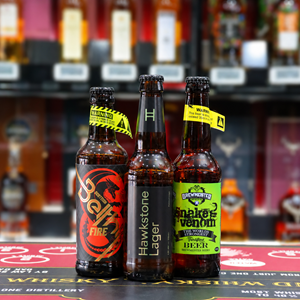
NOAM Versus Hawkstone Premium Lager
Hawkstone Premium English Lager is one of the most relevant premium-lager comparisons available through HTFW.
NOAM Premium Lager
- Germany
- 340ml
- 5.2% ABV
- Bavarian Helles inspiration
- Hallertauer Tradition and Smaragd hops
- Unfiltered and unpasteurised
- Soft malt, citrus and herbs
- Distinctive clear sculpted bottle
Hawkstone Premium Lager
- England
- 330ml
- 4.8% ABV
- English premium lager
- Smooth malty backbone
- Light citrus
- Crisp bitterness
- Connection with Jeremy Clarkson and Diddly Squat Farm
Hawkstone has a firmer rural English identity and a slightly lower strength.
NOAM is softer and more classically Bavarian, with a stronger emphasis on delicate aroma hops, natural haze and minimalist design.
Customers planning larger gatherings can also explore the 12-bottle Hawkstone Premium Lager pack.
NOAM Versus Hawkstone Session Lager
Hawkstone Session Lager is bottled at 4% ABV.
It is lighter and lower in alcohol, making it especially suitable for longer occasions.
NOAM
- 5.2% ABV
- Fuller malt body
- Greater aromatic hop detail
- Unfiltered
- More premium, design-led presentation
Hawkstone Session
- 4% ABV
- Lighter drinking strength
- Subtle hops
- Sweet biscuity malt
- Designed for extended refreshment
NOAM is the more substantial and aromatic beer.
Hawkstone Session is preferable where a lower-strength lager is the priority.
More Beer to Explore at HTFW
Customers can browse the wider beer and cider collection at HTFW, covering premium lager, ale, cider and limited releases.
The NOAM brand page provides direct access to current NOAM availability.
Other related products include:
Hawkstone Premium English Lager
Hawkstone Premium Lager offers smooth malt, citrus and crisp bitterness at 4.8% ABV.
Hawkstone Session Lager
Hawkstone Session Lager provides a lighter 4% ABV option with gentle hops and biscuity malt.
Hawkstone India Pale Ale
Hawkstone India Pale Ale offers a more hop-led alternative for drinkers seeking greater bitterness and aromatic intensity.
Hawkstone English Cider
Hawkstone English Cider moves beyond malt and hops into a crisp apple-led style.
Is NOAM a Luxury Beer?
NOAM is frequently positioned as a premium or luxury lager.
That description is based on several elements:
- Specialist ingredients
- Extended production
- Unfiltered and unpasteurised presentation
- Distinctive custom glass
- Precision labelling
- Design awards
- High-end hospitality partnerships
The term luxury does not mean the beer is intentionally heavy or complicated.
Its flavour remains light, elegant and refreshing. The premium character comes from attention to detail rather than excessive intensity.
Is NOAM Craft Beer?
The definition of craft beer varies between markets.
NOAM uses several qualities associated with craft production:
- Ingredient transparency
- Distinctive aroma hops
- Extended maturation
- No filtration
- No pasteurisation
- A clear brewing philosophy
- Independent brand identity
However, the beer is not designed to resemble a small-batch experimental IPA or frequently changing taproom release.
It is a precisely controlled Bavarian lager intended to taste consistent from bottle to bottle.
It can therefore be understood as a modern premium lager with craft-level attention to ingredients and process.
Is NOAM Suitable for a Gift?
The sculpted bottle makes NOAM more giftable than a conventional packaged lager.
It is particularly suitable for:
- Design enthusiasts
- German-beer drinkers
- Premium-lager fans
- Dinner-party hosts
- Bar and restaurant professionals
- Someone who prefers beer to spirits
- A mixed drinks hamper
One bottle can form part of a wider selection, while several bottles create a strong visual presentation for a party or event.
Is NOAM Suitable for Weddings and Events?
Yes.
The bottle is designed to remain visually distinctive when served directly from ice buckets, bars or table settings.
Its broad flavour appeal also makes it practical for events.
The beer is:
- Light enough for receptions
- Flavourful enough for dinner
- Moderate in bitterness
- Suitable with varied food
- Recognisable at a distance
- Easy to serve without specialist preparation
It should be kept cold and protected from strong sunlight until required.
How to Store NOAM Lager
Store the bottles upright in a cool, dark place.
The most important factors are:
- Avoid direct sunlight.
- Avoid strong indoor UV exposure.
- Keep temperature relatively stable.
- Chill before serving.
- Follow the best-before date.
- Do not freeze.
The transparent bottle makes protection from light particularly important.
The producer uses protective cartons during distribution, but the owner must continue that protection after delivery.
Can NOAM Be Aged?
NOAM is designed to be consumed fresh.
Unlike some strong Belgian ales, imperial stouts or bottle-conditioned beers, a delicate pale lager does not generally benefit from years of storage.
Extended ageing may reduce:
- Citrus
- Floral hops
- Fresh malt
- Crispness
- Clean bitterness
The bottle should be enjoyed within its printed freshness window.
Who Will Enjoy NOAM Premium Lager?
NOAM should appeal particularly to drinkers who enjoy:
- Bavarian Helles
- Premium German lager
- Unfiltered beer
- Soft malt
- Hallertau hops
- Herbal and citrus flavours
- Low-to-moderate bitterness
- Clean lager fermentation
- Design-led packaging
- Beer with food
- Vegan lager
It may be less suitable for someone seeking:
- An intensely bitter IPA
- Dark roasted malt
- Strong fruit flavouring
- A very low-alcohol lager
- A gluten-free beer
Is NOAM Premium Lager Worth Buying?
NOAM Premium Lager delivers exactly what a premium Helles-style lager should: balance, freshness and detail without unnecessary heaviness.
The Bavarian barley malt provides bread, biscuit and soft sweetness. Hallertauer Tradition introduces the classical herbal foundation, while Smaragd brings fresh citrus and an elegant aroma.
Cold fermentation and extended maturation create a clean profile. The decision to avoid filtration, pasteurisation and stabilisation preserves a livelier texture and more natural character.
At 5.2% ABV, the beer has enough body to work with food while remaining crisp and highly refreshing.
The sculpted bottle adds genuine visual appeal, but NOAM is not merely packaging around an ordinary lager. Its 2021 European Beer Star bronze award in the German-Style Kellerbier Hell category confirms that the liquid can stand independently of the design.
For drinkers who want the easy refreshment of lager with greater attention to ingredients, brewing and presentation, NOAM offers a convincing modern interpretation of Bavarian tradition.
Frequently Asked Questions
What is NOAM Premium Lager?
NOAM is a naturally brewed, unfiltered German lager inspired by classic Bavarian Helles.
Where is NOAM beer made?
It is brewed in Bavaria, Germany.
What strength is NOAM Premium Lager?
It is bottled at 5.2% ABV.
What size is the bottle?
The HTFW bottle contains 340ml, equivalent to 34cl.
What ingredients are used?
NOAM is brewed with water, barley malt, hops and yeast.
Which hops are used?
It uses Hallertauer Tradition and Hallertauer Smaragd aroma hops from the Hallertau region.
What does NOAM taste like?
Its profile combines soft malt sweetness, delicate herbs, fresh citrus, floral hops, restrained bitterness and a clean finish.
Is NOAM a Helles?
It is described as a contemporary lager inspired by classic Bavarian or Munich Helles.
Is NOAM a Pilsner?
No. It is closer to Helles, with greater malt softness and less pronounced bitterness than a typical German Pilsner.
Is NOAM filtered?
No. It is naturally unfiltered.
Is NOAM pasteurised?
No. The producer states that it is not pasteurised.
Is NOAM stabilised?
No. It is naturally finished without stabilisation.
Is NOAM cloudy?
A light natural haze may appear because the beer is unfiltered.
Is sediment normal?
Yes. A small amount of natural yeast or protein sediment can occur in unfiltered beer.
Is NOAM vegan?
Yes. The producer describes it as vegan.
Is NOAM gluten-free?
No. It contains barley malt.
Does NOAM contain preservatives?
The producer describes it as preservative-free.
Is NOAM brewed under the German Purity Law?
It follows the principles of the Bavarian Purity Law and uses only water, barley malt, hops and yeast.
How long does NOAM take to brew?
The producer identifies a six-week brewing process.
What temperature should NOAM be served at?
Approximately 4–6°C.
Should NOAM be poured into a glass?
It can be consumed from the bottle, but a glass reveals more aroma, foam and texture.
What glass should be used?
A lager, Pilsner or small stemmed beer glass works well.
Should the sediment be poured?
That depends on personal preference.
Leave the final portion in the bottle for a clearer beer, or gently mix it into the pour for a fuller natural presentation.
How should NOAM be stored?
Store it upright in a cool, dark place and protect the clear bottle from sunlight.
Why is the NOAM bottle clear?
The clear sculpted bottle is central to the brand’s minimalist design. Protective cartons are used to reduce UV exposure during distribution.
Who designed the bottle?
NOAM developed the bottle identity with Swedish creative agency ACNE.
Has NOAM won awards?
NOAM received bronze in the German-Style Kellerbier Hell category at the 2021 European Beer Star. The brand also states that its packaging received recognition at the Cannes Lions Design Awards.
How many calories are in a bottle?
The official product information lists 133 calories per 34cl bottle.
Is NOAM a strong lager?
At 5.2% ABV, it is moderately strong for a pale premium lager.
Is NOAM bitter?
It has restrained bitterness balanced by soft malt, herbs and citrus.
Is NOAM suitable with food?
Yes. It pairs particularly well with schnitzel, sausages, pizza, chicken, seafood, mild cheese and charcuterie.
Is NOAM good for parties?
Yes. Its approachable flavour, premium presentation and food versatility make it suitable for receptions, dinners and events.
Is NOAM best served very cold?
It should be chilled, but serving it close to freezing can suppress aroma. Around 4–6°C is recommended.
Where can I buy NOAM Premium Lager?
NOAM Premium Lager 340ml is available from Hard To Find Whisky while stocks remain.
Tradition Refined, Not Replaced
NOAM does not attempt to modernise Bavarian lager by abandoning the qualities that made it successful.
It retains the central principles of Helles:
- Clean fermentation
- Soft malt
- Noble hops
- Gentle bitterness
- High drinkability
Its modern character comes from refinement.
Hallertauer Smaragd adds citrus freshness. The six-week brewing process gives the beer time to settle and mature. Unfiltered, unpasteurised bottling preserves a fuller natural texture.
The custom bottle then presents those traditional brewing values in a contemporary form.
NOAM Premium Lager is therefore neither a nostalgic replica nor a heavily reinvented craft beer.
It is a precise, elegant Bavarian lager created for drinkers who value refreshment, flavour and design in equal measure.