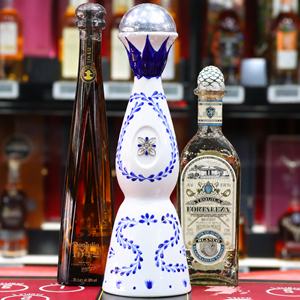





















Tequila has changed considerably over the past decade.
For many drinkers, the category is no longer defined by shots, salt and lime. Premium producers are increasingly focusing on mature agave, careful fermentation, provenance, texture and the influence of individual growing regions.
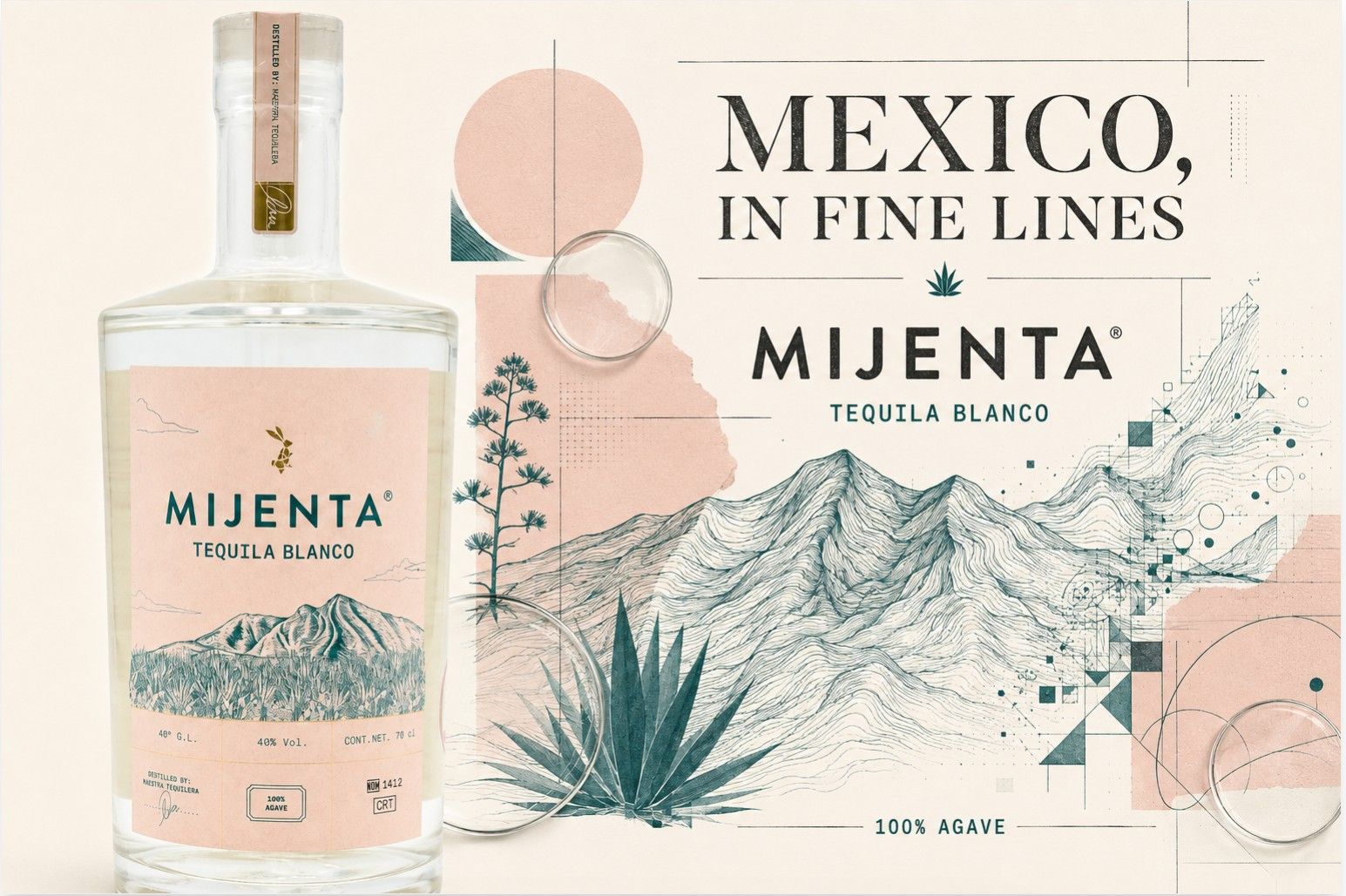
Mijenta Blanco 100% Agave Tequila sits firmly within that modern approach.
Produced from fully mature Blue Weber agave grown in the Highlands of Jalisco, Mijenta Blanco is made through a deliberately slow process designed to preserve the natural character of the agave rather than mask it. It is bottled at 40% ABV and presented as an unaged Blanco, placing the raw material itself at the centre of the flavour profile.
The result is a tequila built around cooked agave, fresh fruit, vanilla, spice and floral notes, with enough weight to drink neat but enough freshness and clarity to work particularly well in cocktails.
Explore Mijenta Blanco Tequila at Hard To Find Whisky or browse the wider Blanco Tequila range at HTFW.
Mijenta Blanco at a Glance
- Producer: Mijenta
- Country: Mexico
- Region: Jalisco Highlands
- Category: Blanco Tequila
- Agave: 100% fully mature Blue Weber agave
- Bottle size: 70cl
- ABV: 40%
- Style: Unaged tequila
- Production: Slow-cooked agave, fermentation and careful distillation
- Filtration: Unfiltered
- Character: Cooked agave, vanilla, fresh fruit, floral notes and spice
- Positioning: Premium, artisanal and sustainability-focused tequila
HTFW currently lists the expression as a 70cl bottle at 40% ABV, produced in Mexico from fully mature Blue Weber agave.
What Is Mijenta Blanco Tequila?
Mijenta Blanco is a premium unaged tequila produced using 100% Blue Weber agave.
Because it is a Blanco, there is no extended oak maturation shaping the finished profile.
That matters.
In an aged tequila, barrel influence can introduce vanilla, caramel, spice, tannin and wood character.
In a Blanco, the distillate has nowhere to hide.
The quality of the agave, cooking, fermentation and distillation therefore becomes far more obvious.
Mijenta's approach is built around keeping those agave flavours at the centre of the spirit.
The brand uses fully mature agave from the Highlands of Jalisco and employs slow cooking, controlled fermentation and careful distillation before leaving the tequila unfiltered.
Where Is Mijenta Tequila Made?
Mijenta is produced in the Highlands of Jalisco, one of the most important tequila-producing areas in Mexico.
The region is often associated with red, mineral-rich clay soils and agave that can develop a particularly expressive, fruit-driven character.
Mijenta specifically highlights the mineral-rich red clay of the Jalisco Highlands as an important part of its terroir.
The term “terroir” is more commonly associated with wine, but it has become increasingly relevant to serious discussions about tequila.
Agave is an agricultural product.
Where it grows, the soil it grows in, the climate, elevation and growing period can all influence the raw material arriving at the distillery.
That means two tequilas made from the same species of agave can still taste noticeably different depending on where and how those plants were grown.
What Does “100% Agave” Mean?
Mijenta Blanco is made from 100% Blue Weber agave.
That is an important distinction.
Tequila regulations allow certain expressions known as mixto tequila to be produced with only part of their fermentable sugars coming from agave.
A 100% agave tequila instead derives its fermentable sugars entirely from Blue Weber agave.
For drinkers looking for a clearer expression of agave itself, that is usually the more interesting category.
Mijenta goes a step further by specifying the use of fully mature agave rather than harvesting plants prematurely.
Why Does Agave Maturity Matter?
Blue Weber agave takes years to reach maturity.
During that time, the plant stores carbohydrates that will eventually provide the sugars needed for fermentation.
Harvesting at full maturity allows the producer to begin with agave containing the level of developed sugars and flavour compounds they are looking for.
That gives the distiller a stronger raw material before any cooking, fermentation or distillation has even taken place.
It is one of the reasons why premium tequila increasingly puts more emphasis on agricultural decisions rather than simply focusing on what happens inside the distillery.
With Mijenta, the production philosophy begins in the field rather than at the still.
Who Makes Mijenta Tequila?
Mijenta's production is overseen by Maestra Tequilera Ana María Romero, who has more than 25 years of experience in the tequila industry.
Her role is central to the brand's identity.
Mijenta describes its production philosophy as a balance of both art and science, with the aim of emphasising agave alongside fruit, floral aromas and minerality.
That approach is particularly relevant for a Blanco.
Without barrel maturation to reshape the distillate, decisions made during cooking, fermentation and distillation directly influence what ultimately reaches the glass.
What Does the Name Mijenta Mean?
The name Mijenta is derived from the Spanish phrase mi gente, meaning “my people.”
The idea reflects the brand's emphasis on community, Mexican culture and the people involved in producing the tequila.
That extends beyond branding.
Mijenta has placed community and environmental considerations at the centre of the business, including work around agricultural practices, packaging and local production partnerships.
How Is Mijenta Blanco Made?
The broad process begins with fully mature Blue Weber agave from the Jalisco Highlands.
The agave is then slow-cooked.
That cooking stage converts complex carbohydrates in the agave into fermentable sugars.
Mijenta deliberately highlights its slow cooking process as part of the development of the tequila's texture and flavour.
Fermentation follows.
The producer uses a particular yeast selected to highlight natural flavours, while clay, lime and other elements associated with the production environment also contribute to the final character.
The fermented liquid is then distilled carefully with the aim of preserving rather than stripping away those flavours.
Finally, Mijenta Blanco is left unfiltered to retain additional complexity and texture.
Why Is Mijenta Slow-Cooked?
Cooking agave is a fundamental stage of tequila production.
Raw agave does not contain readily fermentable sugar in the same way as grape juice or molasses.
Its stored carbohydrates first need to be converted into sugars that yeast can ferment.
The cooking process does that.
Slower cooking also influences flavour.
With Mijenta, the producer specifically connects slow cooking with the development of its characteristic texture and notes of cooked agave, vanilla and caramel.
The aim is not simply sugar extraction.
It is flavour development.
How Is Mijenta Fermented?
Fermentation is one of the most important but sometimes overlooked stages in tequila production.
After cooking and extraction, yeast converts agave sugars into alcohol.
At the same time, fermentation creates a huge number of secondary flavour compounds.
These can contribute fruit, floral notes, spice, acidity and texture.
Mijenta uses a selected yeast with the stated aim of highlighting the natural flavours of the agave.
The brand also references clay, lime and other environmental elements as part of the fermentation profile.
This helps explain why the finished Blanco shows more than straightforward cooked agave.
There are clear fruit and floral characteristics too.
Why Is Mijenta Blanco Unfiltered?
Mijenta Blanco is bottled unfiltered.
Filtration can improve clarity or consistency, but it can also remove certain compounds from a spirit.
Mijenta's decision to leave the tequila unfiltered is intended to retain additional complexity, texture and aromatic character.
For a Blanco, that makes sense.
The entire purpose of the style is to showcase the distillate before ageing introduces a second layer of flavour.
Preserving as much of the original agave character as possible therefore fits naturally with the expression.
Is Mijenta Blanco Additive-Free?
HTFW describes Mijenta as an additive-free tequila, alongside the brand's broader focus on complex, balanced and gastronomic character.
This distinction has become increasingly important to tequila drinkers.
Modern tequila can legally contain small quantities of certain permitted additives without those ingredients necessarily appearing prominently on the label.
These may be used to alter sweetness, colour, texture or perceived maturity.
Additive-free tequila instead puts more emphasis on flavours created through agave, fermentation, distillation and ageing where applicable.
For a Blanco such as Mijenta, that means the profile is intended to come directly from the production process itself.
What Does Mijenta Blanco Taste Like?
Mijenta Blanco is expressive without being aggressively vegetal.
The profile begins with cooked agave but moves quickly into fruit, vanilla and floral notes.
Appearance
Bright and transparent with a substantial visual body.
The tequila remains completely clear because it has not undergone oak maturation.
Nose
Cooked agave leads immediately.
Vanilla and light caramel follow, alongside floral character and fresh fruit.
Mijenta specifically identifies cantaloupe and peach among the fruit notes.
Palate
Rich cooked agave remains at the centre.
Vanilla adds roundness before fresh fruit and warming spice emerge.
Cinnamon is particularly noticeable among the spice notes.
Finish
Clean, gently warming and persistent, with agave, fruit and spice remaining after the sweeter vanilla notes begin to fade.
The overall progression is broadly:
cooked agave → vanilla → fresh fruit → floral notes → cinnamon spice.
Is Mijenta Blanco Sweet?
Mijenta Blanco can appear sweet, but that sweetness comes largely from its flavour profile rather than it behaving like a sweetened liqueur.
Cooked agave naturally creates flavours that can resemble caramelised sugars.
Vanilla and ripe fruit notes add to that impression.
The result can therefore taste rounded and gently sweet even though the defining flavours remain agave, fruit and spice.
That is an important distinction.
Mijenta does not need to taste harsh simply because it is an unaged tequila.
What Is Highland Tequila?
Tequila production is commonly discussed in terms of two broad Jalisco growing zones: the Highlands and the Lowlands.
The Highlands sit at greater elevation and are known for their distinctive red clay soils.
Highland agave is often associated with a sweeter, more aromatic and fruit-driven style, although individual production methods remain enormously important.
Mijenta is deliberately positioned around its Highland origin.
The producer specifically highlights fully mature Blue Weber agave grown in mineral-rich red clay soils.
That geographic identity is therefore part of the tequila rather than simply a marketing detail.
Mijenta Blanco vs Reposado
The clearest difference between Mijenta Blanco and Mijenta Reposado is oak maturation.
Blanco tequila is essentially the clearest expression of the distillery's agave spirit.
Reposado spends time in oak before bottling.
That adds another flavour layer.
Where the Blanco emphasises fresh agave, fruit, floral notes and spice, the Reposado introduces greater oak-derived richness.
For someone wanting to understand Mijenta's production style, the Blanco is arguably the logical starting point.
For someone looking for richer vanilla, wood and mature spice, the Reposado may be more appealing.
Mijenta Blanco vs Patrón Silver
Both Mijenta Blanco and Patrón Silver are premium 100% agave Blanco tequilas.
The comparison is useful because both are positioned as quality sipping tequilas rather than simply mixing spirits.
However, their identities differ.
Patrón has become one of the world's best-known premium tequila brands.
Mijenta is much smaller and places greater emphasis on Highland terroir, sustainability, slow production and its unfiltered character.
Mijenta's flavour profile also leans strongly into cooked agave, fresh fruit, vanilla and spice.
For drinkers exploring beyond the best-known international labels, it provides a noticeably different interpretation of premium Blanco tequila.
You can explore Patrón Silver Tequila at HTFW alongside Mijenta to compare the styles.
Mijenta Blanco vs Don Julio Blanco
Don Julio Blanco is another useful benchmark.
Both are 100% agave Blancos designed to show the character of tequila before oak ageing.
Don Julio tends to offer a relatively clean, citrus-led and approachable profile.
Mijenta places greater emphasis on ripe cooked agave, fruit, floral notes and texture.
The distinction is not necessarily about one being better than the other.
It is about style.
Drinkers looking for a particularly clean and familiar premium Blanco may lean towards Don Julio.
Those interested in a more overtly artisanal, fruit-driven Highland profile may prefer Mijenta.
Is Mijenta Sustainable?
Sustainability is one of Mijenta's most distinctive brand pillars.
The company became the first tequila producer to receive B Corp certification and has also worked towards carbon neutrality.
Its approach extends into the agricultural and packaging sides of the business.
Mijenta promotes biodiversity in its agave cultivation and states that pesticides and herbicides are not used on its agave crops.
The bottles incorporate recycled glass.
Agave waste from production is also reused to make paper for labels through a local women-owned business.
That makes sustainability more than an isolated packaging claim.
It forms part of the wider production model.
What Is B Corp Certification?
B Corp certification is awarded to businesses that meet defined standards around environmental and social performance, transparency and accountability.
For a tequila producer, that can involve issues far beyond the liquid itself.
Agriculture, energy use, waste, packaging, employment and community impact all become relevant.
Mijenta's certification therefore fits naturally with its broader emphasis on community and responsible production.
Can You Drink Mijenta Blanco Neat?
Yes.
In fact, neat tasting is arguably the best way to understand what Mijenta is trying to achieve.
Using a small tulip-shaped tasting glass allows the cooked agave, fruit and floral aromas to develop.
Drinking it at room temperature also reveals more texture than serving it heavily chilled.
A small sip initially shows the agave and vanilla.
Allowing it to sit for a few moments brings forward more peach, melon and spice.
This is exactly why premium Blanco tequila has increasingly moved beyond its old reputation as something intended only for shots.
Should Mijenta Blanco Be Chilled?
It can be, but it does not need to be.
Chilling tequila reduces the perception of alcohol and can make the drink seem crisper and softer.
At the same time, very low temperatures suppress aroma.
For a complex Blanco such as Mijenta, serving it around cool room temperature usually allows more of the cooked agave, fruit and floral character to emerge.
For casual drinking, chilling is entirely reasonable.
For tasting, room temperature is more revealing.
Is Mijenta Blanco Good for Margaritas?
Yes.
A good Margarita depends heavily on the quality of its tequila.
Mijenta Blanco brings enough cooked agave and body to remain noticeable once lime juice and orange liqueur are added.
Its natural fruit and vanilla notes also soften the acidity of the citrus without turning the drink overly sweet.
A simple Margarita made with Mijenta therefore stays recognisably tequila-led.
That is generally what premium cocktail drinkers are looking for.
What Cocktails Work with Mijenta Blanco?
Mijenta can work in virtually any cocktail that calls for Blanco tequila.
The obvious starting points include:
- Margarita
- Tommy's Margarita
- Paloma
- Ranch Water
- Tequila Highball
- Tequila Sour
The fresher drinks tend to work particularly well because they allow the agave character to remain visible.
Heavy syrups or strongly flavoured mixers can easily overwhelm a tequila with this level of nuance.
Is Mijenta Blanco Good for Shots?
It can certainly be drunk as a shot, but that would miss much of what makes it interesting.
Mijenta is deliberately produced to emphasise flavour, texture and aromatics.
Drinking it rapidly removes most of the opportunity to experience those characteristics.
Neat sipping or using it in a simple cocktail will show much more of the spirit.
If it is served as a shot, it does not require salt and lime to mask the flavour.
That old ritual made more sense with rougher tequila than it does with modern premium Blanco.
What Does “Blanco Tequila” Mean?
Blanco is the least oak-influenced tequila category.
It may be bottled relatively soon after distillation and is generally clear in colour.
That makes it the most direct expression of the producer's agave and distillation style.
By contrast:
Reposado is rested in oak.
Añejo is aged for a longer period.
Extra Añejo undergoes even more extended maturation.
The further tequila moves into oak ageing, the greater the influence of wood tends to become.
For agave purists, Blanco therefore remains one of the most revealing categories.
Browse the wider Blanco Tequila selection at HTFW to compare other producers.
Is Mijenta a Premium Tequila?
Yes.
Mijenta is positioned in the premium and super-premium segment.
That positioning comes from several factors rather than simply packaging.
The tequila uses fully mature Highland agave.
Production is deliberately slow.
Fermentation and distillation are managed to preserve flavour.
The finished Blanco is unfiltered.
The company also puts substantial emphasis on environmental and social responsibility.
Those features place Mijenta firmly within the modern premium tequila movement.
Is Mijenta Tequila Award-Winning?
Yes.
Mijenta describes itself as an award-winning tequila brand, and HTFW also identifies it as an award-winning artisanal small-batch producer.
Awards alone do not determine quality, but they reinforce the wider reputation the brand has developed within a relatively short period.
The more useful test remains what is in the glass.
In Mijenta's case, the flavour profile is distinctive enough to stand on its own.
How Strong Is Mijenta Blanco?
Mijenta Blanco is bottled at 40% ABV.
That is a traditional full-strength bottling level for tequila and gives the spirit enough weight to carry the cooked agave, fruit and spice flavours without becoming overly aggressive.
HTFW currently lists the standard bottle at 70cl and 40% ABV.
Frequently Asked Questions
What type of tequila is Mijenta Blanco?
It is a 100% Blue Weber agave Blanco tequila produced in Jalisco, Mexico.
Is Mijenta made from 100% agave?
Yes.
Mijenta uses fully mature Blue Weber agave from the Highlands of Jalisco.
Is Mijenta Blanco aged?
No extended oak maturation defines the style.
As a Blanco, it is designed to showcase the character of the agave and distillation more directly than an aged tequila.
Where is Mijenta made?
It is produced in the Highlands of Jalisco, Mexico.
What does Mijenta Blanco taste like?
Expect cooked agave, vanilla, fresh fruit, floral character and spice, including notes of cantaloupe, peach and cinnamon.
What percentage alcohol is Mijenta Blanco?
It is bottled at 40% ABV.
How big is a bottle of Mijenta Blanco?
The bottle currently listed at HTFW is 70cl.
Is Mijenta Blanco additive-free?
HTFW describes Mijenta as an additive-free tequila producer.
Is Mijenta Blanco filtered?
Mijenta states that its tequila is left unfiltered to retain complexity and elegance.
Who makes Mijenta?
Production is overseen by Maestra Tequilera Ana María Romero, who has more than 25 years of tequila industry experience.
Is Mijenta sustainable?
Sustainability is a major part of the brand's positioning, including B Corp certification, carbon neutrality initiatives, recycled packaging and reuse of agave waste.
Can you drink Mijenta Blanco neat?
Yes.
Its balance of cooked agave, fruit, vanilla and spice makes it well suited to sipping neat.
Is Mijenta good in a Margarita?
Yes.
Its agave-forward profile and fruit character work particularly well with lime and orange liqueur.
Where can I buy Mijenta Blanco in the UK?
You can buy Mijenta Blanco 100% Agave Tequila from Hard To Find Whisky or explore the wider tequila collection at HTFW.
Final Thoughts
Mijenta Blanco 100% Agave Tequila represents a very different idea of what Blanco tequila can be.
The focus begins with fully mature Blue Weber agave grown in the red clay soils of the Jalisco Highlands.
That agave is slow-cooked.
Fermentation is designed to preserve natural flavour.
Distillation is handled carefully.
The finished spirit is left unfiltered.
Nothing in that process is trying to hide the agave.
Instead, the aim is to make it more visible.
That comes through clearly in the glass.
Cooked agave leads into vanilla and fruit, with peach and melon followed by floral notes and warming cinnamon spice.
It is approachable enough for someone moving into premium tequila for the first time, but there is enough detail in the flavour and production story to appeal to enthusiasts already interested in terroir, traditional methods and additive-free spirits.
Mijenta's environmental approach adds another layer.
B Corp certification, recycled materials and the reuse of agave by-products show that sustainability has been designed into the business rather than added afterwards.
For anyone wanting to understand why modern tequila has moved so far beyond its old shot-and-lime reputation, Mijenta Blanco provides a particularly clear example.
Explore Mijenta Blanco 100% Agave Tequila at Hard To Find Whisky, discover Mijenta Reposado, or browse the wider Blanco Tequila range at HTFW.